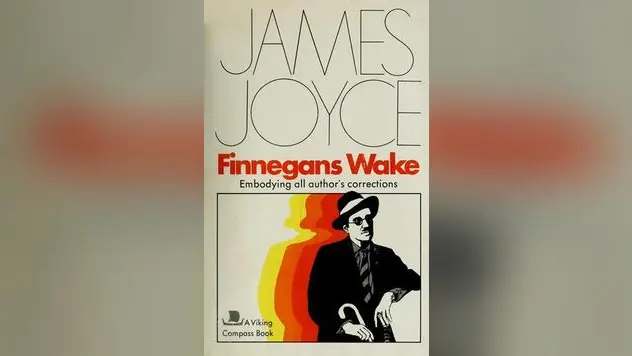
“Finnegans Wake”: The novel that turned language into a dream
James Joyce's experimental novel, published in 1939, upends language and plot to convey nighttime consciousness, and remains one of literature's most difficult—and influential—works.
In an article for Noema, Nathan Gardels examines the view that human thought and decisions are already shaped within networks of biological and technological relationships. The philosophical question is what human control of artificial intelligence means when everyday life depends so closely on computing infrastructure.
Anthropic has revised its usage policy, banning prolonged and unprovoked abusive or cruel behavior toward its models. The change is linked to the debate over whether artificial intelligence can be conscious, without providing evidence that it is.
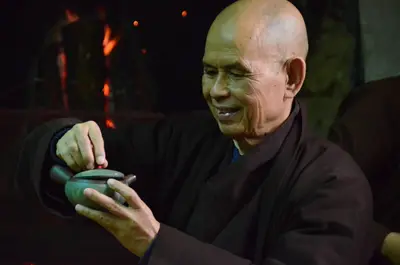
In an excerpt published by Tricycle, Thich Nhat Hanh presents mindfulness as a way to make meaningful contact with life. His Buddhist approach connects acceptance of impermanence with joy, compassion and care for others.
Cheryl Strauss Einhorn explains why human judgment becomes more important as artificial intelligence becomes part of our decisions, and suggests practices—such as the strategic pause, the “vision of success” and the AREA method—to help us use AI tools without losing our values or control.
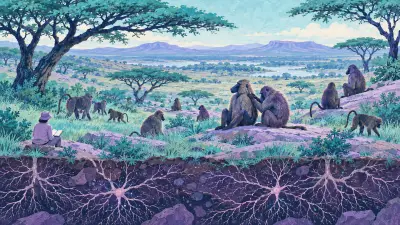
American neuroscientist and primatologist Robert Sapolsky studied stress in wild baboons for decades and became known for his position that human behavior is biologically determined, without free will.
Douglas Hofstadter is an American cognitive scientist known for his Pulitzer Prize-winning book Gödel, Escher, Bach and his theory of “strange loops”. His work ranges from analogy and poetry translation to ambigrams and scepticism about artificial intelligence.
Donald Hoffman, a cognitive psychologist at UCI, argues that our senses do not reveal reality but act as an evolutionary interface, and that consciousness is the foundation of the physical world.
The British mathematician and physicist was awarded a Nobel Prize for proving that black hole formation is a robust prediction of general relativity, while his views on consciousness remain controversial.
American writer and professor Joseph Campbell developed the theory of the monomyth, showing that the world’s major mythologies share a common structure, and profoundly influenced modern cinema and thinking about the meaning of life.
The 1942 essay in which Camus argues that life has no inherent meaning, but that this does not lead to suicide: it leads to revolt, freedom and a passion for life.
Douglas Hofstadter's award-winning book explores self-reference and “strange loops”, showing how thought and meaning emerge from elements that have no meaning on their own.
A free account makes the site yours too:
Already have an account? Log in