In a lecture delivered in May 2010 at Stanford University, neurobiologist Robert Sapolsky described the topic of "chaos and reductionism" as one of the most difficult sections of his course. As he said, the book Chaos, which he had assigned to his students, had made him radically rethink his approach to science, and he wanted to provoke the same questioning in them.
Sapolsky began with a historical overview: after the fall of Rome, Europe descended into a dark Middle Ages in which knowledge was lost, literacy collapsed, and concepts such as progress or ambition did not even exist as words. The capture of Toledo by Christian troops in 1085 brought to light a library containing more books than existed in all of Christian Europe, allowing the rediscovery of Aristotle, Plato, logic and reasoning.
From that period emerged, according to Sapolsky, the most important scientific concept of the past 500 years: reductionism. The idea is that to understand a complex system, you break it into its component parts, understand each one and then add them together linearly. This logic promises complete predictability: if you know the initial state, you can predict the final state, and vice versa.
Within the reductionist framework, variability is treated as noise or measurement error. Sapolsky explained that the more closely one examines a phenomenon, the less variability one is expected to see, because one is supposedly approaching the "true" value. The example of a temperature of 98.6 degrees Fahrenheit shows how deviation from the average is treated as something to be eliminated with better instruments.
Sapolsky used the work of neuroscientists Hubel and Wiesel to show where reductionism breaks down. The two researchers found point-to-point mapping from retinal cells to neurons in the first layer of the visual cortex, followed by neurons that recognize lines and curves. The prediction was that several layers higher there would be "grandmother neurons," specialized in recognizing a single face.
As Sapolsky stressed, grandmother neurons essentially do not exist, because the brain does not have enough neurons to encode every possible stimulus in a point-to-point fashion. He cited a study that found a neuron in a monkey that responded to photographs of Jennifer Aniston, but not Julia Roberts or Brad Pitt. Such cases of "sparse coding" are exceptions rather than the rule.
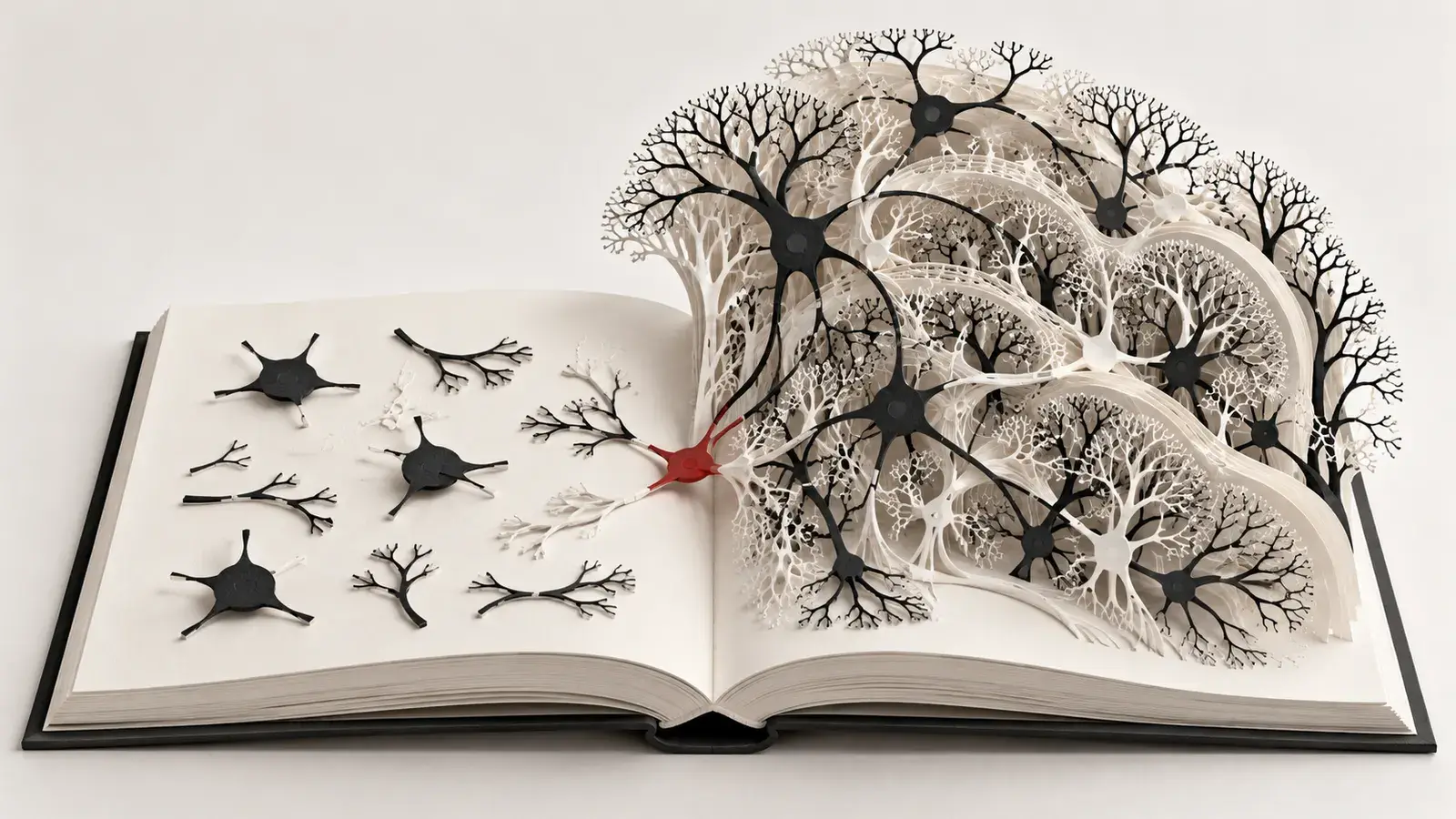
A second area of failure is branching systems, such as the circulatory system, pulmonary system and neuronal dendrites. These systems are scale-independent: the complexity of the branching looks the same whether you are looking at one neuron or millions of capillaries. Sapolsky explained that there are not enough genes to specify every branching point individually; a different logic of encoding is needed.
The role of chance also undermines reductionist predictability. Sapolsky noted that during the first cell division, mitochondria are distributed unequally, and transposable genes introduce randomness. At the behavioral level, Ivan Chase's research with fish showed that the outcomes of dominance contests between pairs do not predict the hierarchy at all when the animals are placed in a group, because random interactions change the outcome.
Sapolsky then introduced the concept of chaos through the example of a waterwheel. With a low flow of water, the wheel turns at a constant speed and the system is periodic and predictable. As the force of the water increases, the period doubles, then quadruples, and at some point the system enters a chaotic state in which the pattern never repeats.
Sapolsky explained that chaotic systems are deterministic but aperiodic: there are rules for every step, but the only way to predict them is to run the system step by step. He also mentioned Yorke's observation that the appearance of a period of three guarantees that the system is heading toward chaos.
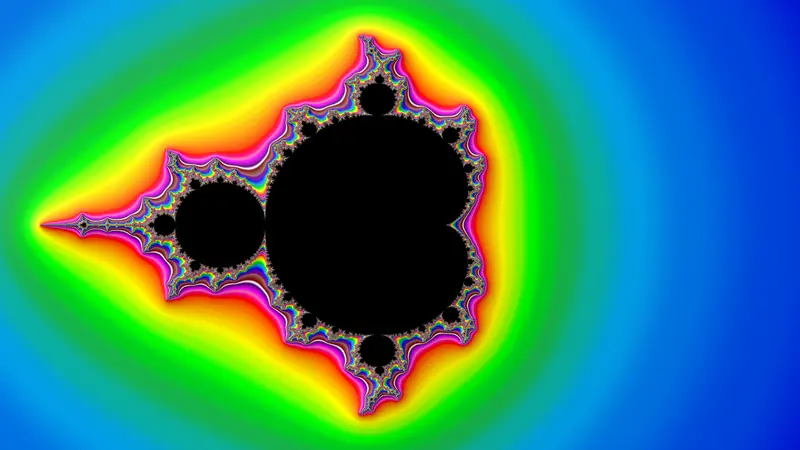
In such systems, a "strange attractor" appears: the system is drawn to a region but never settles at a fixed point. Variability is not noise; it is the phenomenon itself. Sapolsky also described the butterfly effect, in which differences millions of decimal places out can be amplified and change the future course, making the system unpredictable.
This leads to fractals: patterns that retain the same complexity and variability regardless of the scale of observation. Sapolsky noted that branching biological systems are classic fractals and announced that in the next lecture he would examine "fractal genes" that provide scale-independent instructions.
He described a study of his own with an exceptionally persistent undergraduate student, in which they measured the coefficient of variation in hundreds of papers on testosterone's effects on behavior, ranging from anthropological comparisons to receptor crystallography. The finding was that variability remained roughly constant across all levels of reduction, without decreasing as they approached the molecular level. The study was difficult to publish: every specialist journal found it interesting but outside its scope. It was eventually published in a philosophical journal of medicine and biology, but went almost unnoticed.
In closing, Sapolsky clarified that reductionist science is not useless. It is adequate when we are not too demanding, when we want averages: the polio vaccine helped on average, even though one in 560 children developed a more severe form of the disease, and we can say that June is generally warmer than January. But when we demand precise predictions about individuals or specific moments, reductionism breaks down. The deeper philosophical point, according to Sapolsky, is that in complex systems there is no "answer" or "solution." Variation is not a deviation from an ideal rule; it is what the system is supposed to be.


Comments