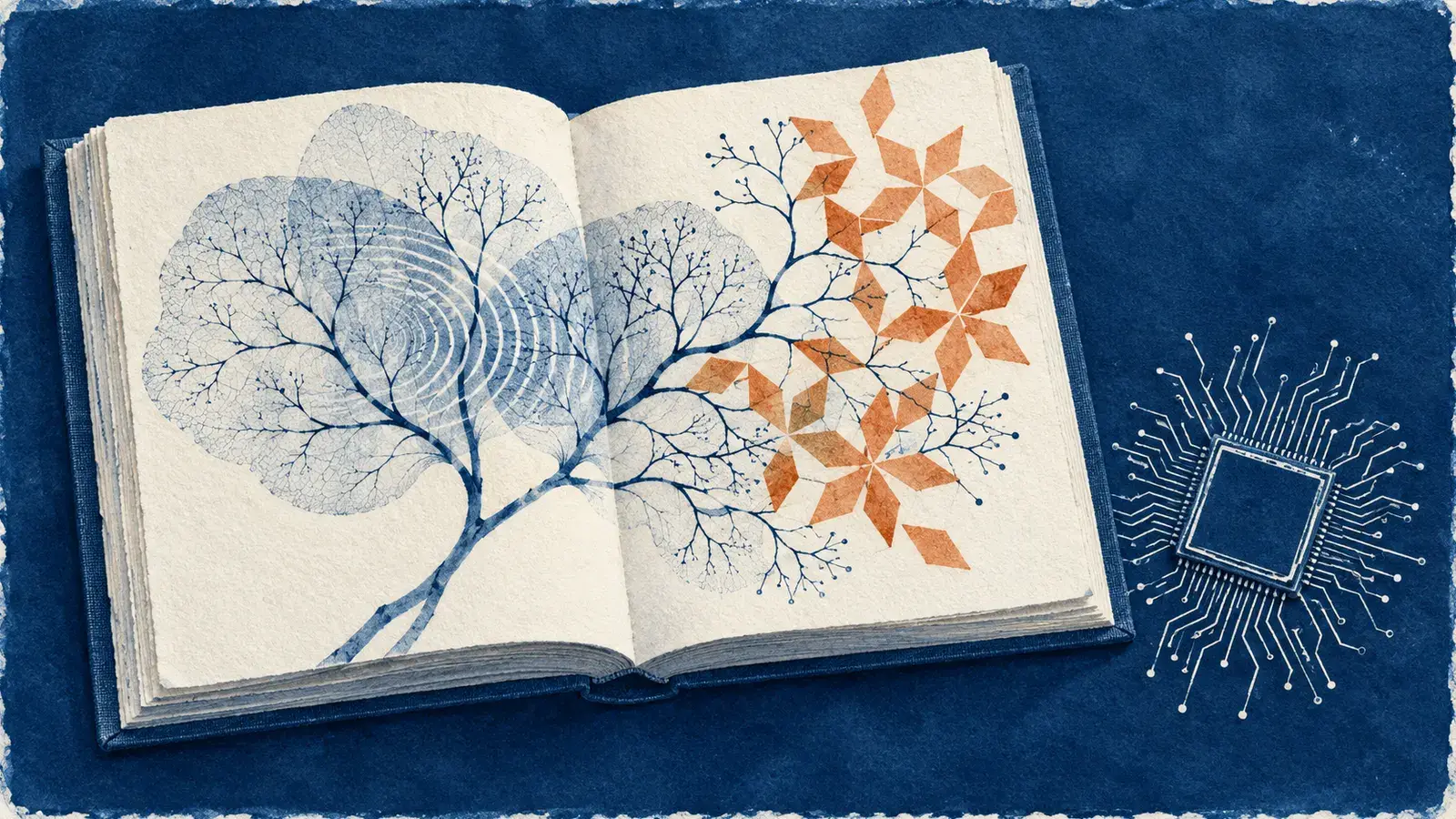
Mathematical physicist Roger Penrose's book “The Emperor's New Mind: Concerning Computers, Minds and The Laws of Physics” was published in 1989 and proposes a quantum theory of the mind. Penrose argues that human consciousness is non-algorithmic and therefore cannot be modelled by a conventional Turing machine, which includes a digital computer. According to the author, quantum mechanics plays an essential role in understanding human consciousness. Specifically, he believes that quantum wave function collapse plays a significant role in how the brain works. He describes these ideas as conjectures, and some experts in philosophy, computer science and robotics consider his position mistaken.
Most of the book is devoted to a review, for general readers interested in science, of many related topics, including Newtonian physics, special and general relativity, the philosophy and limits of mathematics, quantum physics, cosmology and the nature of time. Penrose periodically describes how each relates to his central theme: that consciousness is not “algorithmic”. Only the book's final chapters directly address its main argument.
Penrose attacks the claims of artificial intelligence through the physics of computation. He notes that modern computing rests more on the tangible world of classical mechanics than on the uncertain realm of quantum mechanics. A modern computer is a deterministic system that, for the most part, simply executes algorithms. To illustrate this, Penrose explains that by reshaping the boundaries of a billiard table, one could build a computer in which the billiard balls act as message carriers and their interactions as logical decisions. The billiard-ball computer was first designed a few years earlier by Edward Fredkin and Tommaso Toffoli at the Massachusetts Institute of Technology.
After the book's publication, Penrose began collaborating with Stuart Hameroff to search for a biological counterpart to quantum computation involving microtubules. This collaboration formed the basis of his next book, “Shadows of the Mind: A Search for the Missing Science of Consciousness”.
“The Emperor's New Mind” won the Science Book Prize in 1990. However, according to an article in the American Journal of Physics, Penrose incorrectly states that a barrier very far from a localised particle can affect that particle.
The book remains important to the debate about the limits of artificial intelligence and the nature of consciousness. Penrose proposes that consciousness cannot be reduced to computational processes.


Comments