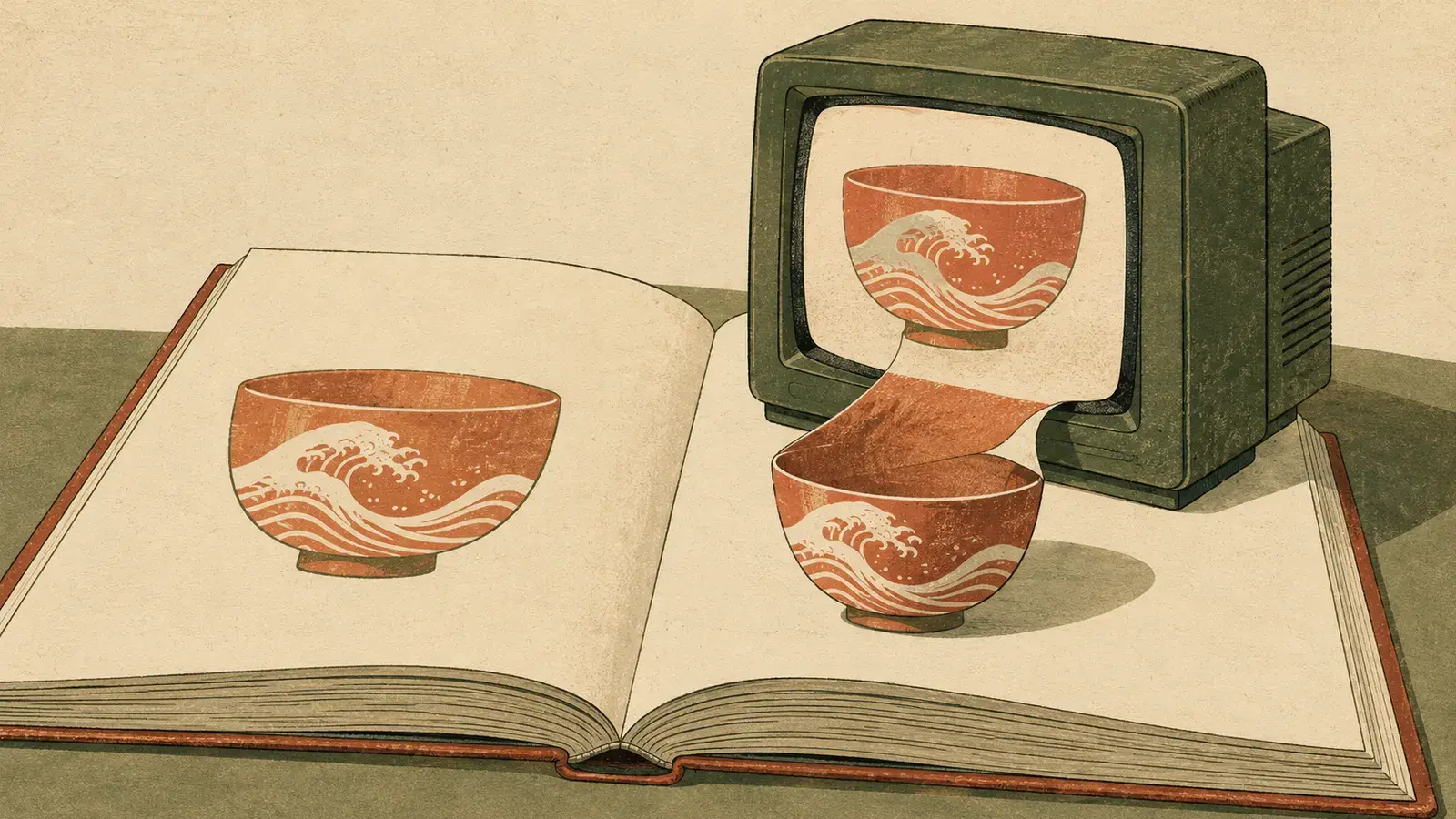
“Simulacres et Simulation” is a 1981 philosophical essay by the French philosopher and sociologist Jean Baudrillard. In it, he examines the relationships between reality, symbols and society, focusing on the meanings and symbolism of culture and the media that construct our shared understanding of existence. The book was originally published in French and translated into English in 1994 as “Simulacra and Simulation”.
Baudrillard defines simulacra as copies depicting things that either never had an original or no longer have one. Simulation, on the other hand, is the imitation of the operation of a real process or system over time. His central argument is that the simulacrum does not conceal the truth; the truth conceals the fact that there is none. As he writes, “the simulacrum is true”.
Baudrillard argues that modern society has replaced all reality and meaning with symbols and signs, and that human experience is a simulation of reality. These simulacra are neither simply mediations nor misleading mediations; they are not based on a reality, nor do they conceal it, but instead conceal the fact that nothing resembling reality is relevant any longer to understanding life. These ideas had appeared earlier in Guy Debord's 1967 work “The Society of the Spectacle”.
Baudrillard describes the transformation of the sign in four stages. In the first, the image is a faithful copy and is believed to reflect a profound reality—the “sacred order”. In the second, the sign distorts and alters reality as an “evil appearance” belonging to the order of malice. In the third, the sign conceals the absence of a profound reality: it is a copy without an original, within a regime of “sorcery” where meaning is artificially constructed. In the fourth stage, we have the pure simulacrum, which has no relationship to any reality; signs reflect only other signs, and every claim to reality is expressed in hyperreal terms.
Similarly, he distinguishes three historical orders of simulacra. The first is associated with the premodern period, when representation is clearly an artificial substitute for the real, and the uniqueness of objects makes them real and impossible to reproduce. The second belongs to the modernity of the Industrial Revolution, when mass-reproducible copies become commodities and threaten to replace the authority of the original, because the copy is just as “real” as its model. The third is associated with the postmodernity of late capitalism, when the simulacrum precedes the original and the concept of originality loses all meaning.
Baudrillard uses the fable from Jorge Luis Borges's short story “On Exactitude in Science”, in which an empire creates a map so detailed that it eventually coincides with the territory itself. In his version, in the postmodern era the territory ceases to exist and only the map remains; or rather, the concepts of map and territory become inseparable. He calls this the “precession of simulacra”: the map precedes the territory and produces it, just as the image of a war can precede the actual war. Baudrillard later linked this to the first Gulf War, in which war arrives not when shots are fired, but when society becomes convinced that it is coming.
Among the phenomena that blur the distinction between reality and simulacrum, Baudrillard includes modern media—television, cinema, print and the internet—which confuse necessary products with those for which a need is created by commercial images. He also mentions exchange value based on money rather than usefulness, multinational capitalism that separates products from the raw materials and people that created them, urbanisation that distances humans from the nonhuman world, and language that is entangled in power relations between social groups.
One consequence he describes is the end of history through the absence of opposing elements in society. The mass becomes the “silent majority”, a concept that implodes and passively absorbs images while the media speak on its behalf. People are symbolically represented by government bodies and market statistics, which marginalises the people themselves. Baudrillard sees this as the natural result of an ethic of unity that equates opposites, as when moral universalism—human rights and equality—is identified with globalisation, which is concerned with means of exchange and equivalence rather than unchanging values.
The work had a major impact on academia and was applied to the analysis of contemporary literature and cinema. For the film “The Matrix”, the book was assigned as required reading for the cast and appears in a scene, although Baudrillard himself was reportedly disappointed by the film. The theory was also used to analyse C. Robert Cargill's novel “Day Zero”, the film “Ex Machina” and science fiction more broadly. Vivian Sobchack criticised it, saying that pain brings us back to our senses and that Baudrillard's “techno-body” is always treated as an object and never as a lived subject; nevertheless, she acknowledged the value of his framework.
Baudrillard himself, however, distanced himself from overly serious readings of the “three orders” of the image. In an interview with Sylvère Lotringer, when his interviewer compared his approach with that of Michel Foucault, he replied that he had spoken about the three orders, that he could have made a book out of them but others had rushed to find examples, and that, without disavowing it, he did not believe it held up. He added that for a time he had believed in Foucauldian genealogy, but that the order of simulation is at odds with genealogy.



Comments