For a decade, the prevailing view of psychedelics has been that they cause chaos in the brain: networks that handle vision, attention or the sense of self loosen up and begin communicating with one another in a disorderly way, while electroencephalogram recordings become noisier and more complex. A new study published in Nature adds a different picture: beneath the apparent chaos, the brain under the influence of psilocybin organizes itself in a way that relates to how deep and personally meaningful the experience is.
Devon Stoliker, a neuroscientist at Monash University, explains that the concept of chaos did not adequately explain why someone might experience meaning, clarity or insight during a psychedelic experience, or why these experiences can translate into positive psychological changes. To explore alternative explanations, his team designed the PsiConnect study.
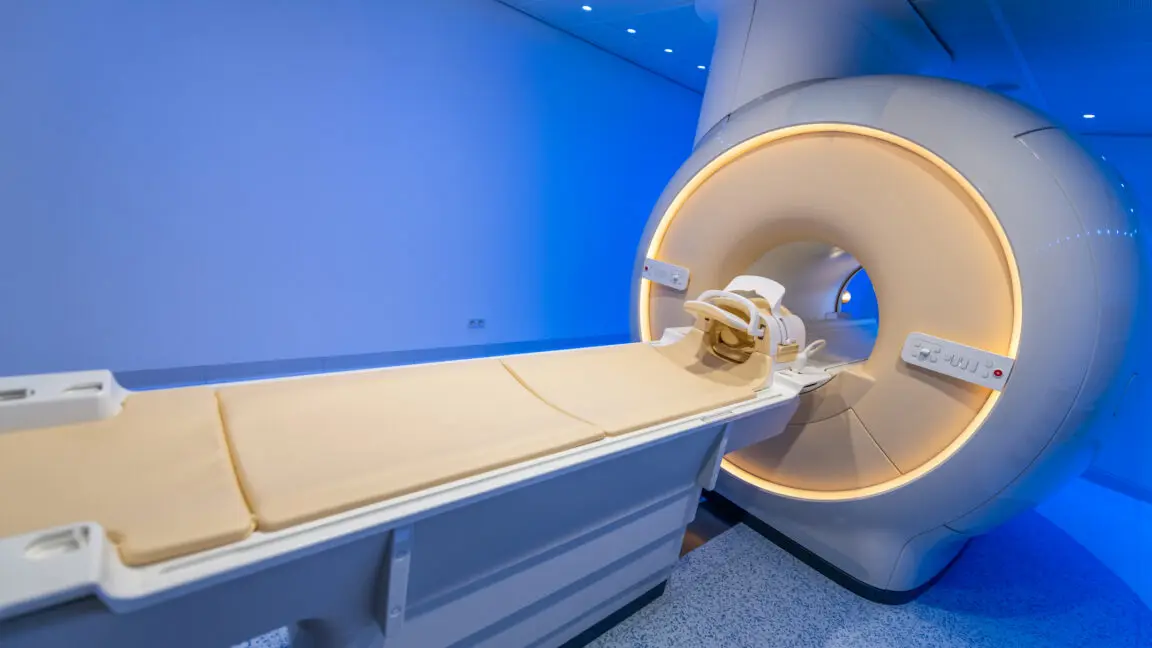
The study involved 62 people who had never taken a psychedelic. Each volunteer received 19 milligrams of psilocybin, a psychoactive substance found in certain fungi, and their brain activity was then recorded using magnetic resonance imaging and electroencephalography. Participants went through four different contexts: eight minutes of rest with their eyes closed, guided meditation, an eleven-minute curated music playlist and six minutes watching a video of clouds moving across the sky.

The researchers deliberately avoided cognitive tasks because they wanted ecological validity: they wanted to see what the brain is like during an authentic, uninterrupted psychedelic experience. According to Stoliker, there is evidence that introducing a task during the experience can bring a person out of that state, a phenomenon researchers call “grounding.” The approach appears to have worked: half the participants ranked the session among the most meaningful experiences of their lives, and 24 placed it in their top five.
Analysis of overall functional connectivity showed that when participants had their eyes closed, sensory regions lost influence while association regions gained it. Stoliker interprets this as a sign that the brain's ability to construct reality, imagination, beliefs and the sense of self was gaining greater dominance over sensory regions, although he stresses that this is a hypothesis. In addition, connections within each brain network weakened while connections between different networks strengthened, and the brain's modularity decreased.
One of the most striking findings was that, in the sober brain, activity with the eyes closed differs greatly from activity while watching a film, but under the influence of psilocybin this difference almost disappeared. In the visual network, the connectivity gap between open and closed eyes shrank by 85%. Electroencephalography independently confirmed the trend, with alpha-wave activity falling by almost half. “When someone takes a psychedelic and can close their eyes and see complex images, there seems to be less of a boundary between the inner and outer worlds,” Stoliker says.
The team analyzed the data using a less conventional method. Instead of calculating averages over time and across people, it fed the moment-to-moment activity of 332 brain regions into a machine learning tool called CEBRA. The tool compressed the data while preserving the time sequence and produced a trajectory in three-dimensional space for each person. Under psilocybin, the trajectories separated into four distinct groups corresponding to rest, meditation, music and video, and a classifier could identify which context the brain was in.
The classifier's performance was linked to how profound participants described their experience as being. When the researchers replaced a network's activity under psilocybin with its sober version, they found that the default mode network and visual network each accounted for more than 20% of the effect. The former is associated with the narrative sense of self, while the latter is directed outward. Under psilocybin, the two networks become less distinct, which the team believes explains the subjective sense of “integration”: the feeling that the self and the outside world are less separate.
The next day, participants rated whether things such as their connection with themselves, others and nature, as well as their sense of peace, acceptance and creativity, had changed. The overwhelming majority reported positive psychological changes the following day, and the size of these changes tracked the classifier's performance. The researchers see future therapeutic applications: if context does more than set the mood and actually affects the mechanisms of brain organization, then the room, playlist and instructions can serve as clinical variables that a therapist could adjust.
However, the researchers acknowledge limitations. Two people with the same “integration” score may have very different subjective experiences, and all the volunteers were healthy rather than patients with mental or psychiatric disorders. It is also not yet known exactly how variables such as music or visual stimuli should be adjusted. Even so, according to Stoliker, discovering this level of organization hidden beneath the disorder has real explanatory value.




Comments