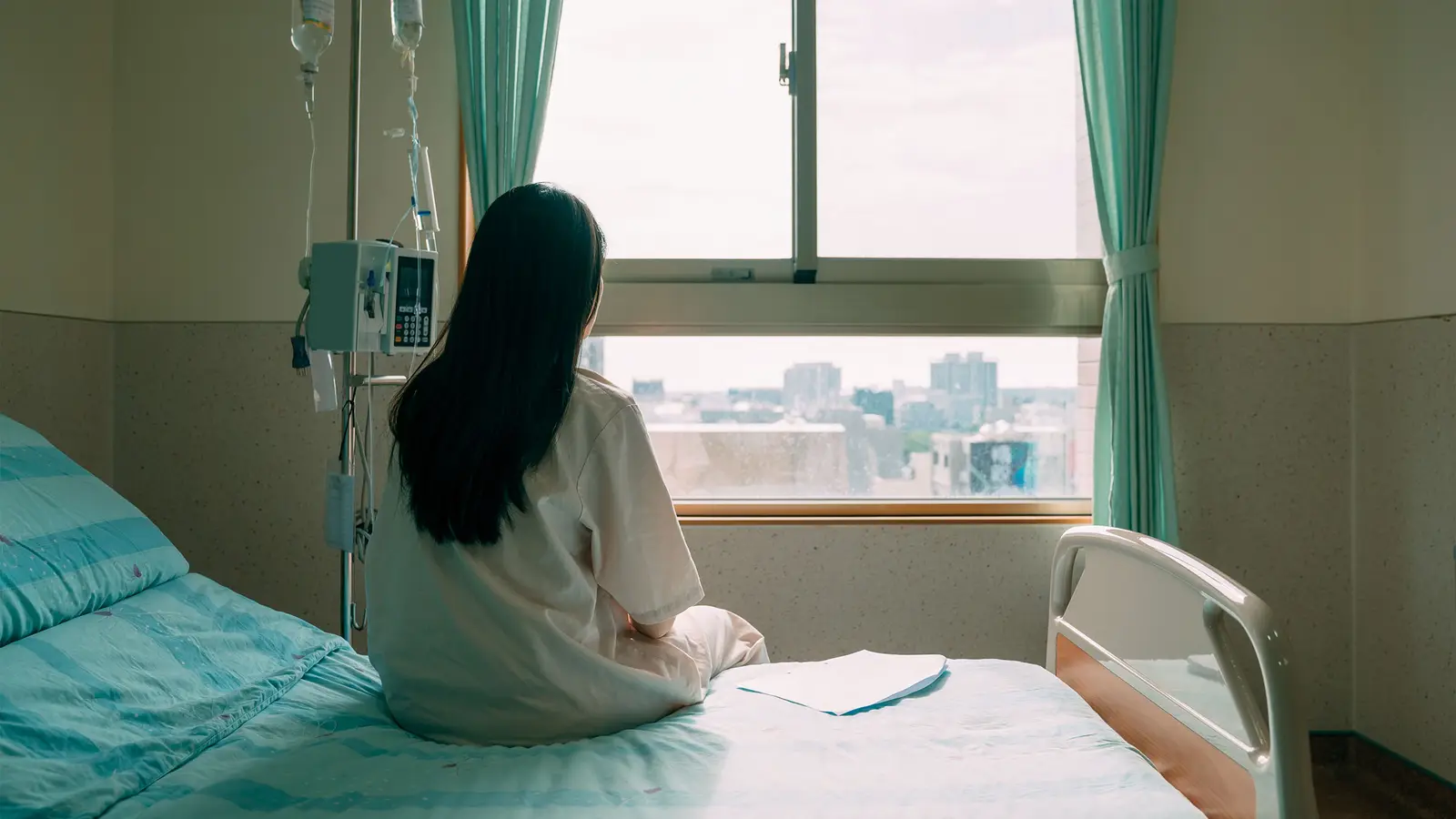
Writer and literature professor Ann Tashi Slater was in her forties when she found herself in a Tokyo hospital with joint pain, burning skin, a severe headache, nausea, a fever of 103 degrees Fahrenheit and violent chills. She had returned from a summer holiday in Indonesia with her husband, David, and their children, so the doctors suspected dengue fever or malaria. But her symptoms persisted; she developed jaundice, petechiae on her hands, a rash on her knees and sensitivity to light. On her tenth day in hospital, Dr. Kondo rushed into the room and announced: “Final diagnosis! Endocarditis.”
Endocarditis is a rare and life-threatening infection of the endocardium, the heart’s inner lining. Bacteria had entered her bloodstream, attached themselves to her mitral valve and formed a 20.3-millimeter vegetation. Dr. Kondo said she was “lucky” not to have suffered a heart attack, but she would need to stay in hospital for another four weeks for intravenous antibiotics, which “might or might not work.” When Slater searched online for information herself, she read about congestive heart failure, severe organ damage, intracranial hemorrhage, stroke and neurological impairment, as well as a significant mortality rate. As she writes, she shrank into a knot of fear and confusion.
At the time, she was researching The Tibetan Book of the Dead for a novel, a guide to transitional states called “bardo.” These include the intervals between death and rebirth, as well as periods when ordinary reality is suspended, such as during a serious illness. Slater began to see her own journey as a passage through the bardo. The book, she writes, helped her face uncertainty, change and endings more calmly, reminding her that nothing—not even we ourselves—lasts forever.
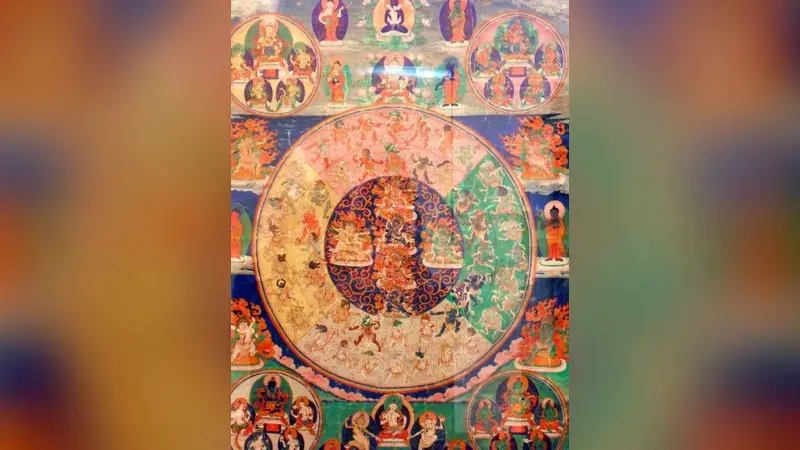
When the lead physician, Dr. Ando, asked whether she had lived in Japan for a long time and she replied that she had lived in Tokyo for almost a quarter of a century, he was surprised. Even more so when she told him she was a mother of two, a writer and a literature professor. She felt she was viewing her life from a distance, much as the dead are said to float in the bardo, struggling to accept their new state and looking back at the existence they want to return to. At night, she heard sirens and ventilators, and in her nightmares she drove along a dark road in torrential rain before plunging over the edge, or was attacked by wild dogs. Such images, she notes, resemble the landscape of the bardo, where wailing is heard, deep darkness appears and people experience hallucinations of being pursued by terrifying beasts.
After two days of antibiotic treatment, the vegetation on her mitral valve had shrunk by almost 40%. However, an MRI and a CT scan showed that a fragment had broken off, traveled through her bloodstream to the brain’s occipital lobe and caused a large abscess. Dr. Ando explained to Slater and David that this could lead to paralysis, “irreversible cognitive decline” or, as he said after a pause, “even more critical complications.” Treatment with intravenous glycerol did not prevent her condition from worsening: two days later, an MRI showed that the abscess had grown, causing an infarction and necrosis of the surrounding tissue. The doctors were even considering drilling into her skull or performing a craniotomy to drain it.
Amid this extreme uncertainty, Slater remembered a dive she had taken with David years earlier off a volcanic island in Fiji. Because of the rain, they went diving every day, and on one dive they were swept along by currents, unable to see either the seabed or the surface. That feeling of being lost in the vast blue resembled the experience of illness, when the ground disappears beneath your feet. The doctors started high doses of dexamethasone to reduce the swelling in her brain, while also holding serious discussions about the neurological complications. However, subsequent tests showed a gradual reduction in the vegetation and swelling; the abscess left a scar, the dexamethasone dose was gradually reduced, and a cerebral angiogram found no aneurysms, so the risk of stroke receded.
Six weeks after her admission, on a sunny October morning, David came to take her home. The nurses kept saying in Japanese how happy they were and that she had really made it through. Later, at a neighborhood restaurant, David told her that when the brain abscess was discovered, the doctors had thought she would not survive. Slater pictured herself leaving the room from which she could have been taken out on a stretcher, covered with a sheet.
The experience led her to reconsider what it means to seek the “lost harmony” described in The Tibetan Book of the Dead. Until then, she had believed it meant restoring our previous lives. Now she interpreted it differently: it is the harmony we lose when we forget that impermanence is the central truth of existence. Only when we accept that change is the essence of our brief time here can we, she writes, find the happiness we seek.
Looking at the trees and flowers in green, orange, pink and red, and at the sky, she felt immersed in the beauty of a world that was passing. She had lost about four and a half kilograms, her hair was thin, and her arms bore marks from intravenous needles. Yet she was eating pasta with tuna and tomato with her husband on a sunny autumn afternoon, with conversation and laughter around her and the sound of a baseball bat from a nearby field. She had emerged from the bardo, she concludes.




Comments