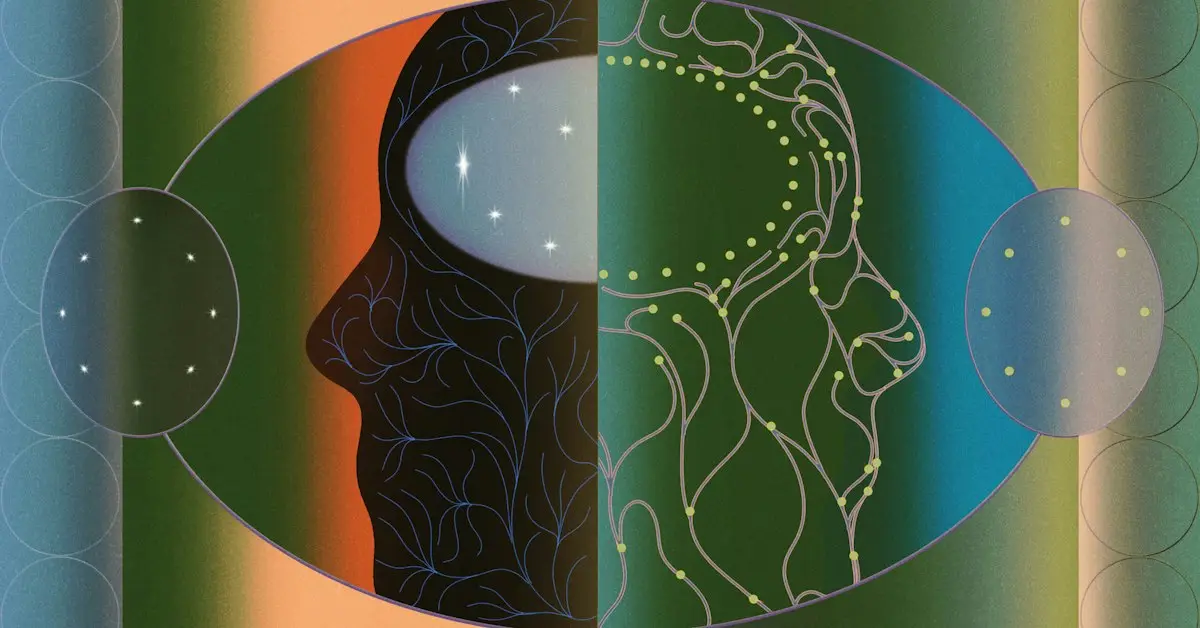
The debate about human control of artificial intelligence requires an answer to a deeper question: what do we mean when we say “human”? In Noema, the magazine's editor-in-chief, Nathan Gardels, examines the view that humans are formed through relationships with other organisms, the environment and their technologies. In this sense, the “post-human” condition describes an interdependence that already exists. The article uses this perspective to reconsider both our relationship with machines and the place of human experience within it.
Central to the argument is N. Katherine Hayles, author of “Bacteria to AI: Human Futures with our Non-human Symbionts.” Speaking on the Futurology podcast, she argues that the concept of the human changes according to the era and culture. In her view, the understanding associated with the Enlightenment remains dominant: an autonomous, individual being with rational free will. Hayles challenges this picture because she believes humans have always been embedded in a web of relationships that shapes their perceptions, interpretations, decisions and actions.
As a clear example of this relationship with non-human life, the article cites gut bacteria and their vital biological functions. Hayles extends the same reasoning to computing technologies: microchips, routers and devices control, process and transmit the information within which we operate. She stresses that in technologically advanced societies, this dependence involves basic functions, from food transportation and flights to financial transactions. Interdependence therefore concerns the material organization of life as much as the way we think.
To describe this condition, Hayles speaks of distributed cognition and distributed decision-making among human and non-human participants. She also uses the concepts of “cognitive assemblages” and networked intelligence: groupings in which different participants connect to process information and choose actions. Here, the term “post-human” indicates that we have already become part of a shared cognitive framework with computing technologies. For Gardels, this symbiosis makes it difficult to clearly identify who or what exercises control.
Kevin Kelly offers a related interpretation, arguing in another Futurology discussion that we are already within the technological “singularity.” He uses the term to describe the gradual merging of humans and machines, a process that unfolds as their interdependence deepens. According to Kelly, the scale of the change will become clearer when we can examine it retrospectively. The process remains open to new combinations and creative possibilities, without a predetermined endpoint.
Hayles, however, distances herself from the transhumanist idea that human consciousness could one day be uploaded to a non-biological substrate. She argues that artificial intelligence cannot become conscious on its own because it lacks the embodied experience and evolutionary history that shaped human intelligence. In her approach, language refers to lived experiences that a large language model does not share. Producing sequences of language or carrying out reasoning steps does not, in her view, amount to the human experience of meaning.
The article connects this argument with the position of neuroscientist Antonio Damasio, who places the homeostatic effort to sustain life at the root of emotion and self-awareness. It also cites Pope Leo XIV's view that artificial intelligence systems lack a body, joy, pain and the maturation that comes through relationships. In this approach, simulating empathy and understanding does not imply an inner knowledge of love, work, friendship or responsibility. This distinction forms part of the philosophical argument for the importance of human participation.
Gardels concludes that human control of artificial intelligence requires lived experience to be actively present within shared networks of humans and machines. He emphasizes the human being as a whole person, formed through relationships with others and with nature. According to this position, limiting systems' autonomous action needs to be accompanied by deliberately incorporating this understanding into their decisions. The article asks how the technological symbiosis that already exists can preserve meaningful space for human experience and responsibility.



Comments