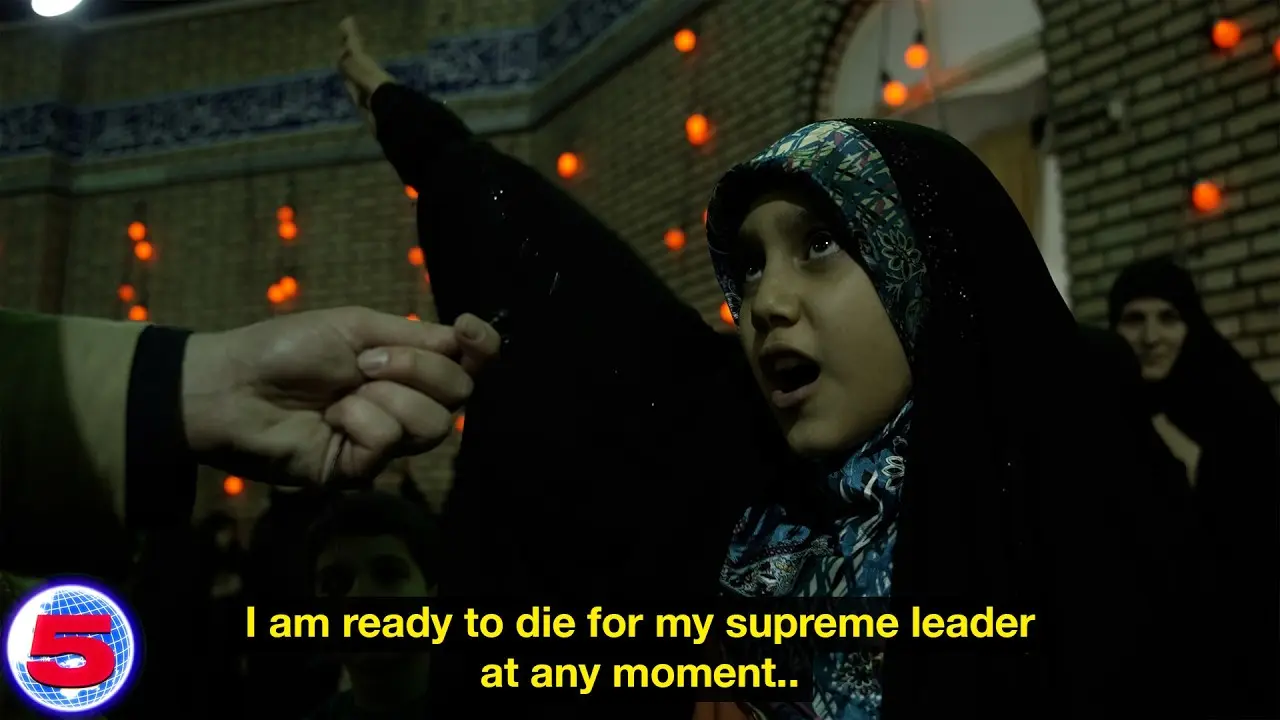
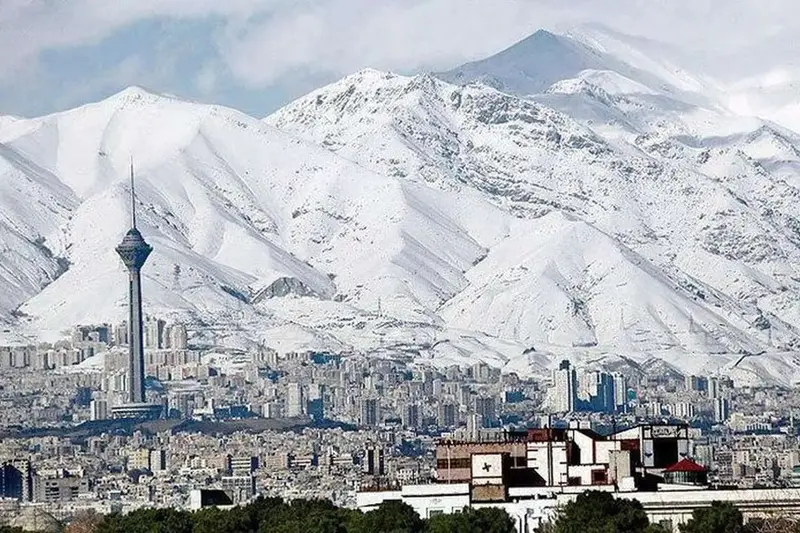
Andrew Callaghan traveled to Tehran after the Iranian authorities invited Vice News, with backing from Vice. From the moment he arrived at the airport, his local producer told him that the authorities were closely monitoring his movements, and he soon realized that his experience was carefully “curated” by the Iranian government. On the way to the hotel, he saw the ruins of bombed buildings beside busy highways. The hotel was government-approved and heavily guarded, and he could not go out for a walk without an escort. He felt that his every move was being watched.
He notes that the suspicion toward him was not unjustified, since he came from the country bombing Iran's civilian infrastructure. He describes an unsettling atmosphere, with the same ominous musical theme playing in the lobby, elevator and corridors, and admits that he may have been seeing cameras and microphones everywhere. Every so often, a government liaison would knock on his door and announce that he had arranged an interview. The first was with a pro-government Gen Z think tank head, around 35 years old, who wanted to give Vice the “perspective of Iranian youth.”
During the discussion, the expert argued that Iran's Gen Z does not know what its American peers really believe because of state media and a lack of resources, and that the war proved they would defend their homeland against foreign invaders. When Callaghan asked about the protests before the war, the expert described them as primarily economic, driven by high inflation, low employment, high prices and shortages, which he attributed both to poor economic management and international sanctions. He said there had been peaceful protests in the bazaar for two weeks, but then, he claimed, the movement was infiltrated by Western instigators who publicly beheaded two police officers.
Callaghan countered with estimates of 20,000 to 30,000 deaths, while the expert insisted that the official list put the figure at around 3,000 and that claims by Trump and Reza Pahlavi of tens of thousands were false. He argued that more than 2,000 of the dead were killed by rioters rather than the police, and drew a comparison with Israel, saying it had killed 70,000 people in three years. However, international observers and the UN report that no such beheadings took place and that the six men who were hanged were tortured into confessing in a sham trial. The expert also attributed the protests to Reza Pahlavi, the son of the former crown prince, who lives in the US and calls himself the Shah, saying he used the protests as a tool to overthrow the regime.
Regarding Mahsa Amini, Callaghan recalled that she was arrested for not wearing her headscarf properly and died within 24 hours. The police cited cardiac arrest, but her family knew of no history of heart disease. The expert denied that it was murder and said that even many pro-government Iranians had reacted after her arrest, with the result that the morality police no longer existed. Callaghan noted that the four-month uprising led to the temporary disbanding of the morality police and the easing of headscarf rules, but cost 551 lives, most of them from gunfire by the Islamic Revolutionary Guard Corps (IRGC), and that many women were shot in the breasts and genitals. The expert countered that the Iranian government does not violate women's human rights.
Callaghan then met the Malcolm X Foundation, a group of pro-government rappers, in a public park. Their banner presented figures such as Malcolm X, Martin Luther King, Tupac and Nipsey Hussle as “martyrs,” whom they consider victims of the US. Callaghan clarified that Nipsey Hussle was killed in a gang dispute rather than by the government, but, as he said sarcastically, because he was a guest in Iran, he accepted the narrative that Western powers had killed him. The rappers spoke about Christopher Columbus, the Rothschilds and Murdoch, and displayed a button for launching Iranian missiles, saying that Iran was now a missile superpower and that this power belonged to all oppressed people.
He was particularly struck by a banner supporting Lil Durk, the rapper on trial in Los Angeles for murder-for-hire. A member of the group argued that Durk was a political prisoner because he had united gangs under Islam, citing Fred Hampton and the Black Panthers, and asked why Trump was not being arrested. Callaghan corrected the timeline: Durk converted to Islam in September 2024 and was arrested three weeks later, but federal authorities had already been investigating him for more than a year and a half over multiple killings, including the murder of Lil Pabb, an associate of Quando Rondo, in retaliation for King Von's murder. He noted that Durk's own lyrics and statements on podcasts had provided evidence to the authorities.
Callaghan began to get a “Truman Show” feeling, wondering whether the Lil Durk banner had been deliberately placed there because Channel 5's most popular video was filmed in O'Block, the area associated with Durk. The rappers also moved on to conspiracy theories about Jay-Z, Cardi B and COINTELPRO, claiming that record labels belonged to private prison owners and that music promoted crime for profit. Callaghan brought Future into the discussion, noting that he had not been in his neighborhood for 30 years and did not sell fentanyl, and commented that his song sounded like CIA mind control. They then repeated that the January protests were caused by CIA agents and that Trump had said weapons were sent to the protesters.
Despite the wartime tension, Callaghan found Tehran's Grand Bazaar showing economic vitality, with people shopping, American flags and counterfeit goods. He even bought fake Air Jordan 1s for less than a dollar. He then remotely interviewed the person behind the Lego Resistance Front, a collective of pro-government creators that uses AI-generated Lego animations to troll Western powers. The creator invoked Jean Baudrillard's concept of “hyperreality” and said they could not fight with facts but had to enter the enemy's battlefield. He claimed they had reached around 900 million views and that the mobile phone was mightier than the sword.
Asked whether this was government propaganda disguised as internet culture, he replied that they were completely independent and defended their country of their own accord. He admitted, however, that the Iranian government was one of their clients, saying that their videos were high-quality and catered to many media outlets. Later, Callaghan met a young woman in western Tehran whose family home had been destroyed in a US-Israeli airstrike. The building housed eight families and, according to the woman, had been labeled a government building, but she said it was simply her grandmother's home. Her grandmother was killed beneath the rubble early in the morning. She estimated that around 500 people in Tehran had lost their lives in such strikes.
Her grandmother was the mother of a martyr from the Iran-Iraq War, and now she herself had become a martyr. The young woman recalled the ghormeh sabzi her grandmother used to cook and stressed that their family had no connection to the armed forces or the government.
The video description points to the third part of the series, titled “Tehran Streets,” on Patreon.


Comments