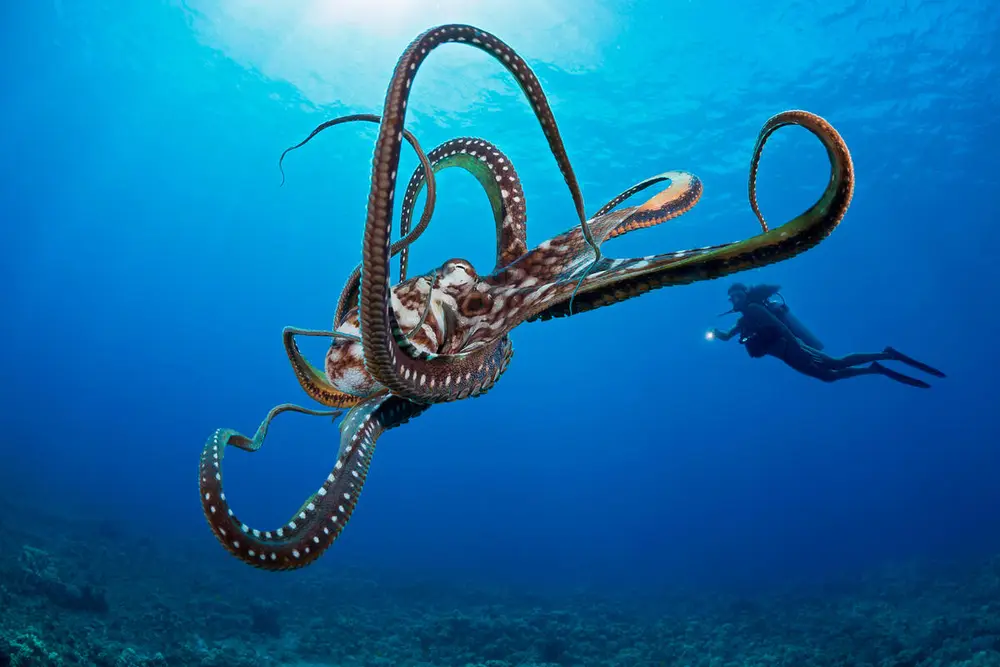
World Octopus Day is celebrated every 8 October, offering an opportunity to turn attention to one of the sea's most unusual creatures. Octopuses are known for their eight arms and their ability to squirt ink when frightened. They can also change colour and texture, mimicking their surroundings to disappear from predators and prey.
They have also been observed using tools, which is considered a sign of intelligence. Mongabay has covered several discoveries about octopuses this year, from giant fossils to newly hatched individuals and a recently described species.
In April 2026, Japanese researchers described fossils of an ancient octopus that may have been even larger than today's colossal squid, considered the largest invertebrates in the sea. The team found a fossilised jaw from the extinct species Nanaimoteuthis haggarti. Based on its size, the researchers estimate that the octopus may have reached between 6.6 and 18.6 metres in length. At the upper end, that is roughly two-thirds the size of an adult blue whale, the largest animal ever to have existed.
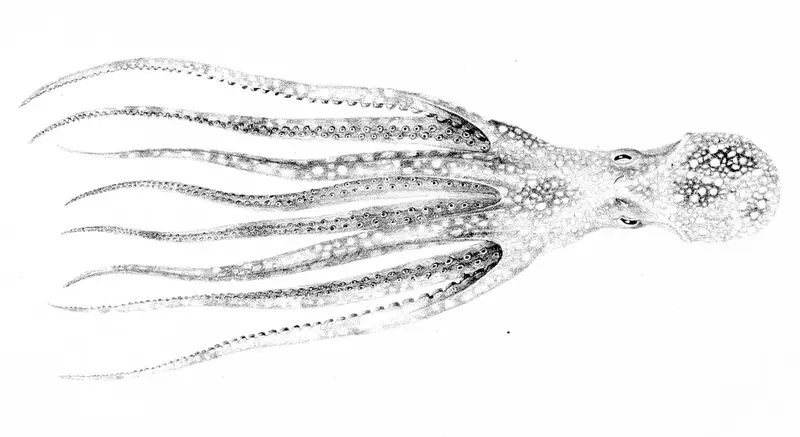
Yasuhiro Iba, a palaeontologist at Hokkaido University in Japan and a co-author of the study, told Mongabay that the finding suggests it was probably one of the largest invertebrates ever known. These animals were most likely giant predators roaming the seas of the Late Cretaceous, between 100 and 72 million years ago.
Moving from ancient octopuses to newly hatched ones, Mongabay journalist Shanna Hanbury also presented a rare photograph of Patagonian octopus eggs in the Puerto Lobos Protected Natural Area in Argentina. The eggs belong to the small species Octopus tehuelchus, one of the area's most common octopuses, although its global conservation status remains undetermined. The black dots inside each egg are the eyes of the developing embryos, a sign that they are close to hatching. The female of this species often lays her eggs inside an oyster shell and then guards them aggressively, even stopping feeding for the duration of this period.
New octopus species are frequently described, such as a blue octopus the size of a golf ball recently discovered in the Galápagos. During a deep-sea expedition in 2015, scientists used a remotely operated underwater vehicle and spotted the short-armed blue octopus. In a recent study, they confirmed that it is a species new to science, as reported by Mongabay's David Brown. The species was named Microeledone galapagensis, but questions remain about how it uses its short arms. Lead author Janet Voight wonders: if you gather prey by moving your arms through sediment, wouldn't longer arms with more suckers be better than short ones?
These discoveries show that octopuses continue to surprise scientists, from the limits of size in the distant past to reproductive behaviour and unknown deep-sea species. Together with their already known ability to camouflage themselves and use tools, they paint a picture of one of the planet's most adaptable and interesting invertebrates.


Comments