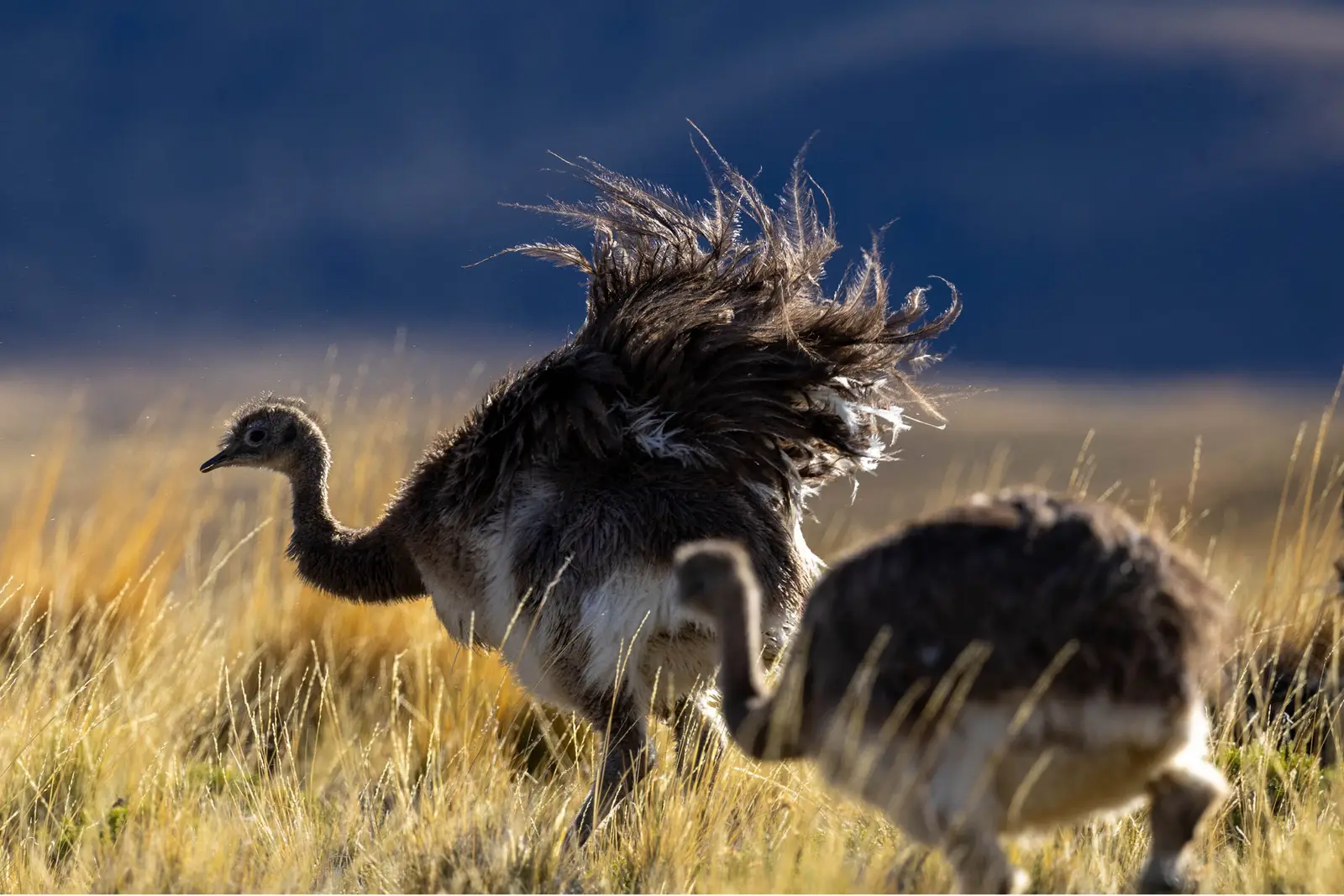
In Chile’s Patagonia National Park, a team led by women is working to return 13 Darwin’s rheas (Rhea pennata) to the wild. Mongabay visited the park in April 2026 and documented the rangers’ preparations in the days before the planned release. The initiative is part of a broader effort to restore the natural landscape and bring back wildlife.
The rangers work with the Rewilding Chile Foundation and care for the birds around the clock. The video states that this will be the third release of the year and that such an effort requires almost a full year of work. The care and preparation aim to give the rheas the best possible chance of survival once they are free again.
The park lies in the Chacabuco Valley, where sheep and cattle farming dominated for more than a century. Fences fragmented Patagonia’s vast steppes, and rheas almost disappeared from the area. One account in the video describes how rare it was to encounter these birds in 2016.
Tompkins Conservation, the organization behind Rewilding Chile, acquired land previously used for livestock farming and began removing thousands of kilometers of fences. According to the report, this intervention allows wildlife to return to the landscape. For rheas, which move around extensively and range over large areas, the continuity of their natural habitat is especially important.
The people caring for them also consider their ecological role important. In the video, the rhea is described as the “gardener of the steppe” because it helps disperse seeds. The rangers say the birds are particularly effective at this, linking their return to the restoration of the wider ecosystem.
The effort faces difficult weather conditions, particularly strong winds, and the presence of predators such as pumas. Meanwhile, illegal grazing by livestock continues to put pressure on the park’s fragile ecosystem. The provided text documents the team’s preparations and concerns without clarifying the final outcome of the release or the survival of the 13 birds.


Comments