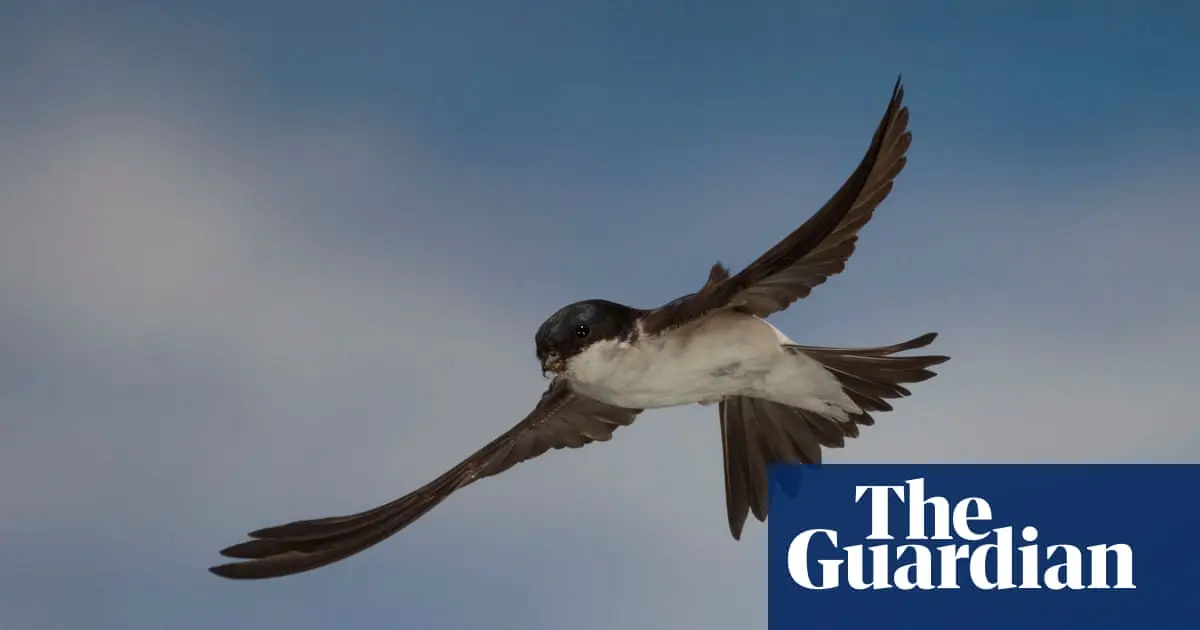
The house martins have left Lockerbrook in Derbyshire for another year, leaving behind questions about their long journey to Africa. In his nature diary, the writer describes the abrupt change: where dozens of birds had been flying the previous week, the sky was now empty. Their seasonal absence prompts him to reflect on both their declining numbers and the gaps in our knowledge of their migration.
The difference was neither in the landscape nor in the weather. The low sunlight was once again breaking through the clouds, lighting up the yellowing birch leaves and the slopes of Kinder Scout. A week earlier, against this backdrop, the writer had spotted what initially looked like a cloud of large insects; they were house martins.
Dozens of birds were turning and diving in front of him, with even more flying a little farther away. They were feeding heavily on insects before the long flight south. The writer describes their gathering as an encouraging sight, particularly because their declining numbers have led to their inclusion on the red list of threatened species.
On his next visit, only a kestrel was patrolling the area. The martins’ absence made him wonder where they were now and how many would survive to return. To convey the feeling of this expected but palpable loss, he invokes a Japanese expression that captures the melancholy of things passing.
As the article explains, the house martins will spend the winter somewhere in sub-Saharan Africa, but their exact whereabouts remain unknown. Dutch researchers examined isotopes in the feathers of returning birds and were only able to narrow the geographical search to West Africa. The finding provides a general direction without solving the mystery of their winter destination.
The diary also refers to research that found microplastics trapped in house martins’ feathers: tiny fragments carried through the air, which is also home to the insects the birds feed on. It provides no evidence of their possible effects on the martins’ health or survival. The writer closes with a reflection on human interference in these delicate natural systems and on migration as an evolved survival instinct.

Comments