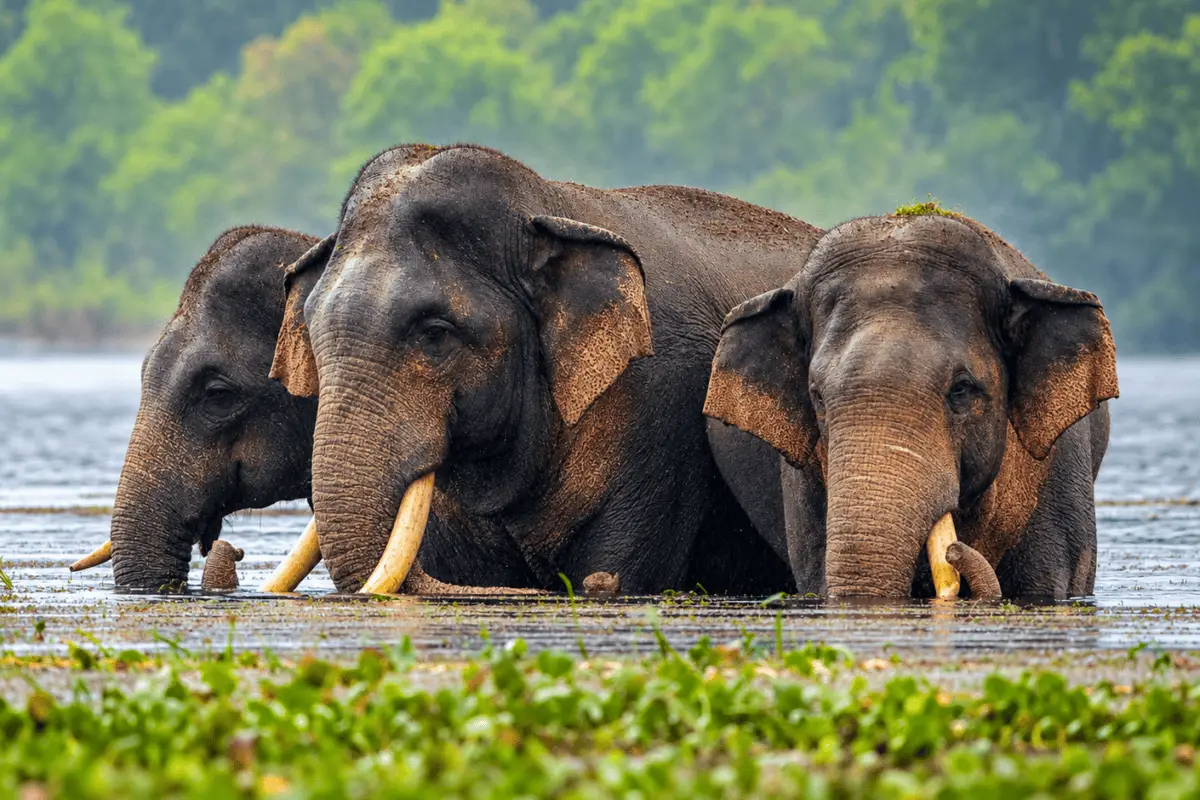
Kavantissa, considered Sri Lanka's tallest living tusker, was found with a gunshot wound to his right front leg, near the knee, and needed urgent veterinary care. The incident occurred in the Galgamuwa area, in the island's northwestern dry zone, where conflict between people and elephants is a known problem. The injury has revived calls for special protection for certain elephants, along with the question of how to ensure their coexistence with local communities.
Wildlife observer Pathum Bandara saw Kavantissa moving calmly through the area on September 20, but the next day noticed that he was limping and spotted the wound. The Department of Wildlife Conservation, the responsible wildlife protection agency, sent a team to treat him. According to veterinarian Isuru Hewakottage, the elephant was sedated so the wound could be cleaned and treated, received repeated antibiotic treatment and remains under monitoring. Without treatment, such a wound can become infected and threaten the animal's ability to walk, feed and survive.
After treatment, Kavantissa began moving between small patches of forest, occasionally passing through populated areas and the well-known elephant crossing near Galgamuwa. Bandara told Mongabay that the animal appeared to be recovering, but had become aggressive after the shooting and sometimes chased residents and wildlife department staff. This behaviour exposes him to new dangers, including the possibility of being shot again. Monitoring therefore concerns both the healing of the wound and the conditions in which the injured animal moves.
Concern is heightened by previous losses of tuskers to shootings, electrocution and other causes. Bandara recalled the younger Sankha, who was often seen with Kavantissa and had stiffness in his right leg after being shot. Sankha died in 2022 after falling into a pit, possibly because of his limited mobility, according to Bandara. The report also refers to an elephant with crossed tusks who died in 2007 despite efforts by veterinarians, as well as Bhathiya, who died in 2025 after suffering gunshot wounds and becoming severely weakened.
Some wildlife protection advocates are now calling for dedicated, even armed, guards for Kavantissa and other well-known elephants, such as Agbo and Mahasen. They point to Kenya as an example, where Ahmed was declared a "living monument" in the early 1970s and protected around the clock by armed guards. He died of natural causes in 1974, aged around 55. Craig, another well-known elephant from the Amboseli area, died of natural causes in January 2026 at the age of 54, having been protected through a broader system of cooperation between community rangers, organisations and authorities.
The Society for Conservation of Wild Elephants in Sri Lanka proposes declaring selected elephants "living national heritage" and creating special protection units involving wildlife authorities and civil defence. The proposals also include GPS tracking collars, additional guards along movement corridors and information networks involving residents of areas the animals visit. The same proposal puts the total value of a wild elephant at around 3.8 billion Sri Lankan rupees, or $11.5 million. The estimate takes into account the animal's ecological, cultural and tourism contributions, as well as its other contributions.
However, Ravi Corea, president of the Sri Lanka Wildlife Conservation Society, warns that the African examples cannot easily be transferred to Sri Lanka. The island's well-known elephants often move outside large protected areas, through a densely populated landscape where forests, farmland, roads and villages coexist. In his view, providing continuous physical protection for even one free-roaming elephant is far more complex than assigning two armed guards to accompany it. He therefore questions whether the proposed protection can be implemented on the scale being discussed.
Corea argues that the discussion must include the costs borne by people living near elephants. These communities often gain few direct financial benefits from the presence of wildlife, while facing damage to crops and property, injuries and deaths. A farmer who loses an entire harvest overnight, he points out, may face debt and be unable to feed their family. Under these conditions, an elephant's cultural and ecological value is not enough to ensure acceptance of its presence.
As a key part of the solution, Corea proposes economic opportunities that are less vulnerable to damage from elephants, including sustainable activities outside agriculture with support from private investment. He also calls for a strong policy framework that will enable meaningful cooperation between communities, conservation organisations, businesses and state authorities. The challenge, he says, is for coexistence to offer tangible opportunities to residents rather than impose an unbearable financial burden on them. Kavantissa's injury thus highlights both the need for immediate protection of the animals and the social conditions required for their conservation.
Comments