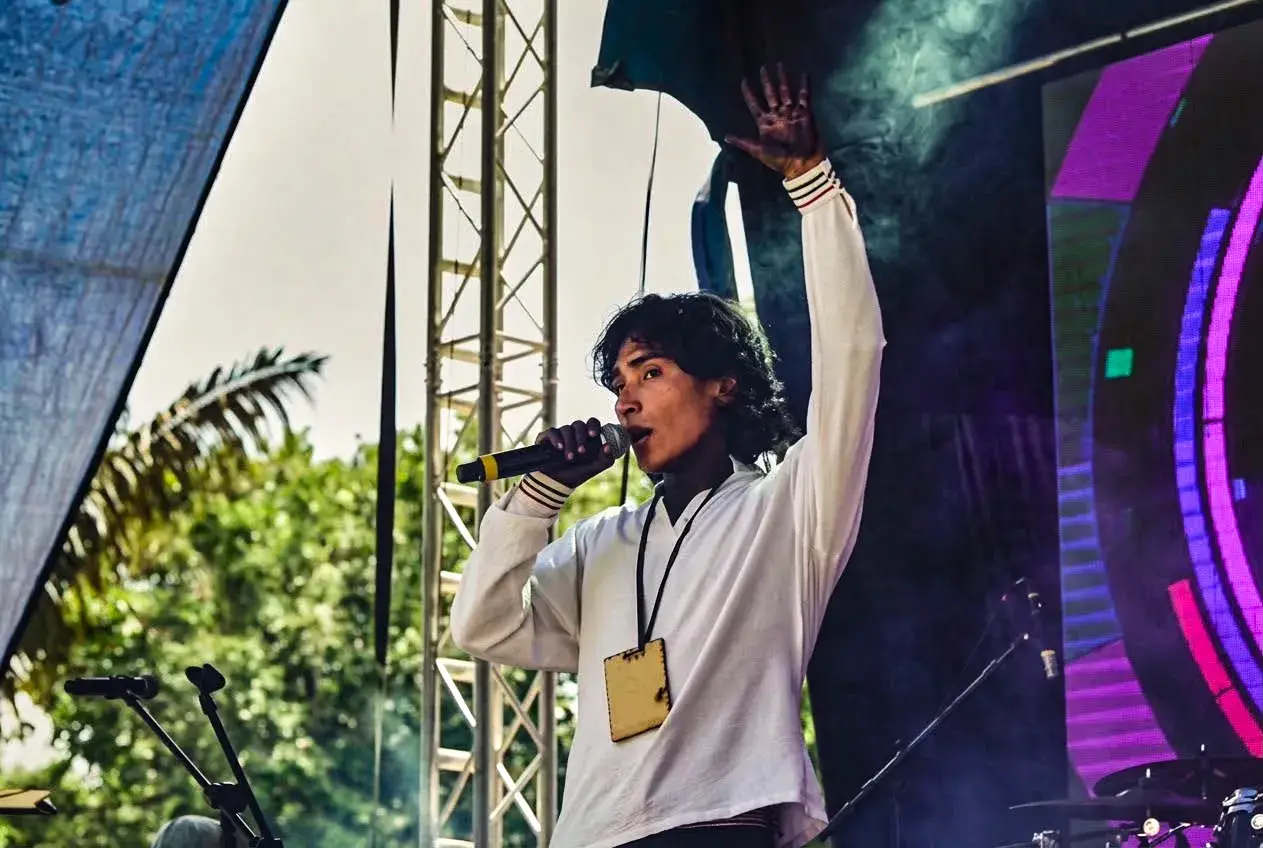
In the Ecuadorian Amazon, a new generation of Indigenous artists is using rap to defend the forest, rivers and their communities against the effects of extractive activities. Their lyrics draw on personal experiences, elders' stories and struggles to protect their ancestral lands. Their choice to sing in their native languages connects environmental advocacy with the preservation of their identity, while some add Spanish lyrics to reach a wider audience.
Willan Gualinga, 23, known as Taki Supay, started out in the Sarayaku community in Pastaza province. Three years after his first performance, when nerves made even speaking difficult, he took to the stage at Rizoma 2026 in the city of Puyo and heard thousands of people singing his lyrics in Kichwa. His first track, "Allpamanda kawsay manda jatarishun", calls on listeners to rise up for the land and for life. As he explains, music allows him to pass on his ancestors' knowledge and defend his homeland.
The pressures the musicians describe are also reflected in data from the MapBiomas mapping initiative, compiled by the EcoCiencia Foundation and provided to Mongabay. According to the data, 71% of Ecuador's mining activity is in the Amazon region, and 44.5% of that activity takes place within Indigenous territories. Meanwhile, oil concessions cover 63% of the territories of the Amazon's Indigenous peoples. The artists say that their public opposition to these activities exposes them to the risk of attacks or reprisals.
Misael Elías Criollo Grefa, 19, known as Misa17, is the first rapper from Ecuador's Indigenous A’i Cofán people. In "Ingi Tsampi", which means "our forest" in A’ingae, he speaks about river pollution and forest destruction. He grew up in Dureno, a community that has resisted the activities of Texaco and Petroecuador for years, and in the video he honours his uncle, Eduardo Mendúa, a land defender murdered in February 2023. Within a month of its release, the song surpassed 400,000 views on TikTok and 9,000 on YouTube.
In Pastaza, the duo Zona Verde connects its music with the demand for clean water. Its members are Raúl Vargas, or Robenban, from the Kichwa people, and Alejandro Moya, or Naruman, from the Shuar people. Communities in the Puyo River basin are seeking its cleanup through a legal protection process, as untreated sewage is the main source of pollution. The two musicians are preparing a song about the consequences for health and tourism, their communities' main source of income.
Robenban turned from love songs to protest after witnessing resistance by his community's elders. Zona Verde has performed in Amazonian cities and on Ecuador's coast, and has listeners in Colombia and the United States. Its lyrics combine Kichwa, Shuar and Spanish; Taki Supay sings exclusively in Kichwa, while Misa17 uses A’ingae, Spanish subtitles and occasional Spanish lyrics. Misa17 hopes rap will encourage younger people to keep speaking his language, which is at risk of disappearing.
Tzitzanu, 28, is making a similar effort by learning and using the Sápara language. In 2001, UNESCO recognised the cultural expressions of this people, who live along the Ecuador–Peru border, as a masterpiece of the oral and intangible heritage of humanity. At the time, only five people, all over 70, spoke the language fluently; according to the report, only one elderly woman remains today. As a child, Tzitzanu accompanied his father, a language teacher, to communities where they distributed books, dictionaries and educational games.
Today, Tzitzanu uses rap both to revive the language and to resist oil activities. He considers the use of multiple languages essential for his community's perspective to reach the outside world, while encouraging other young people to take up music. University lecturer and music journalist Carla Vera tells Mongabay that rap's appeal is linked to its direct language and its tradition as a means of protest against oppression.
For Gualinga, defending his homeland is connected to Sarayaku's legal history. In 2012, the Inter-American Court of Human Rights ruled that the state had violated the community's collective rights when an oil company attempted to operate without consulting it. More than 14 years later, according to the report, parts of the ruling remain unimplemented, including the removal of explosives from 25,000 hectares of community land. He was nine when the ruling was issued and says the experience pushed him to seek new ways to raise awareness.
Producing music remains difficult because of the cost, the lack of equipment and the need to travel to cities with studios, such as Puyo and Lago Agrio. Misa17 has written 12 tracks but has released only one video. The artists share the goal of establishing studios close to their communities so that more children can record and find role models within their own culture. They hope that expanding their audience will bring more support and mobilise young people to protect the Amazon.

Comments