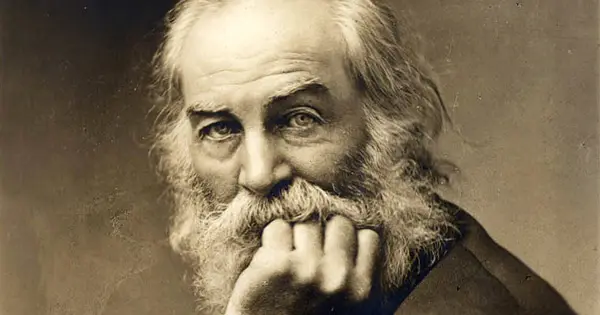
At fifty-three, Walt Whitman suffered a stroke that left him severely disabled. It was a peculiar kind of darkness: a violent exile from his own body that brought successive exiles. He was forced to leave his home in Washington, where he had settled after his volunteer nursing work in the American Civil War—that work which first taught him the connection between body and spirit—and move in with his brother in New Jersey.
As his body slowly healed, Whitman continued to seek the light. He attributed his partial recovery entirely to being “outdoors every day,” among the trees and beneath the stars. Nature nursed him back to life, and the experience permanently etched a new understanding of things into his consciousness.
As happens with all our unexpected encounters with mortality, the stroke placed a ledger before him and demanded an accounting of his life: who he was, what he stood for, what he had offered the world and how he wanted to be remembered. He recorded these reflections in “Specimen Days,” the collection of prose fragments, letters and diary entries that gave us Whitman’s wisdom on trees and music as nature’s deepest expression.
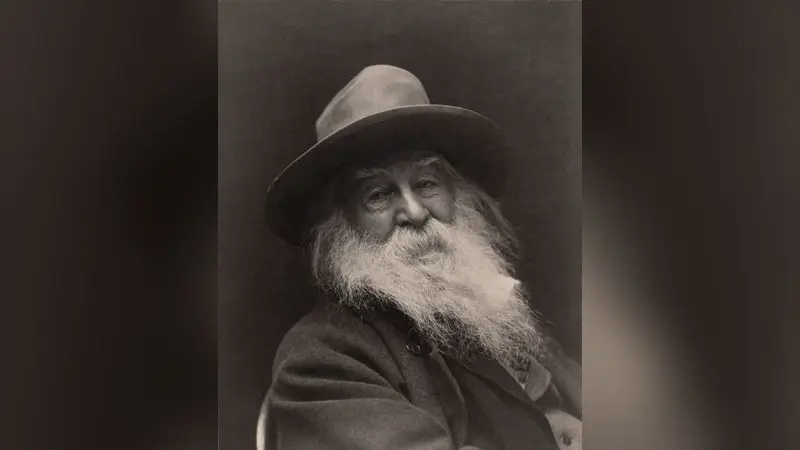
Writing to a German friend on his sixty-third birthday, ten years after the stroke, Whitman describes what the limitations of a disabled body taught him about the meaning of a full life. The paralysis has now “settled quietly” and will probably continue. He tires easily, is very clumsy and cannot walk far—but his spirits are excellent.
He goes out in public almost daily, travels hundreds of miles by train or boat, lives largely outdoors, is tanned and stout—he weighs 190 pounds—and retains all his activity and interest in life, people, progress and the issues of the day. He notes that his mental faculties remain completely unaffected, although he is physically partly paralyzed and will probably remain so for the rest of his life. The main purpose of his life, he writes, seems to have been fulfilled: he has the most devoted and enthusiastic friends, loving relatives—and enemies, he says, do not count at all.
Above all, however, Whitman found vitality in the natural world—in what he poetically called “the invigorating and optimistic balance of tangible outdoor Nature, the only permanent support for the spiritual health of a book or a human life.” The trick, he finds, is “to lower your desires and tastes enough, and to appreciate the negatives, the simple daylight and the sky.”
Once one has exhausted everything business, politics, companionship and love have to offer—once one discovers that none of them ultimately satisfies or endures—what remains? Nature remains, Whitman answers: awakening from their sluggish hiding places humanity’s affinities with the outdoors, the trees, the fields, the changing seasons, the sun by day and the stars by night.
“Specimen Days” remains, as the article notes, a kind of secular bible for the thinking and feeling person. The piece also points to other thinkers who grappled with the same question—Dostoevsky’s dream about the meaning of life, Tolstoy on finding meaning when life seems meaningless, and the forgotten genius Alice James on how to live fully while dying.

Comments