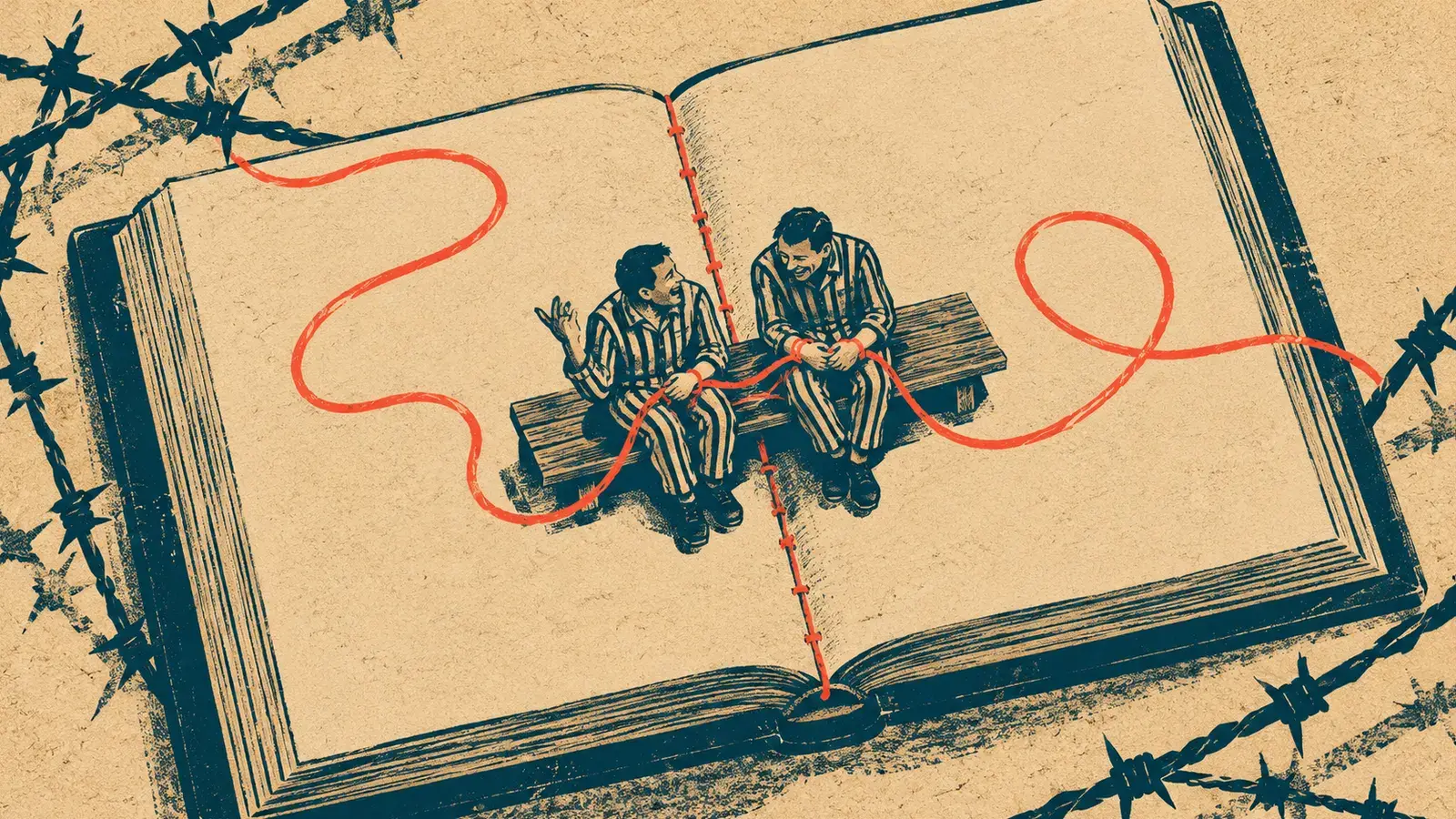
In his 1946 psychological memoir, Man’s Search for Meaning, the Austrian psychiatrist and Holocaust survivor Viktor Frankl argues that humor served as one of the soul’s weapons in the struggle for self-preservation inside the concentration camp. This is more than a personal account; it is a deeper insight: humor can provide detachment and the ability to rise above any situation, even for a few seconds.
Frankl was born in 1905 and died in 1997. His book remains one of the most profound and life-affirming works on how to endure the darkest moments and what it means to live with presence. In it, he records the inner acts of resistance through which prisoners maintained their dignity, sanity and thirst for life: they made art in secret, read smuggled books and devised ways to laugh.
He writes that humor was another of the soul’s weapons in the struggle for self-preservation. As he notes, it is well known that humor, more than anything else in the human makeup, can offer distance and an ability to rise above any situation, even for a few seconds. This ability, according to Frankl, is not innate but can be cultivated, like any art.
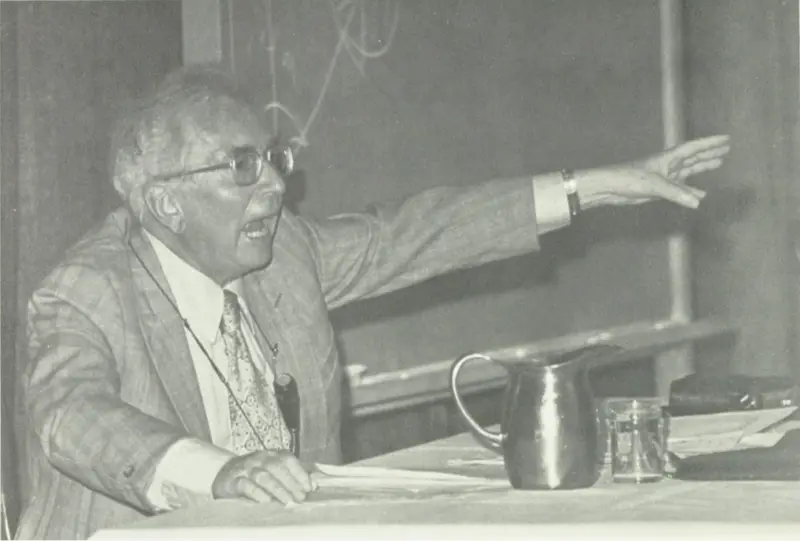
Frankl recounts how he trained a friend, a surgeon who worked beside him on the construction site, to develop a sense of humor. He suggested they make a mutual commitment to invent at least one funny story every day about something that might happen after their liberation. In an effort to make him smile, Frankl described how he would be unable to shake off the habits of camp life when he returned to his former work.
On the construction site, the foreman urged the prisoners to work faster by shouting “Action! Action!” Frankl told his friend: “One day you’ll be back in the operating room, performing a major abdominal operation. Suddenly a stretcher-bearer will rush in and announce the chief physician’s arrival by shouting ‘Action! Action!’” In its simplicity, this story shows how humor transformed terror into something one could look at from a distance.
Frankl broadens his thinking from the particular to the general: trying to develop a sense of humor and see things in a humorous light is a kind of trick we learn as we master the art of living. And this art, he insists, can be practiced even in a concentration camp, where suffering is everywhere. Finding humor in the darkest circumstances is not only a tool for survival, but also a supreme act of creativity and an assertion of our most inviolable personal freedom.
Frankl writes that everything can be taken from a person except one thing: the last of the human freedoms — to choose their attitude in any given circumstances, to choose their own way. This spiritual freedom, which cannot be taken away, is what makes life meaningful and purposeful. An active life gives a person the opportunity to realize values through creative work, while a passive life of enjoyment offers the possibility of finding fulfillment in the experience of beauty, art or nature.
But there is also purpose, he continues, in a life almost barren of creativity and pleasure, which allows only one possibility for morally elevated behavior: a person’s attitude toward their own existence, an existence restricted by external forces. This thought also extends to modern life. As the Hungarian journalist László Feleki observed half a century ago, life has become so mechanized and electronic that it needs an elixir to make it bearable — and that elixir is humor.
The Marginalian, which presents the piece, also recalls Ella Frances Sanders’s observation: when contemplating the universe, it makes sense to find a balance between laughter and uncontrollable crying. Frankl’s story thus takes on an enduring value: humor is not an escape from reality, but a way to endure it without losing our humanity.
Comments