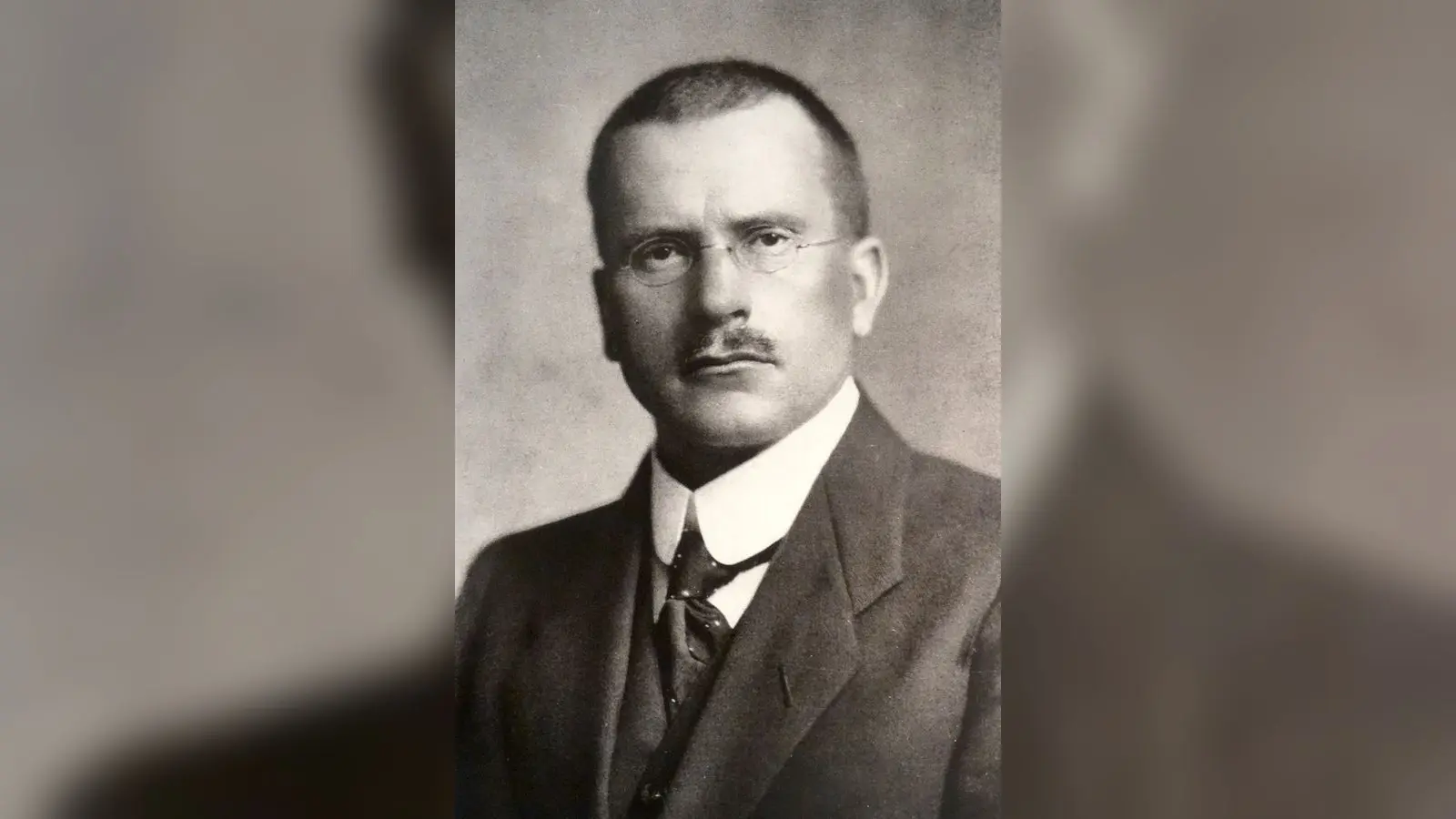
In a recent article, The Marginalian returns to the chapter Carl Jung wrote on creativity in his 1939 book “Modern Man in Search of a Soul”. Jung was writing in an era between mysticism and science, and saw the human psyche as the womb of all sciences and arts, with the unconscious forming the necessary undercurrent of every act of creation. For him, creative imagination was the only primary phenomenon available to us, the true ground of the psyche and the only immediate reality; all other realities arise from it and are revealed indirectly through the artificial aid we call science. At the same time, he warned that the creative act eludes every rational formulation: we can describe its manifestations and dimly sense it, but never fully grasp it. The observation recalls Virginia Woolf, who wrote that one cannot speak directly about the soul, because when one looks at it, it disappears.
Jung distinguished two modes of creation. The psychological mode draws on the material of human consciousness: life’s lessons, emotional upheavals, passion and the crises brought by fate. The poet absorbs this material, raises it to the level of poetic experience and brings into consciousness what we usually avoid or pass over; such subjects explain themselves. The visionary mode, by contrast, draws on the depths of the mind: it is a primordial experience that exceeds human understanding, tears through the veil of the ordered world and allows a glimpse into the abyss of the unborn. Visionary works resemble dreams: they do not explain themselves and never have just one meaning.
The most radical aspect of Jung’s thinking connects visionary creation with the collective unconscious, and this is where he differed from Freud, whose pupil he had once been. Jung considered Freud’s reductive analysis, which saw creativity solely as a product of personal factors and experiences, especially early childhood traumas and the neuroses they cause, to be poison for the artist. Great poetry, he said, draws its power from the life of humanity, and we lose its meaning if we try to explain it through personal factors alone.
When the collective unconscious becomes a living experience and touches the conscious outlook of an age, a creative act takes place that carries a message for generations. Every age has its own prejudice and psychological affliction and needs a compensatory correction. This happens when a poet, a visionary or a leader allows themselves to be guided by the unspoken desire of their times, whether this leads to the healing of an age or its destruction.
The creative person is, according to Jung, a duality: on one side, a person with a personal life; on the other, an impersonal creative process. Art is an innate drive that seizes a person and makes them its instrument. The artist is not simply an individual with free will pursuing their own ends, but allows art to fulfil its purpose through them. This tension creates conflict: on one side, the longing for happiness and security; on the other, a ruthless passion for creation that can override every personal desire.
Although he rejected the myth of the tortured artist, describing the idea that suffering is necessary for creation as a failing and a form of madness of his time, Jung acknowledged that creative life is full of conflicts. In this perspective, The Marginalian sees an answer to the contemporary moral fashion of rejecting works of art because their creator’s personal life is judged inadequate by today’s standards. The secret of artistic creation, he wrote, lies in returning to that level of experience where the human being lives, not the individual; this is why every great work of art is objective and impersonal, yet moves us deeply.
Jung’s text had first been published a decade earlier in an obscure journal, and he had complained that the individual’s voice was drowned out in the chaos of newspapers and the flood of books. As The Marginalian notes, he did not know then that he himself would become one of the great visionaries who touch the life of humanity for centuries—an encouragement to all the half-defeated visionaries whose voices are drowned out by the noise of the present.

Comments