
The life of Austrian psychiatrist and Holocaust survivor Viktor Frankl is considered one of the most powerful testaments to the endurance of the human spirit. In his book “Man’s Search for Meaning” (1946), described as a psychological memoir, Frankl records what his time in Auschwitz taught him about life’s deepest driving force: the unquenchable human need for meaning. According to Frankl, this need was what separated those who survived from those who perished in the camps. It was neither physical endurance nor luck alone, but the ability to retain a reason for living even when the future seemed to have disappeared.
This insight applies beyond extreme conditions; it also touches on everyday mental health. Frankl describes the art of presence not as enjoying pleasant moments, but as the ability to inhabit the present precisely at the most difficult times. Anyone who allowed themselves to collapse because they could see no future goal turned to the past to make the present less real. But this escape came at a cost: the present lost its significance, opportunities to create something positive amid the horror went unnoticed, and life became meaningless.
Frankl does not, however, suggest viewing suffering through rose-colored glasses. Instead, he argues that presence emerges when a person leans into suffering and accepts it as their own task. When someone recognizes that it is their fate to suffer, they must accept this burden as a unique and personal duty. No one can relieve them of it or take their place; their only opportunity lies in the way they carry their load.
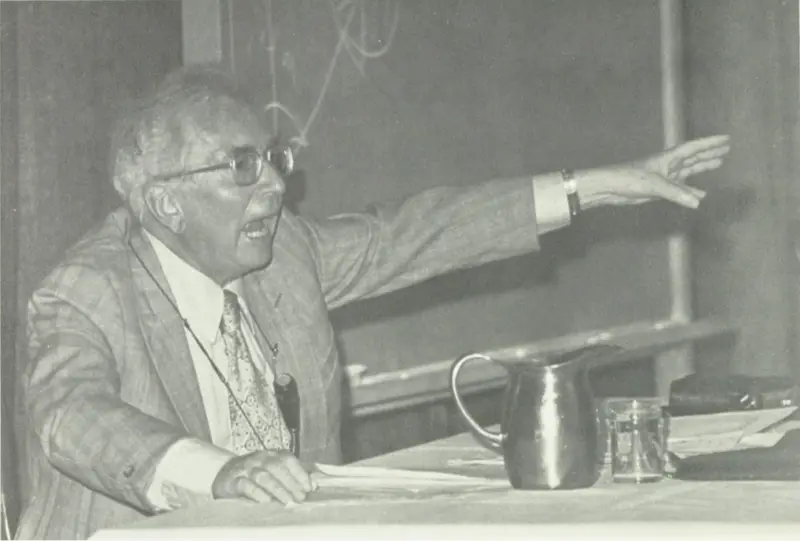
The present gains meaning through commitment. Frankl points out that each person’s uniqueness—what distinguishes the individual and gives meaning to their existence—is expressed both in creative work and in love. Human relationships, even the “gentle bonds of love” that remain indifferent to life and death, act as an anchor. The same is true of an unfinished project or a cultural contribution waiting to be completed. A person who becomes aware of their responsibility toward someone waiting for them with love, or toward a project they have not finished, cannot throw their life away, Frankl writes.
Anyone who knows the “why” of their existence can endure almost any “how.” This connection to something greater than oneself keeps a person bound to life even through the most extreme ordeals.
“Man’s Search for Meaning” remains a book that can change a reader’s life in the most substantial sense. However representative this excerpt may be, it cannot convey the richness of the entire work. Frankl’s thinking reminds us that meaning is not a luxury for peaceful times, but a prerequisite for survival—psychological and, in some cases, physical.

Comments