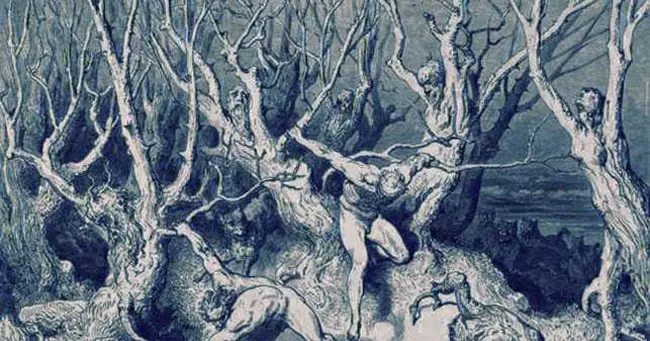
"Midway through the journey of our life, I found myself in a dark wood where the straight path was lost," Dante wrote in Inferno. Half a millennium later, Elizabeth Peabody warned that the most dangerous time for the most gifted is not youth but midlife.
In his book The Middle Passage: From Misery to Meaning in Midlife, Jungian analyst James Hollis offers a torch: the darkness of midlife can become a blaze of profound transformation, an opportunity to reconsider the patterns of thought, feeling and behaviour that we acquired while adapting to life's traumas and demands, and finally inhabit the authentic self beneath the temporary mask.
A person enters the Middle Passage when the demands of the true self press against and rebel against the acquired persona, until the conflict produces unbearable psychological pain, a "terrifying collision" that, as Hollis writes, leaves us "radically shaken into consciousness". The first step towards making the passage meaningful is to recognise that the lens our family and culture gave us is incomplete. Had we been born in another place and time, to different parents with different values, we would have an entirely different lens. This lens created a "conditional life" that represents not who we are but how we learned to see and choose.
The conditional life is haunted by psychological reflexes: coping mechanisms developed in response to childhood traumas. Hollis divides them into two main categories: the experience of neglect or abandonment and the experience of being crushed by life.
The child who was crushed may become a passive, compliant adult prone to codependency, while the abandoned child may spend a lifetime compulsively seeking a stable Other. These unconscious reactions come together in a provisional adult personality that continues to deal with the emotional emergencies of early life. "We all unconsciously live out reflexes assembled from the past," Hollis observes.
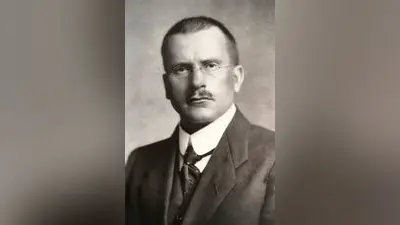
Carl Jung called such reflexes personal complexes: largely unconscious, emotionally charged reactions that operate autonomously. Most of the midlife crisis is caused by the pain of this split between the inner sense of self and the acquired personality.
The symptoms of midlife are actually welcome, because they represent not only a self rooted in instinct beneath the mask but also a powerful call for renewal. The first self must die for the second to be born. This death and rebirth are not ends in themselves; they are a passage necessary to fulfil our potential and gain the vitality and wisdom of ageing with maturity.
The call often begins with humility: having failed to bend the universe to our will, we recognise our limits and face disappointment and the collapse of our projections. When undertaken with honesty and self-compassion, this reckoning can reward us with "the restoration of the human being to a humble but dignified relationship with the universe".
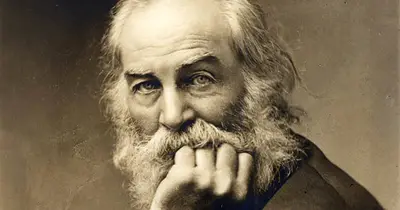
Hollis describes the shift in identities as a change of axes: from the parent-child axis in early life, to the ego-world axis in youth, to the ego-Self axis in the Middle Passage, and finally to the "Self-God" or "Self-Cosmos" axis. The fourth axis recognises the Self as a microcosm of the universe, like Whitman, who called himself "kosmos", echoing Alexander von Humboldt. Without some relationship to the cosmic drama, we remain condemned to lives of transience, superficiality and aridity.
These shifts are marked by "profound transformations of the soul", the most significant being the withdrawal of projections: those ghosts of the mind that embody what we do not claim or know within ourselves. In love, the tendency to superimpose the unconscious on external objects is strongest: what we often mistake for love for another person is a projection of the unloved parts of ourselves.
Drawing on the Jungian psychologist Marie-Louise von Franz, Hollis describes five stages of projection: first, we are convinced that our inner experience is actually external; then, we gradually recognise the discrepancy between reality and the projected image; third, we are forced to accept this discrepancy; fourth, we reach the conclusion that we were initially mistaken; and fifth, we search within ourselves for the source of the energy behind the projection. This final stage always requires deeper self-knowledge.
Losing the hope that something outside us will save us opens up the possibility of saving ourselves. Only when we accept the deflation of childhood expectations and take direct responsibility for finding meaning can our second adulthood begin. Hollis defines neurosis as "the soul's protest" against the split between our nature and our cultural adaptation.
Relationships can never be better than our relationship with ourselves; all relationships are symptomatic of the state of our inner life. When projections fall away, we can see the other person as they really are rather than as the embodiment of our need or an appointed saviour. Then we live out Iris Murdoch's definition of love as "the extremely difficult realisation that something other than oneself is real".
Hollis opposes the dangerous romantic ideal of merging two souls: one plus one does not make One, it makes three—two separate beings whose relationship forms a third entity, requiring them to move beyond their individual limitations.
Loving a partner's otherness is a transcendent event, because we enter the true mystery of relationship, where we are not simply you plus me but a "we" in which, together, we are more than our individual selves. It takes courage to confront our emotional states directly and enter into dialogue with them, but this is where the key to personal integrity lies. In the swamps of the soul there is meaning and an invitation to expand consciousness; terror is offset by meaning, dignity and purpose.
Our task in midlife, Hollis concludes, is to become strong enough to leave behind the ego's emergencies of the first half of life and open ourselves to a greater wonder. In the rest of the book, he examines literary examples from Goethe's Faust, Dostoevsky's Notes from Underground and Sylvia Plath's "Daddy", showing how personal complexes and projections manifest in parenthood, creative practice and love, and how their painful renunciation opens a gateway to a deeper and more liberating transformation.
Comments