Xiye Bastida, 23, a member of the Planetary Guardians and executive director of the Re-Earth Initiative, talks to Nate Hagens about her journey from student climate protests to international environmental advocacy. Hagens introduces her as one of the most recognizable voices of her generation and notes that the conversation moved him because it reminded him why he does this work.
Bastida began organizing school climate strikes at 17 in New York, where she attended high school. As she recalls, initially just 300 students gathered from her school and a few nearby ones; the following month there were 10,000, then 20,000, and by September 300,000 were in the streets. This exponential growth made her believe anything was possible, but also that mobilizing on a global stage such as New York was a privilege that had to be used responsibly.
She explains that the initial surge was fueled by a deep sense of generational injustice: young people felt their future was being sacrificed for profit, with a hundred companies responsible for about 70% of emissions. That feeling connected science with injustice and gave rise to a refusal to accept it. However, Bastida acknowledges that this momentum has now faded, as other issues, such as threats to democracy, have shifted attention away from climate, except during disasters or when planetary boundaries are crossed.
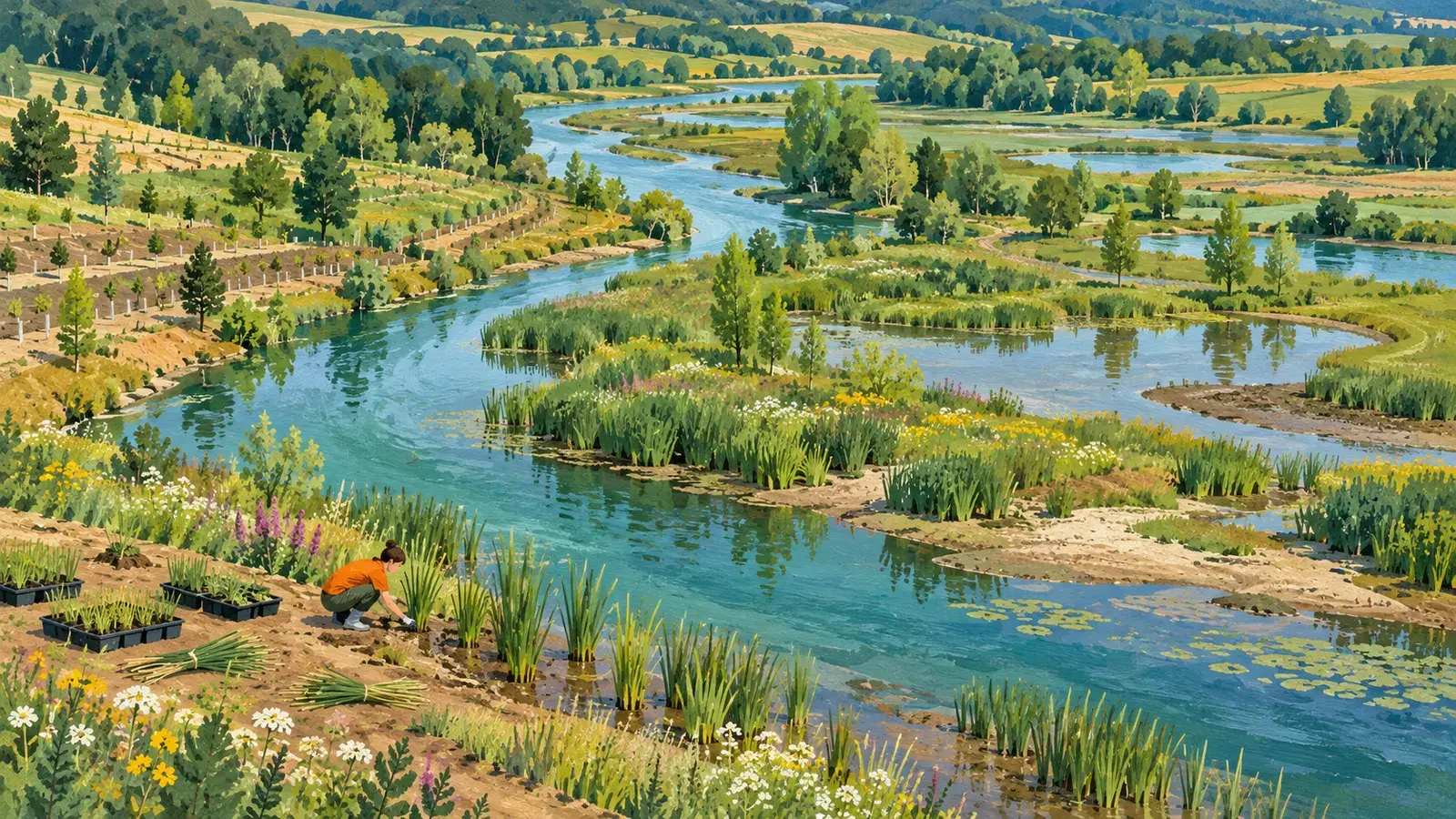
Her family history is tied to the environment: her parents met at the first Earth Summit in 1992. Her father worked on Indigenous rights at the UN level and her mother as an ethnoecologist. Growing up in Mexico, she constantly heard warnings about the worsening climate, but few people talked about it in everyday life. When her local river flooded when she was 13, she says, her world was shaken: it was not simply water, but contaminated water from the Lerma River, one of Mexico's most polluted because of hundreds of factories and illegal drilling.
Bastida describes her community as a sacrifice zone: pollutants caused skin conditions and other health problems, while the river that was once a source of life has now been declared dead. Her dream is to see the river clean and residents no longer afraid of the rain. This experience, she says, made her understand that activism is not about saving the world out of ego, but a responsibility of care and stewardship.
Raised in the Indigenous Otomi community, Bastida explains that her worldview emphasizes communicating with the Earth, sacred places such as the temazcal and rituals connecting the womb of the Earth with the heart of the sky. Rather than seeing water as a resource, she treats it as a sacred element. This attitude removes ego from activism: it is not about “helping the world,” but about the duty to live closer to the rhythm of the Earth, which works in cycles and with wisdom.
From mass marches, Bastida moved to more strategic campaigns. At COP28 in Dubai, her team printed “not paid by the fossil fuel industry” on their credentials to highlight conflicts of interest and worked together to get fossil fuels mentioned in the final decision for the first time. By contrast, at COP29 in Brazil, she says, fossil fuels were left out of the text, which she considers a step backward. But she sees hope in the first planetary science pavilion and in the conference on transitioning away from fossil fuels in Colombia in April, involving more than 50 countries.
Bastida also comments on climate polarization: the US has a polarization rate of nearly 50%, while the next highly polarized countries—Norway, Canada and Australia—are at about 30%. In Mexico, she says, the rate is around 5%, and in most countries it is in single digits. She links polarization to fossil fuel interests: the four most polarized countries in the Global North are also those that have increased their emissions the most since the Paris Agreement.
The conversation also touches on the economic narrative. Bastida argues that the obsession with growth and GDP ignores communities' real wealth, such as ecological knowledge, social capital and their relationship with the land. Indigenous communities may be considered poor by World Bank criteria, but they possess ecological wealth and knowledge that cannot be measured in dollars. The point, she says, is to ask “what is good” rather than constantly asking “what is better, more, faster.”
A large part of her work today involves distributing resources. She points out that young people receive just 0.76% of climate philanthropy, even though the most effective shifts in the narrative came from the youth movement. The Re-Earth Initiative awards grants of $5,000 to $20,000 to community-based, intersectional projects, prioritizing those who have never received funding. Examples she mentions include an agroecology school in Haiti, coral restoration in Tanzania and climate education laws in Argentina.
Bastida also talks about the documentary “The Way of the Whale,” expected in spring 2026. She recounts how Mexico's former environment minister Julia Carabias described Mitsubishi's attempt to open a saltworks in Laguna Ignacio, and how residents, the government and NGOs worked together to protect the ecosystem. From whales, she says, she learned a wisdom that is hard to describe: while she was in a boat, a mother whale brought her calf to play with her for half an hour, and she understood how important care and connection are.
At the heart of her philosophy is hope as a fire. She explains that hope is not simply optimism, but a sacred flame that needs nourishment. If you feed it with anger, it becomes uncontrollable; if you feed it with love, it regenerates. She also suggests that we should not obsess over leaving our mark, but walk gently, with kindness, so we reach our destination without sinking into the sand. Relationships between generations are another tool for hope: young people bring energy and older people bring wisdom.
Responding to older people who say young people give them hope, Bastida asks them to avoid remaining passive recipients and instead reflect the flame back. She remembers a female CEO who said her responsibility was to give hope back to the youth movement, and how relieved she felt. Bastida suggests asking not what you can do better, but how you can change your mindset: connect with nature, find your community of organizers and talk about the climate crisis as a communication crisis.
Looking to the future, Bastida is particularly concerned about AI and data centers, which consume enormous amounts of energy and may weaken human relationships and connection to the Earth. Her hope is that humanity will recognize life and continue fighting for it. She closes by saying that, despite everything we know, she still thinks beautiful things about us, Mother Earth and our possibilities, and invites listeners to believe they can be part of this change.

Comments