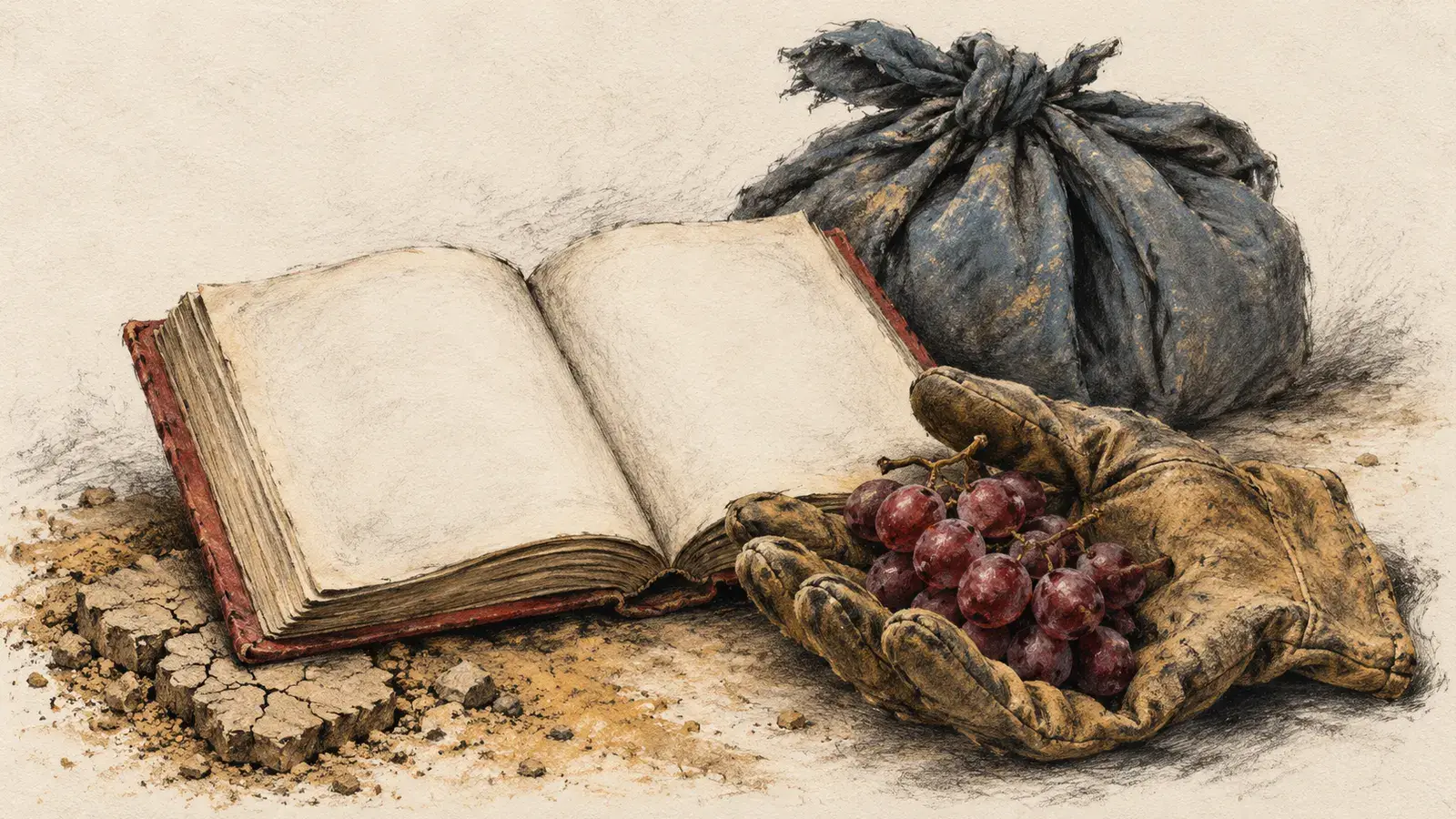
John Steinbeck's novel “The Grapes of Wrath” was published in 1939 and won the Pulitzer Prize in 1940. It was the bestselling book of 1939, with 430,000 copies printed by February 1940, and in 1962 the Nobel committee explicitly cited it as one of the major works for which the author was awarded the Nobel Prize in Literature.
The novel captures the effects of two disasters on American life during the 1930s: the Great Depression that followed the crash of 1929, and the drought that struck large parts of Oklahoma, known as the Dust Bowl. The Joad family, poor tenant farmers, lose their farm because of drought, financial difficulties and bank foreclosures, and are forced to leave for California in search of work, land and dignity.
The story begins when Tom Joad is released from prison and, on his way home, meets former preacher Jim Casy. Together, they find the family loading whatever they have left onto a truck, as dust storms have destroyed the crops and the farm has been foreclosed on. Tom decides to leave with the family, violating his parole, hoping that the leaflets promising well-paid work in California are telling the truth.

Traveling west along Route 66, the Joads discover that the road is full of thousands of other migrants, the “Okies”, leaving for the same reason. In makeshift camps, they hear worrying stories from families returning from California. The family dwindles along the way: the grandfather dies of a stroke, the grandmother dies near the California border, and the eldest son, Noah, and Connie, the husband of the pregnant Rose, abandon the family.
Arriving in California, the Joads find an oversaturated labor market, where large growers exploit the huge number of migrants to drive down wages. Workers live in extreme poverty, often with less than they need to eat. Jim Casy becomes a labor organizer and tries to persuade them to join unions, but a guard kills him during a strike. Tom kills his friend's murderer and is forced to go into hiding.
The novel's ending is among the most discussed in American literature. After a flood destroys the family's shelter, the Joads take refuge in a barn, where a man is dying of hunger. Rose, who has just given birth to a stillborn baby, possibly because of malnutrition, feeds him her breast milk to save him.
The title was suggested by the author's wife, Carol Steinbeck, and refers to Julia Ward Howe's “Battle Hymn of the Republic”, which in turn refers to the Book of Revelation. The phrase also appears at the end of chapter 25 of the novel: “in the eyes of the hungry there is a growing wrath”. The image of the winepress of the grapes of wrath symbolizes both the oppression during the Dust Bowl and the workers' possible liberation through cooperation.
The novel grew out of Steinbeck's reporting assignments: he followed poor migrants from Oklahoma on their journey west and wrote a series of seven articles titled “The Harvest Gypsies” for the San Francisco News in 1936. His stated aim was, as he wrote, “to put a label of shame on the greedy bastards responsible for this”. However, later studies revealed strong similarities to Sanora Babb's then-unpublished novel “Whose Names Are Unknown”. Her field notes appear to have reached Steinbeck through her supervisor, Tom Collins, without Steinbeck mentioning her.
The book's reception was explosive. On one side, California's Associated Farmers denounced it as “communist propaganda” and a “pack of lies”, while it was banned and copies were burned in public. The first attempts at censorship directly inspired the American Library Association's publication of the Library Bill of Rights. On the other, the book gained a huge working-class readership and sold 300,000 copies in the Soviet Union in 1941.
The 1940 film adaptation, directed by John Ford and starring Henry Fonda, closely followed the first part of the book but significantly changed the second half, especially the ending. The novel also inspired songs by Woody Guthrie, Bruce Springsteen and Rage Against the Machine, an opera that premiered in 2007, and stage adaptations. In 1999, the French newspaper Le Monde ranked it seventh on its list of 100 books of the 20th century.


Comments