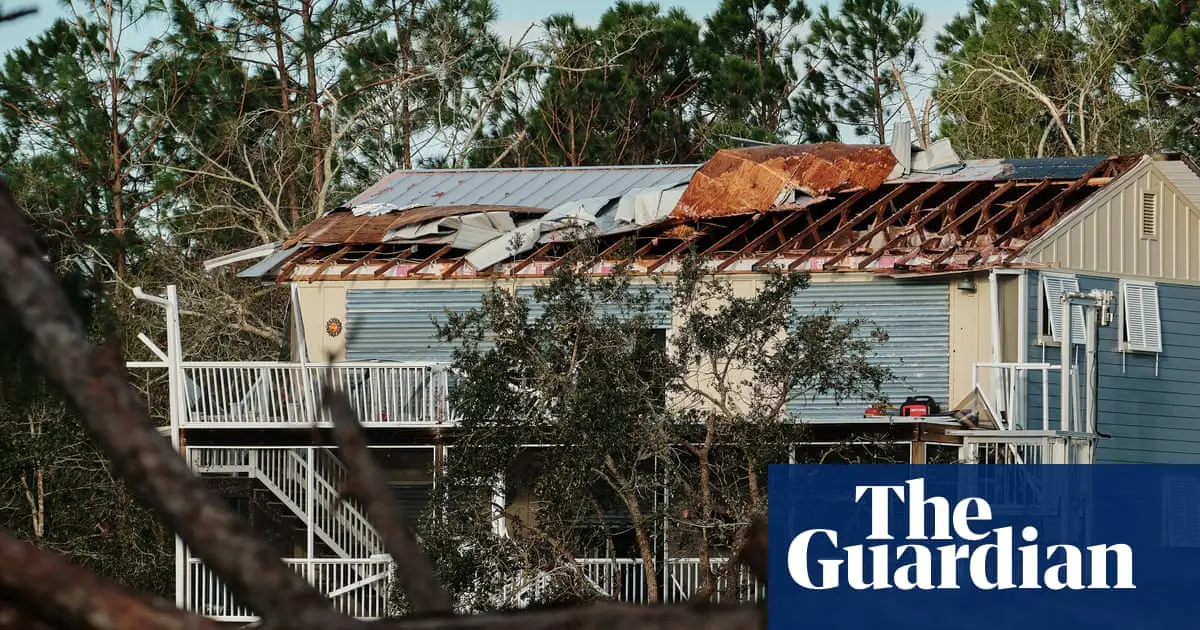
At least four people were reported dead on Saturday as Isaias moved through, after the cyclone struck the Florida coast as a Category 2 hurricane on Friday night. Two deaths were recorded in Florida's Escambia County and another two in Alabama as the storm moved inland, according to local authorities. The storm brought down trees, cut power to hundreds of thousands of people and flooded highways, but by Saturday afternoon the region was beginning to reopen.
One of the two deaths in Escambia County and one in Birmingham, Alabama, were caused by trees falling onto homes, local officials said. Another victim in Escambia County was found in an enclosed garage with a generator running, while four members of his family were taken to hospital with carbon monoxide poisoning, according to the sheriff's office. “Do not run generators inside your home; it can be very dangerous,” warned Florida Governor Ron DeSantis.
More than 679,000 customers were without power in Florida, Alabama and Georgia on Saturday afternoon, according to PowerOutage.us, although the number had fallen from more than 900,000 earlier. Storm surge and tropical storm warnings had already been lifted, but the National Hurricane Center (NHC) warned that “significant impacts” were still expected across most of southern Alabama, northwestern Florida and southwestern Georgia.
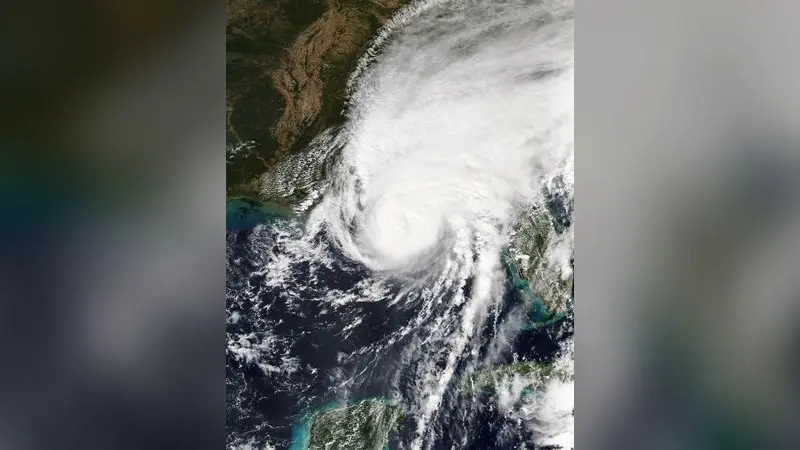
Although Isaias had weakened to a post-tropical cyclone, it still posed threats of flooding and tornadoes inland, meteorologists and officials warned. In a Saturday morning update, the NHC said flash, urban and river flooding was possible, along with a significant risk of landslides in the southern Appalachians. Through Sunday, rainfall of 10 to 20 centimeters was expected in southern Alabama, northwestern Florida, the Big Bend and southwestern Georgia, with up to 38 centimeters in some places. Elsewhere in the southeastern US, 5 to 13 centimeters was expected, with local totals of up to 25 centimeters, especially in the southern Appalachians and the coastal Carolinas.
Isaias made landfall near Destin, Florida, on Friday as a Category 2 hurricane, with maximum winds of 169 kilometers per hour. It was the season's first Atlantic hurricane and formed unusually late, making it one of the two latest first hurricanes on record and matching the record set on October 8, 1905. The last hurricane to strike the mainland US was Hurricane Milton in October 2024.
Tim Morey of Pensacola described the sound of the winds as a “train whistle.” He lost power on Friday afternoon and relied on a generator, while his son tried to visit him but was forced to turn back because fallen trees and power lines had blocked the road. Despite everything, he said he was “really lucky.” Ashley Weeks of Crestview, Florida, said a tree from her backyard fell onto her house, damaging the roof near her daughter's room, and described the sound as being like “a bomb had gone off.”
The 2026 season had so far been unusually quiet: none of the eight previous named storms had strengthened beyond tropical storm status. The National Oceanic and Atmospheric Administration (Noaa) had forecast three to six hurricanes, below the average of seven, and in August reduced its forecast to two to six. The strong El Niño appears to have helped limit the number of Atlantic hurricanes.
Despite the weakening, authorities stressed that the dangers had not passed. Florida's transportation secretary, Jared Perdue, pointed out that rising rivers can cause flooding and urged people not to drive through standing or moving water, as it can sweep away cars and people. The situation showed that even a relatively quiet hurricane season can bring severe local destruction.


Comments