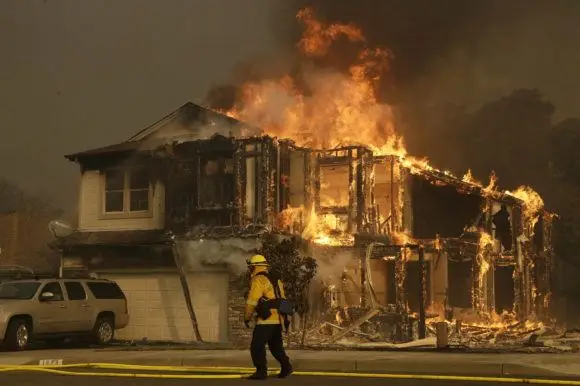
On January 7, 2025, a dry wind swept down from the mountain canyons north of Los Angeles. The forests and shrubs were already parched because of the delayed start of the winter rainy season, and the arrival of hurricane-force Santa Ana winds sparked enormous fires in the city. By the time the flames were extinguished, more than 18,000 homes and buildings had burned or been destroyed, and at least 31 people had lost their lives — one of the worst disasters in California's history.
Insurance is a way to support people who suffer catastrophic losses, but insurance companies are now more cautious than ever about covering damage from fires and other weather-related hazards. In 2024, insurers worldwide paid out more than $140 billion in claims for natural disasters — the fifth consecutive year with losses exceeding $100 billion.
Traditionally, insurers used past claims to predict future losses from the same hazards. As long as there were no major unforeseen disasters, the premiums paid by the many were enough to cover the claims of the few.
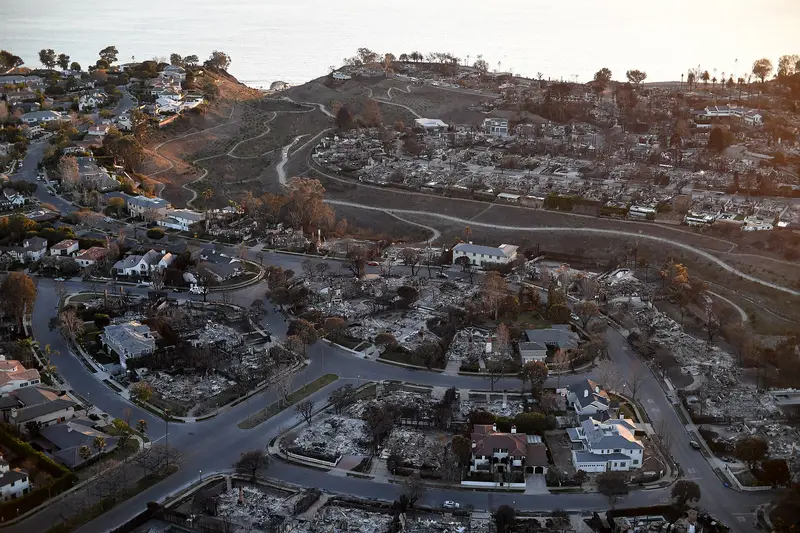
The devastation caused by Hurricane Andrew in 1992 showed how fragile this approach was: insured losses were three times higher than estimates and drove several companies into bankruptcy. This miscalculation accelerated the adoption of catastrophe models, which combine the physics of hazards with construction and insurance data.
As the effects of global warming become more apparent, the industry has hired climate and Earth scientists to reduce the risk of future surprises. With these tools, insurers now have a more realistic picture of their exposure to weather- and climate-related risks.
Within the limits set by regulators, they can decide how much risk they can bear, raise premiums so that the most exposed homes pay more, and buy reinsurance for losses greater than they could normally cover. This progress has mixed implications, however: bankrupt insurers do not pay claims, so companies and policyholders have a shared interest in accurate risk assessments.
At the same time, insurers use the same models to justify higher premiums, which are quickly becoming unaffordable for many people. Many are forced to pay more for the same coverage, accept less coverage or let their insurance lapse.
Continuously raising premiums to cover growing losses from hurricanes, fires and other hazards may make financial sense, but it also signals a crisis. In the United States, the real cost of home insurance is more than twice what it was a generation ago.
For consumers, paying more does not mean they are better prepared for a disaster. Despite higher premiums, many insurers are still losing money on home insurance because they are paying record claims. When they withdraw from high-risk properties or areas, the market shrinks and risk becomes more geographically concentrated.
For the sake of both homeowners and insurers, this upward spiral must stop. Insurance traditionally transfers risk rather than reducing it, so new approaches are needed to lower risks and costs.
In April, Willis and The Nature Conservancy announced a first-of-its-kind wildfire insurance policy that drew on previous fire management efforts to secure lower premiums and deductibles. Industry-funded programs that pay homeowners to strengthen their homes, such as Strengthen Alabama Homes, have been shown to reduce premiums in high-risk areas. In Minnesota and elsewhere, some insurers offer discounts for impact-resistant roofs, while other states are considering legislation that would require insurers to tell customers how they can reduce risks and offer discounts for mitigation measures.
All these efforts, however, address the symptom, not the disease. Apart from earthquakes, all the major hazards that lead to substantial claims — tropical storms, wildfires, windstorms, tornadoes, hailstorms and river or coastal floods — are expected to worsen because of climate change. Even for hazards where the recent increase in insured losses is mainly due to greater exposure and inflation, such as severe convective storms, climate change gives the overall risk an unwelcome boost. The turmoil in insurance markets shows that adaptation without emissions reductions is not enough to offset the damage from climate change.
The way forward is not to move away from risk, but to invest in resilience. Ultimately, we need to reduce greenhouse gas emissions to zero, prevent further warming and avoid the expected upward trend in disaster risk. If we fail, home insurance could become unaffordable for many people in the United States.
The article is written by Scott St. George, a climate and Earth scientist and head of weather and climate research at the Willis Research Network.
Comments