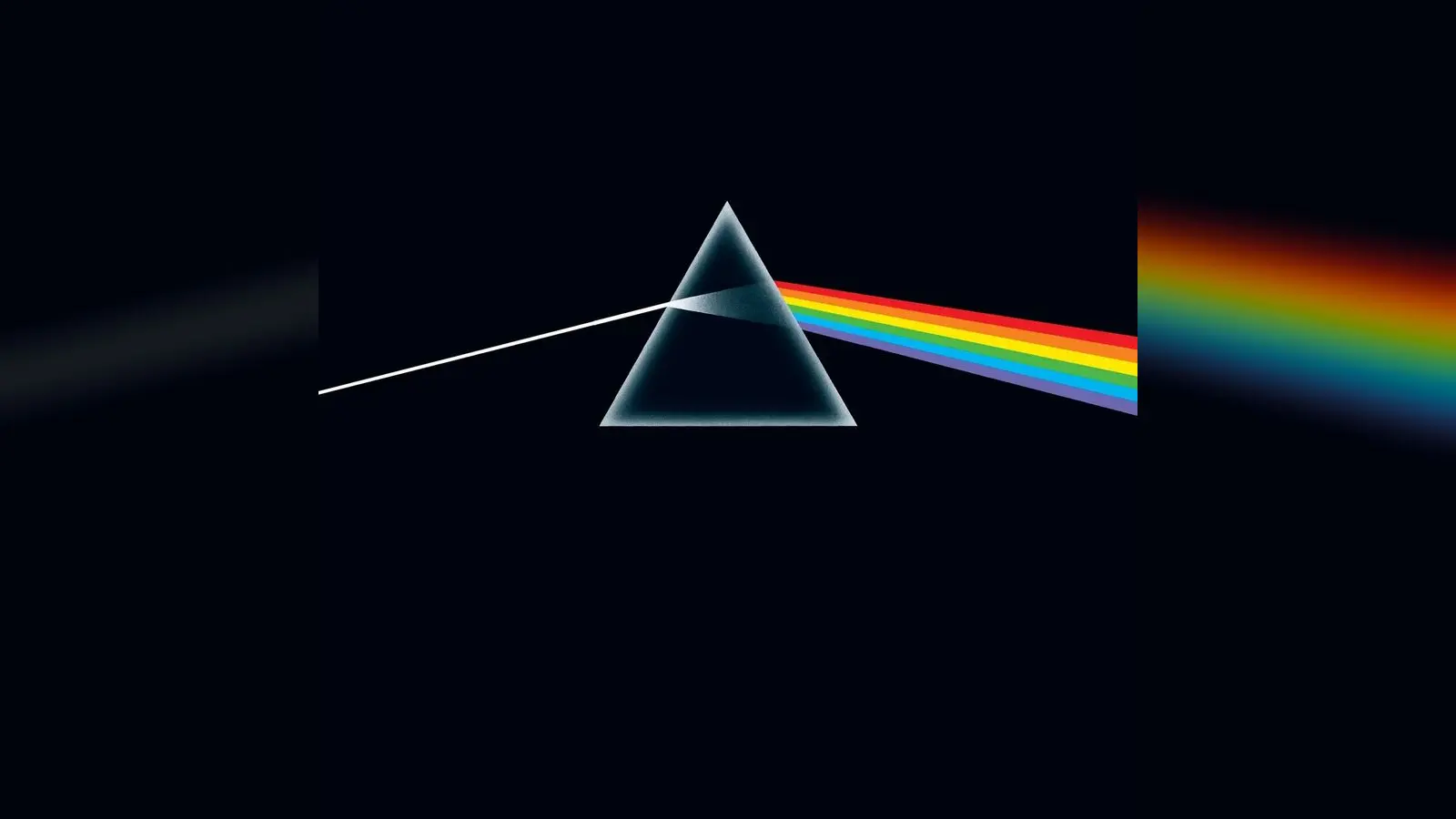
“The Dark Side of the Moon” is Pink Floyd’s eighth studio album, released on March 1, 1973, in the United States by Capitol Records and on March 16 in the United Kingdom by Harvest Records. It was conceived as a concept album focused on the pressures the band members faced from their exhausting lifestyle, as well as the mental health problems of their former member, Syd Barrett.
The idea came from bassist Roger Waters, who proposed a record about the things that “drive people mad.” As guitarist David Gilmour explained, there was a sense that the lyrics on previous records had been “rather indirect” — now the words would be “very clear and specific.” The album explores themes such as conflict, greed, time, death and mental illness, with excerpts from interviews with touring staff and others appearing alongside philosophical sayings.
Recording took place at EMI Studios, now Abbey Road Studios, in London, over approximately 60 days between May 1972 and February 1973. Sound engineer Alan Parsons was responsible for many aspects of the recording, using multitrack recording, tape loops and analog synthesizers such as the EMS VCS 3 and Synthi A. The band experimented with unconventional sounds: a drum processed to simulate a human heartbeat, clocks chiming simultaneously at the start of “Time,” and sound effects from cash registers and coins on “Money.”
One of the record’s most memorable moments is Clare Torry’s vocal performance on “The Great Gig in the Sky.” The singer, brought in by Parsons, improvised a wordless melody over Richard Wright’s piano, expressing emotions rather than words. She was paid just £30 for her contribution and left the studio without knowing whether her vocals would be used. In 2004, she sued EMI and Pink Floyd over co-authorship, and the case was settled out of court — subsequent album covers have since credited Wright and Torry jointly.
In the final week of recording, Waters asked studio staff to answer questions written on cards — such as “When were you last violent?” and “Were you in the right?” Their answers were incorporated into the mix. The studio’s Irish doorman, Gerry O’Driscoll, contributed the record’s closing line: “There is no dark side of the moon, really. As a matter of fact, it’s all dark.”
The cover, depicting a glass prism splitting white light into the colors of the spectrum, was designed by Storm Thorgerson of Hipgnosis. It answered Wright’s request for a “simple and bold” design that would represent the band’s stage lighting and the album’s themes. All four band members immediately agreed that the prism was the best choice: “There were no disagreements,” Waters recalled. “We all pointed to the prism and said, ‘That’s it.’”
The album became one of the best-selling records in music history. By 2013, it had sold more than 45 million copies worldwide, making it the fourth best-selling album of all time. It spent a total of 996 weeks on the Billboard 200 across several separate runs. In 2007, it was estimated that one in fourteen people under 50 in the US owned a copy.
Critical reception was glowing. Loyd Grossman in Rolling Stone described it as “an excellent album with a richness of texture and conceptual depth that not only invites but demands involvement,” while Robert Christgau called it a “kitsch masterpiece.” In 2012, it was selected for preservation in the Library of Congress’s National Recording Registry as “culturally, historically or aesthetically significant,” and it was inducted into the Grammy Hall of Fame in 1999.
The enduring appeal of “The Dark Side of the Moon” owes something to its themes: the pressure of modern life, greed, fear of death and mental health remain just as relevant today. The album demonstrated that rock music can serve as a vehicle for introspection and social criticism, as well as entertainment.
As one of the blockbuster albums of its era, “The Dark Side of the Moon” helped drive higher sales across the music industry during the 1970s.




Comments