“OK Computer” is the third studio album by English rock band Radiohead and was released on 21 May 1997. With Nigel Godrich producing, most of it was recorded at the band’s rehearsal space in Oxfordshire and the historic mansion St Catherine’s Court in Bath during 1996 and early 1997. The band moved away from the guitar-driven, introspective sound of their previous record, “The Bends”, while the abstract lyrics, dense production and eclectic influences laid the foundations for Radiohead’s later experimental direction.
After the success of “The Bends”, the members felt they did not want to repeat another miserable, introspective record, as singer Thom Yorke put it. “Lucky”, recorded with Godrich in five hours in 1995 for a War Child charity compilation, offered the first indication of the sound they were seeking. The band decided to produce the album themselves, away from the city, bought their own equipment, and Godrich eventually went from technical adviser to the album’s co-producer.
The first demo recordings were made in early 1996 at Chipping Norton Recording Studios in Oxfordshire. Recording began in July at the Canned Applause studio near Didcot, but the band found the space unsatisfactory. After touring America as the opening act for Alanis Morissette, during which they also wrote “Exit Music (For a Film)” for Baz Luhrmann’s “Romeo + Juliet”, they moved to St Catherine’s Court. There, they used the natural reverberation of different rooms: the vocals for “Exit Music” were recorded on a stone staircase and “Let Down” in a ballroom at 3 am. Guitarist Ed O’Brien estimated that around 80% of the record was recorded live, with very few overdubs, while the strings were recorded at Abbey Road Studios in January 1997.
According to Yorke, the starting point for the sound was the “incredibly dense and terrifying sound” of Miles Davis’s album “Bitches Brew”. Among the influences he cited were Elvis Costello, R.E.M., PJ Harvey, the Beatles, Ennio Morricone and the band Can. Guitarist Jonny Greenwood described “OK Computer” as the result of trying to recreate records they loved and “missing the mark” creatively. Although the band rejected the influence of 1970s progressive rock, critics pointed out that the album, particularly the six-and-a-half-minute “Paranoid Android”, effectively reinvented the genre.
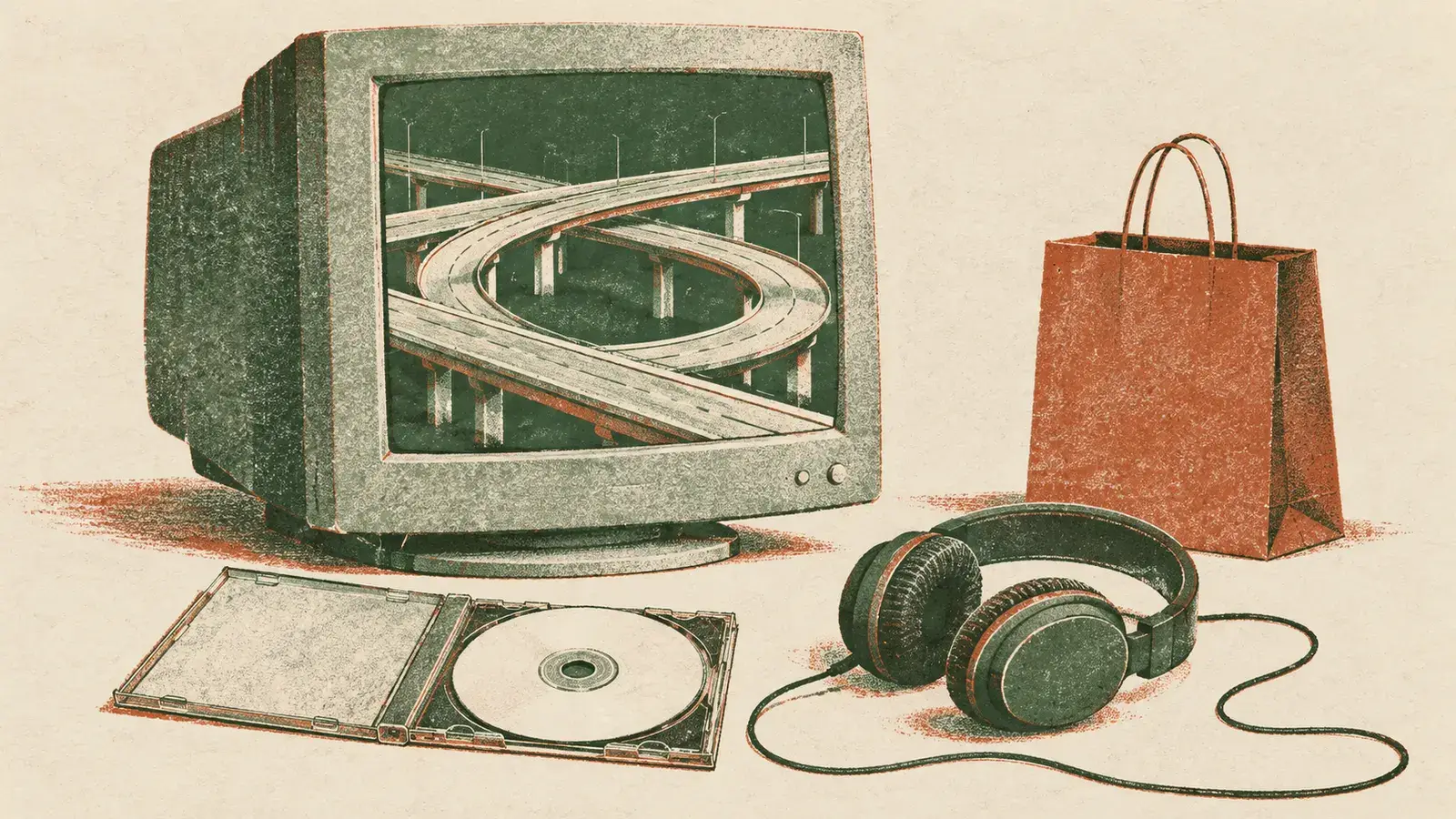
Yorke’s lyrics became more abstract than those on “The Bends” and describe a dystopian world marked by rampant consumerism, social alienation, technological anxiety and political corruption. Themes such as transport, conformity, paranoia, death, modern British life and globalisation run through the songs. Yorke said that on this record “the outside world became everything” and that, like a neutral camera, he observes a different character in each song. His influences included political writings by Noam Chomsky, Eric Hobsbawm’s “The Age of Extremes” and fiction by Philip K. Dick.
Individual tracks reflect this thematic unity. “Airbag” combines electronically processed drums with lyrics about the illusion of safety in modern transport, while “Fitter Happier” is recited by a synthesised Macintosh computer voice. Yorke described it as the most unsettling text he had written, a list of 1990s slogans. “Electioneering” is the most directly political song, inspired by the poll tax riots and Chomsky’s book “Manufacturing Consent”. In “No Surprises”, the gentle melody contrasts with lyrics about an unfulfilled life and despair, while the final track, “The Tourist”, closes the record with the plea “idiot, slow down”.
EMI had low expectations and considered the album a difficult commercial prospect, but “OK Computer” reached number one on the UK charts and entered the US Billboard 200 at number 21, Radiohead’s highest US chart position at the time. It went five times platinum in Britain and twice platinum in the US, and sold at least 7.8 million copies worldwide. “Paranoid Android”, “Karma Police”, “Lucky” and “No Surprises” were released as singles.
The critical reception was overwhelmingly enthusiastic. At the 1998 Grammy Awards, it won Best Alternative Music Album and was nominated for Album of the Year. The album is credited with shifting British rock away from Britpop towards a more melancholic, atmospheric alternative sound. In 2014, the US Library of Congress added it to the National Recording Registry as “culturally, historically or aesthetically significant”, while in 2017 an anniversary edition with additional material was released under the title “OKNOTOK 1997 2017”.




Comments