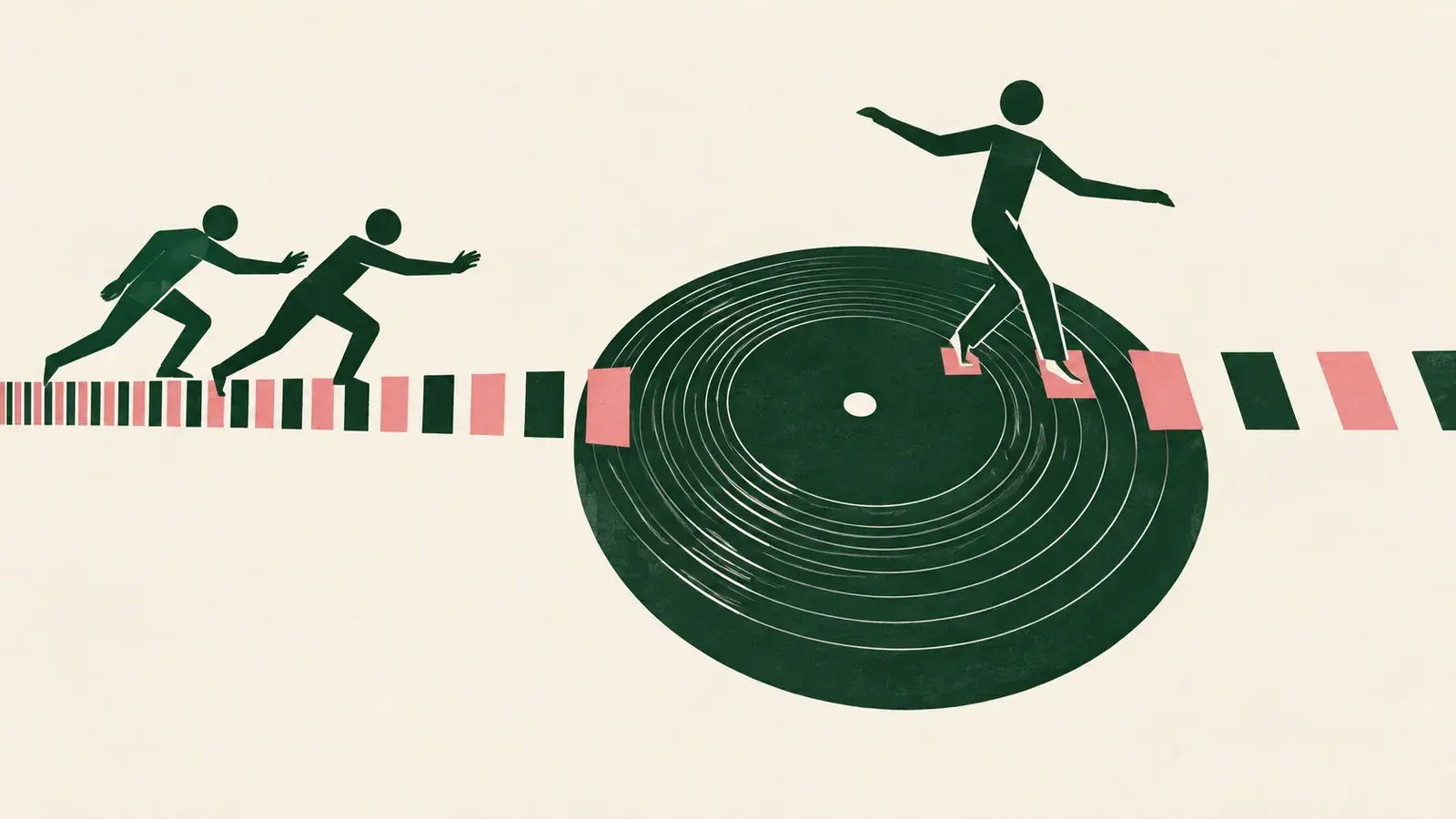
The Marginalian revisits the work of the British philosopher Alan Watts, described here as a pioneer of Zen teachings in the West and an enduring sage. The piece argues that his lasting value lies in his ability to call out modern culture's chronic habit of confusing things of substance with their simulacra—belief with faith, money with wealth, productivity with presence, ego with the true self, stimulation with wisdom, profit with purpose.
One of the most striking passages appears in his 1970 anthology Does It Matter? Essays on Man's Relation to Materiality. In it, Watts turns to another duality with deep personal and social consequences: the relationship between hurrying and timing. He asks what the 'good' is to which people aspire through doing and eating things said to be good for them. The question echoes Seneca's ideas about busyness and Bertrand Russell's famous lament about the conquest of leisure and health if no one remembers how to use them.
For Watts, the question is strictly taboo because a serious investigation would threaten the entire economic and social order. It would be like a donkey discovering that the carrot dangled before him is hitched by a stick to his own collar. The good we chase, he contends, exists only and always in the future.
Because modern people cannot relate to the sensuous and material present, he writes, they are happiest when good things are expected rather than when they are happening. They receive such a kick from looking forward to pleasures and rushing ahead to meet them that they cannot slow down enough to enjoy pleasures when they arrive. The result, he says, is a civilization suffering from chronic disappointment, a formidable swarm of spoiled children smashing their toys.
Watts finds a counterforce in what he calls timing. There is indeed such a thing as timing, he writes, and it is the art of mastering rhythm. But timing and hurrying are mutually exclusive. This distinction matters because much of our perilous hurry comes from an unexamined dependence on the clock.
He describes clock time as merely a method of measurement held in common by civilized societies, with the same kind of reality—or unreality—as imaginary lines of latitude and longitude. By that standard, the present moment is nothing but a hairline which ideally should have no width at all. A person bewitched by the clock therefore has no present; 'now' becomes no more than the geometrical point at which the future becomes the past.
Against this abstraction Watts sets direct, material perception. If you sense and feel the world materially, he argues, you discover that there never is, or was, or will be anything except the present. That felt present is, for him, the grounding of real experience and of art.
For the perfect accomplishment of any art, he writes, this feeling of the eternal present must get into your bones, because it is the secret of proper timing. The instruction he draws from it is simple and demanding: no rush, no dawdle—just the sense of flowing with the course of events in the same way that you dance to music, neither trying to outpace it nor lagging behind. Hurrying and delaying are alike ways of trying to resist the present.
The Marginalian calls Does It Matter? a superb read in its entirety and places it alongside other reflections on presence, mindful living and the art of waiting, including Annie Dillard's reminder that how we spend our days is how we spend our lives.



Comments