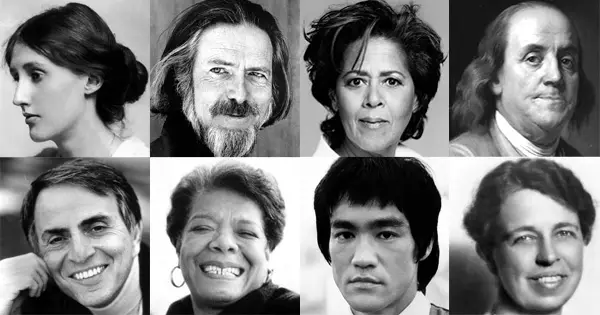
At the start of a new year, most resolutions focus on bodily health, but a 2015 essay from The Marginalian argues that the more meaningful commitments target mental, spiritual and emotional habits, which often shape physical ones. The author revisits ideas from thinkers spanning two millennia and gathers fifteen higher-order resolutions for personal refinement. The result is less a list of tasks than a set of practices for returning to attention, meaning and aliveness. The selections range from walking and journaling to discipline, mindset, scepticism and the willingness to get lost in uncertainty.
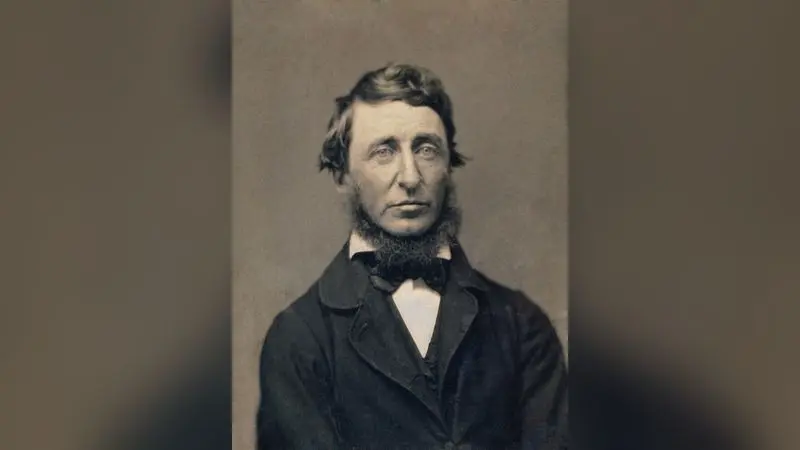
Henry David Thoreau makes the case for walking as more than exercise. In his 1861 treatise Walking, he distinguishes true sauntering from merely taking a walk, tracing the word to medieval seekers who wandered toward the Holy Land, or alternatively to being without a fixed home and at home everywhere. The real art, he says, is to arrive in spirit as well as in body: he is alarmed when he has walked a mile into the woods without getting there in spirit. He calls every walk a sort of crusade and warns against the creeping tameness of sedentary civilisation, which turns expeditions into mere tours.
Virginia Woolf offers the diary as a tool of self-exploration and craft. She began serious journaling in 1915 at 33 and continued until 1941, leaving twenty-six handwritten volumes. Her husband later observed that the diary was a method of practising writing. Woolf wanted a diary loose-knit but not slovenly, able to absorb solemn, slight or beautiful material; she advised against playing censor and against waiting for the right mood. She also saw the entries as material for her future self, calling stray details the diamonds of the dustheap and imagining a fifty-year-old Virginia using them to build a memoir.
Seneca’s On the Shortness of Life insists that life is not short but wasted. We squander time as if we were immortal, he argues, and we fear everything as mortals while desiring everything as immortals. The biggest waste is postponement: expectancy hangs upon tomorrow and loses today. His cure is direct but difficult: stop arranging what belongs to fortune, abandon what is not within our control, and live immediately. The text says that life is long if you know how to use it, and that the problem is not being ill-supplied with time but being wasteful of it.
Discipline appears as a recurring theme. Tchaikovsky, Chuck Close, Anthony Trollope and E.B. White all suggest that professionals work rather than wait for ideal conditions. Anna Deavere Smith argues in Letters to a Young Artist that discipline, mental and physical, is crucial. She recounts how Mario van Peebles said he must go directly to the gym without having coffee first, because any delay risks not going. For creative people, Smith adds, there is no external licence that makes one an artist; they must become their own judge and create their own standards. What we become, she writes, ultimately consists of what we have been doing.
Alan Watts brings an Eastern perspective. In The Book: On the Taboo Against Knowing Who You Are, he argues that the prevalent sensation of being a separate ego inside a bag of skin is a hallucination. He describes the growing apprehension that existence is a rat-race in a trap, with people as tubes that put things in at one end and let them out at the other. Against this, he offers a different picture: we do not come into the world, but out of it, like leaves from a tree, and the universe peoples as the ocean waves. Each individual, he says, is a unique action of the total universe.
Stanford psychologist Carol Dweck’s research on mindset describes two ways of relating to ability. A fixed mindset treats character, intelligence and creative ability as static and makes success a way of proving oneself. A growth mindset treats qualities as cultivable through effort and experience. Dweck does not claim anyone can become Einstein or Beethoven, but says true potential is unknown and unknowable. The growth mindset creates a passion for learning rather than a hunger for approval, and people with it see failure not as evidence of deficiency but as a springboard for growth.
Several other tools appear. David McRaney examines the Benjamin Franklin effect, in which doing a favour for a rival can reverse attitudes and turn a hater into a friend. Hannah Arendt stresses the need to keep asking unanswerable questions of meaning, arguing that without the appetite for meaning we would lose both art and the capacity to ask the answerable questions on which civilisation rests. Anne Lamott’s bird-by-bird story warns that perfectionism is the voice of the oppressor and that messes are the artist’s true friend.
Carl Sagan offers a baloney detection kit: seek independent confirmation, encourage substantive debate, be wary of authority, test multiple hypotheses, avoid attachment to your own idea, quantify where possible, ensure every link in an argument works, apply Occam’s razor, and ask whether a claim can be falsified. Rebecca Solnit closes the collection by celebrating getting lost as a conscious choice, a way to remain present with uncertainty and encounter what we do not yet know. Bruce Lee’s famous water metaphor appears as well: water can be struck but not wounded, and cannot be grasped; it is soft but not weak.


Comments