
This is an age of self-righteousness, and one of its great tragedies is the zeal with which people prefer to feel right rather than understand: to understand the situation, the context, the motives and vulnerabilities behind actions, and the basic fact of the other. Beneath that posture, the article argues, lies an aversion to our own imperfections. We look toward the faults of others instead of stepping into our own shadow and embracing it with light, and in doing so we give up our wholeness and stop being fully human.
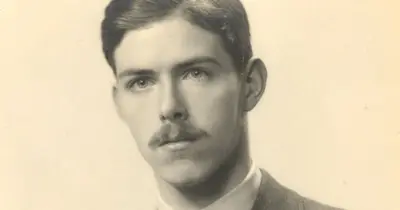
Alan Watts took up the question of how to rehumanize ourselves by owning that shadow in passages from Tao: The Watercourse Way, his final book. Watts died on November 16, 1973, before the book was finished; it was published posthumously with the help of his friend Al Chung-liang Huang. The Marginalian revisits that text as a counterweight to contemporary moral certainty.
At the head of all virtues Confucius placed not righteousness, which the text calls i, but human-heartedness, or jen. Watts clarifies that jen is not so much benevolence, as it is often translated, but being fully and honestly human. A true human is not a model of righteousness, a prig or a prude; rather, a true human recognizes that some failings are as necessary to genuine human nature as salt is to stew.
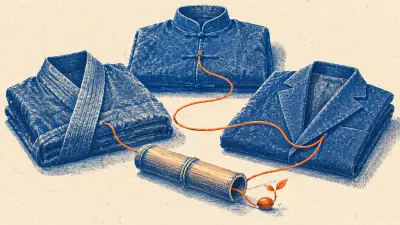
Watts is blunt about the alternative. Merely righteous people are impossible to live with, he says, because they have no humor, do not allow true human nature to be, and are dangerously unconscious of their own shadows. Like legalists and busybodies, they try to put the world on a Procrustean bed of linear regulations, which makes reasonable compromise impossible.
For Watts, trust in human nature means accepting the good and the bad of it. It is hard to trust those who do not admit their own weakness. That insight was not abstract: Tao: The Watercourse Way itself became a way of admitting and remedying a human weakness on the scale of society. In a footnote, Watts proposes that the word jen, which is ungendered in Chinese but had traditionally been translated as 'man-heartedness,' should be translated as 'human-heartedness,' and that all uses of 'man' as a universal pronoun be replaced with 'human.' The article notes that this came a decade before Ursula K. Le Guin so brilliantly unsexed the universal pronoun.
The piece also connects Watts's view to the advice Parker Palmer gave in a commencement address a generation later: to take everything bright and beautiful in oneself and introduce it to the shadow side, so that the shadow's power is put in the service of the good. In Watts's framing, that is not a psychological luxury; it is the difference between being a righteous performer and being a person others can live with and trust.
Read today, the essay argues, Watts's reading of jen offers a way to recover our 'human-heartedness': not by denying our failings, but by admitting them and still remaining in relationship with others. The value lies less in moral purity than in the difficult, ordinary work of becoming whole enough to see other people clearly.

Comments