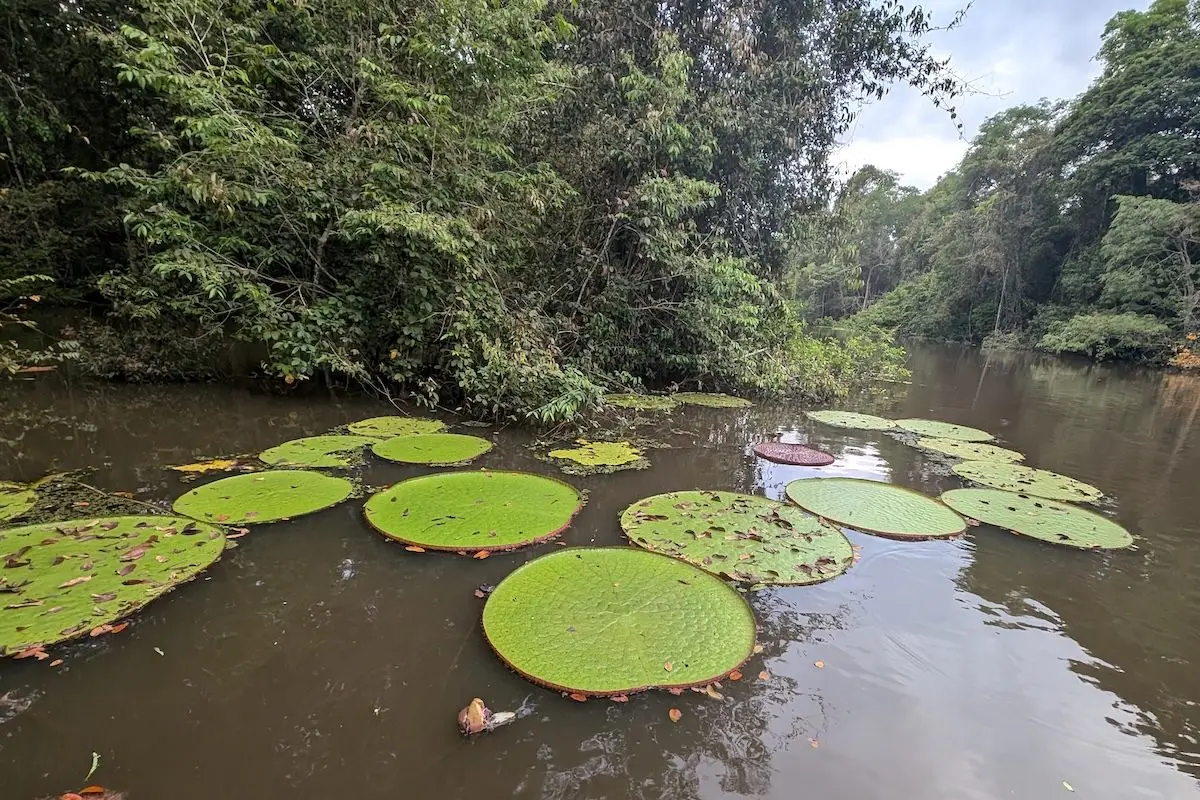
A new species of giant waterlily, Victoria colombiana, was documented in the Inírida River region of eastern Colombia following research that began with an Instagram photo. The discovery, details of which were published in the scientific journal Phytotaxa, concerns an extremely rare plant: according to the scientists, there are at most 50 individuals in the wild.
The photo had been taken by Jeremiah Harris, a well-known plant cultivation expert, during a visit to the area. In his post, he had identified the waterlily as Victoria amazonica, another species of giant waterlily.
But when Carlos Magdalena, a researcher specializing in waterlilies at the Royal Botanic Gardens, Kew, in London, saw the image, he noticed something that did not fit. Victoria amazonica was not known to grow in the Inírida region, where the plant had been photographed. Examining satellite images of the river, he located a cluster of giant waterlilies, and Harris confirmed that they were the ones he had seen on his trip.
Two years later, Magdalena organized an expedition to the area to find and examine the plants. The team found waterlilies, but they had no flowers, which were essential for identifying the species. The day before their departure, their boatman, an Indigenous Tukano man, said he knew where there were more waterlilies.
The team set off at one in the morning and followed the boatman deep into the rainforest. They reached a small lake with five waterlilies, one of which had a flower. The discovery gave the researchers the evidence they needed to identify the new species.
The journey from the post to the scientific record combined a photographic observation, satellite images, field research and an Indigenous man's knowledge of the area. However, the identification of Victoria colombiana comes with concern for its survival: scientists say that the very small number of individuals in the wild puts it at risk of extinction.

Comments