Playing underwater sounds from healthy reefs helped coral larvae settle on artificial structures and attracted more fish larvae, according to two studies led by the Scripps Institution of Oceanography at UC San Diego. The experiments took place in Kāneʻohe Bay, Hawai’i, near the island of Oʻahu, during reproductive seasons in 2023 and 2024. Researchers are examining acoustic enrichment as a tool that can work alongside other techniques for restoring degraded reefs.
According to the team, these are the first field trials to examine the effect of underwater sound on coral and fish larvae simultaneously, alongside living materials and 3D-printed surfaces. Scripps collaborated with the University of Hawai’i and other partners in the Rapid Resilient Reefs for Coastal Defense (R3D) program. The studies and the broader program were funded by the U.S. agency DARPA, with the aim of developing nature-based solutions to reduce wave energy, protect coastlines and strengthen coral resilience.
The coral study, published on October 8 in Communications Biology, focused on larval settlement: the stage at which larvae seek a surface to attach to and begin growing. Scientists recorded the soundscape of a healthy reef off Oʻahu for one lunar cycle. The recordings included sounds from fish, shrimp and other crustaceans and were played through an underwater speaker in a flat, sandy area near the small island of Moku o Loʻe, from sunset to sunrise for two weeks.
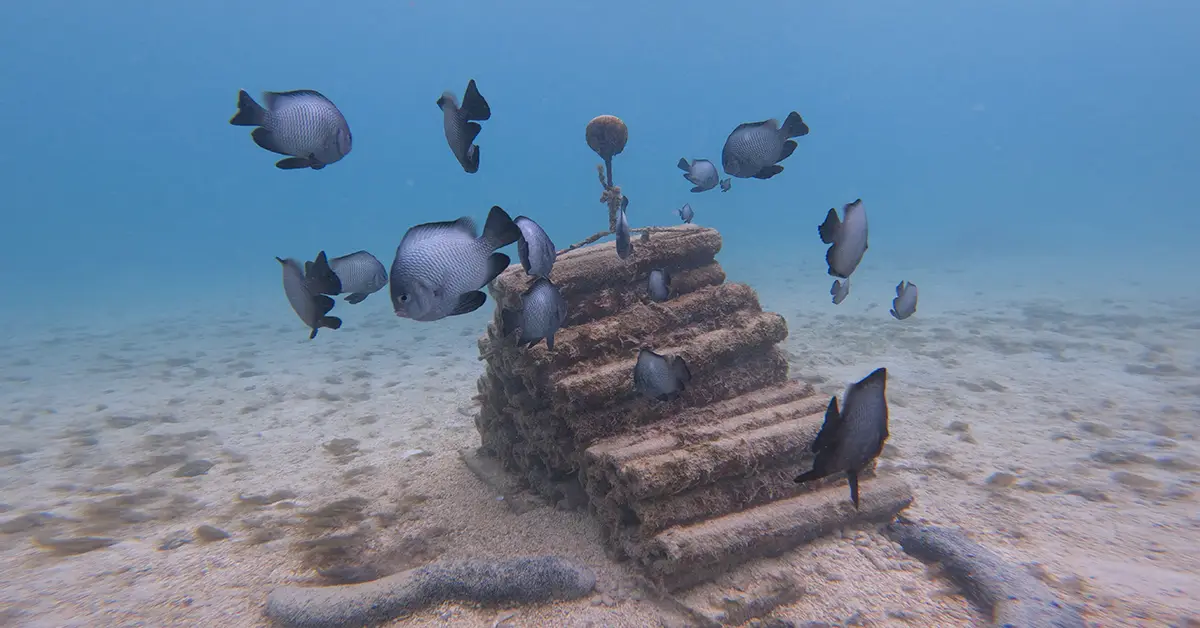
Around the speaker, 37 artificial structures were placed at a depth of 4.5 meters and at distances ranging from one to 42 meters. The structures differed in shape and surface properties to examine how sound interacts with other settlement factors. Some microhabitats had complex architecture with sheltered recesses, while others had a coating of BRINK, a bioactive “reef ink” containing living bacteria. The material was developed by Natalie Levy and colleagues in Daniel Wangpraseurt's laboratory.
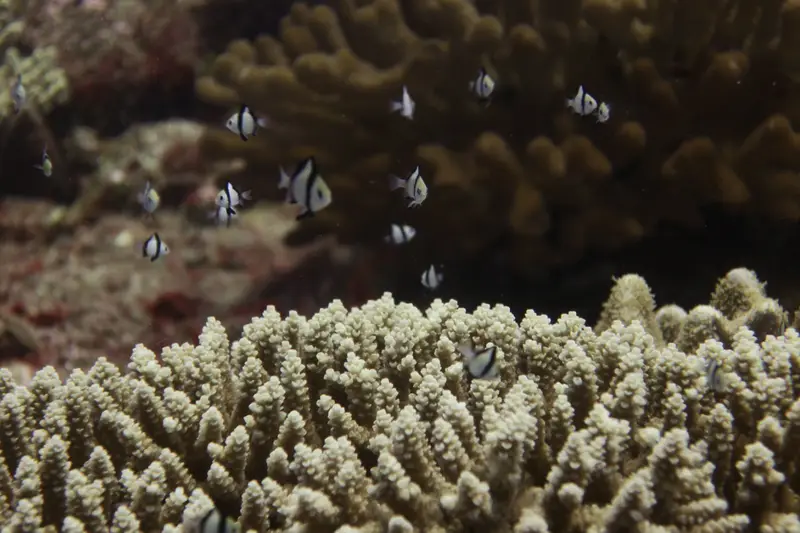
In three experiments over two years, scientific divers counted settled larvae one and two weeks after the new moon, when reproduction occurs, using blue light and a yellow filter. Structures closest to the speaker showed the highest coral settlement, and among these, those coated with BRINK had the best results. Lead author Aaron Thode says sound appears to act as a cue indicating a suitable settlement site and that the analysis also supported the attractive effect of synthetic chemical cues. Specialized 3D-printed structures also performed well, but they were tested with sound without BRINK; combining them with the coating is proposed for future experiments.
The second study, published in Scientific Reports, examined the presence of fish larvae in the same acoustic enrichment trials. Lead author and doctoral candidate Océane Boulais developed autonomous, low-power cameras capable of detecting and counting larvae continuously for up to three weeks. Monitoring without divers present allowed the team to reduce disturbance to the fish and record their behavior over longer periods.
The cameras were placed at the entrances to complex, 3D-printed structures that served as fish shelters. The team compared a site near the active speaker with a control site, where an identical speaker remained silent. At both sites, counts peaked around the new moon, but the site with sound attracted four to 14 times more fish larvae overall. The result persisted when researchers swapped the positions of the active and silent speakers, strengthening the evidence that the added sound helped attract them.
The presence of fish also matters for corals: as Boulais explains, some species feed on microalgae that can hinder coral larval settlement and growth. Wangpraseurt considers the trials an important step toward hybrid reefs, living coastal infrastructure that combines engineering and biology. The findings document improved coral settlement and an increased presence of fish larvae on the experimental structures, while restoring entire ecosystems remains the broader goal.
According to the report, DARPA plans to install the Kalaeloa Hybrid Reef off Oʻahu in the fall, with a budget of $22 million. The structure will span 50 meters and incorporate technologies tested in R3D, including Scripps microstructures and an acoustic enrichment system. Coral transplantation is tentatively planned for late 2026 or early 2027. After installation, ownership of this prototype living breakwater will be transferred to the Hawai’i Department of Transportation.


Comments