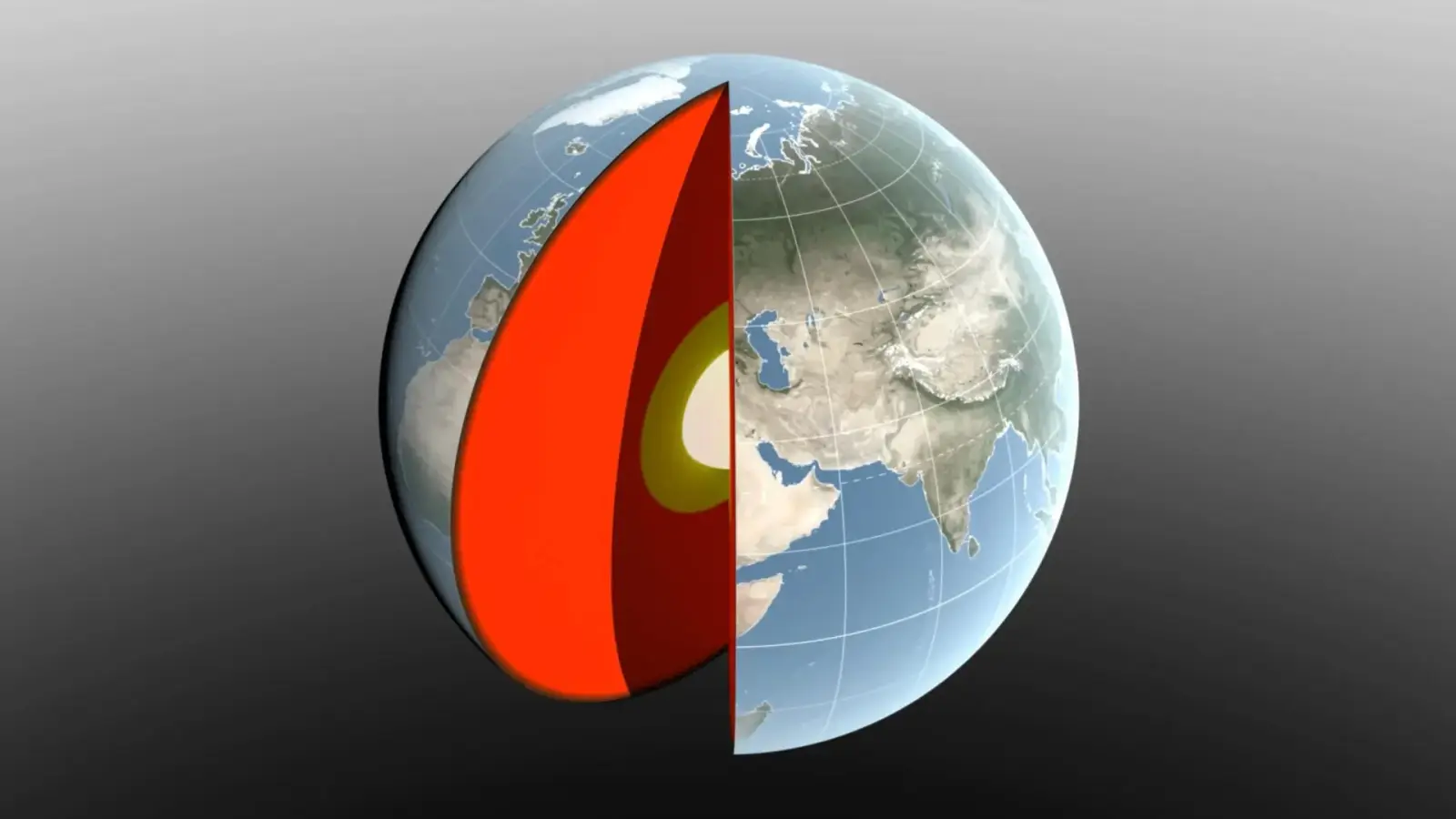
Earth's center of mass does not stay still. As water, ice and air move around the planet with the seasons, they redistribute enough weight to shift the center of mass by fractions of an inch relative to Earth's geometric center. A new study published in Geophysical Journal International, led by geoscientist Donald Argus of NASA's Jet Propulsion Laboratory in Southern California, describes a method that measures these seasonal shifts with exceptional precision.
The precise location of the center of mass has practical importance: it serves as a reference point for satellite navigation and surface elevation measurements. If Earth behaved like a completely solid blue sphere, its center of mass would coincide with its geometric center. Instead, the planet responds to the changing weight of water, ice and the atmosphere, and its center of mass wanders a few millimeters around the geometric center.
Determining the exact size of this movement has proved difficult. The two most recent international estimates, from 2017 and 2023, differ by 7 millimeters — about the height of three stacked nickels. This difference is almost as large as the movement scientists are trying to measure. To reduce the uncertainty, Argus developed a new approach based on highly precise satellite tracking.
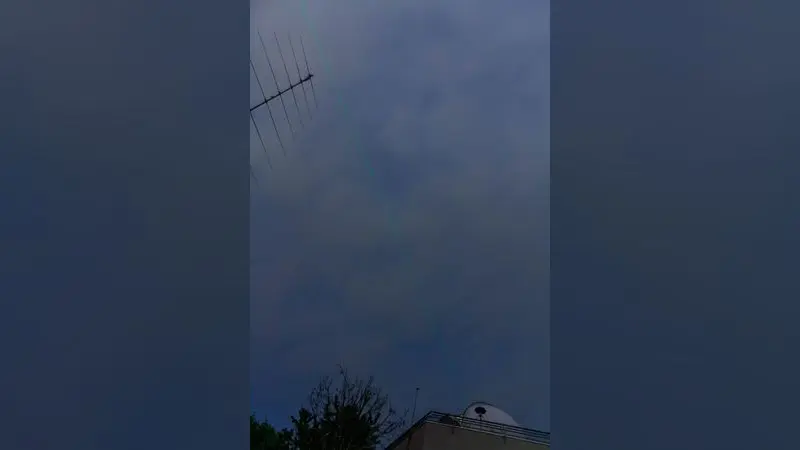
Gravity makes satellites orbit Earth's center of mass. When it shifts, scientists detect tiny changes in the distances between satellites and ground stations. The LAGEOS 1 and 2 satellites, launched in 1976 and 1992, resemble metal disco balls weighing about 408 kilograms, covered in reflective prisms; ground stations in more than 20 countries fire lasers at them and measure the returning signal. The problem is that the laser stations are not evenly distributed around the planet.
The new method addresses this limitation in two ways: it combines laser measurements with GPS data and orbital information from several satellites in low Earth orbit, and it accounts for how the changing weight of water and ice bends Earth's crust — meaning that the ground stations themselves also move slightly.
According to Argus, "we now estimate that the amount Earth's center of mass moves each year is about half what we thought eight years ago." He adds that the findings suggest the mass of water and air moving between the hemispheres is smaller than previously believed.
Felix Landerer, a study co-author at JPL, notes that "although these movements may seem tiny, the modern world relies on extremely precise position measurements," with benefits for mapping, navigation, global shipping and precision agriculture.
The researchers tracked the seasonal movement and attributed it to three main sources: the oceans, the atmosphere and continental water — meaning land ice, snow, lake and river water, soil moisture and groundwater. Snow in North America and Eurasia reaches its maximum accumulation in March; this additional mass shifts the center of mass about 3 millimeters toward the North Pole.
In April, the Amazon basin reaches its seasonal peak in rainwater, holding about 2,400 gigatons; this concentration pulls the center of mass 2.2 millimeters toward South America. Monsoon water in Southeast Asia peaks at 600 gigatons in November, six months after the Amazon's maximum, and makes a smaller contribution.
Ocean water also plays a significant role. From August to October, meltwater and rain add mass to the oceans, pushing the center of mass toward the South Pacific. Because the Pacific is enormous, changes in its mass can more than offset gains or losses in other ocean basins; even seasonal changes in the Mediterranean, Red, North, Baltic and Barents seas make smaller contributions.
The atmosphere adds another layer to the cycle: the researchers used a model from the European Centre for Medium-Range Weather Forecasts and found that cold, dense winter air shifts the balance toward Arabia, Asia and northern Africa around December 21, while around June 21 the corresponding effect appears over South America and South Africa.
The mass estimates from the new analysis agree with observations from the GRACE-FO mission, launched in 2018, which consists of two satellites that measure monthly changes in Earth's gravity field. The two satellites travel in an extremely precise formation: when the leading satellite passes over an area with additional mass, such as a swollen river basin, the stronger gravitational pull changes the distance between them by a small but detectable amount. The GRACE-Continuity mission is targeting a launch in late 2028 and will continue the nearly 25-year record of tracking the movement of water and mass on Earth.



Comments