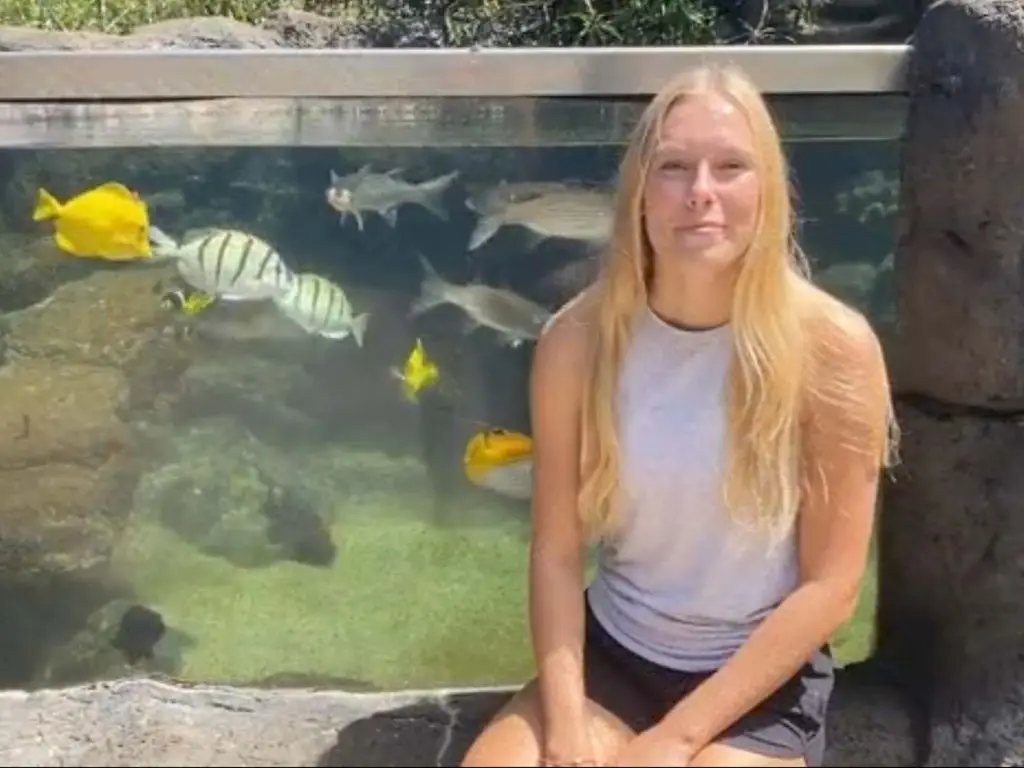
On September 21, 2026, a new study on the development of the gut microbiome in yellow tang (Zebrasoma flavescens) larvae was published in the scientific journal PeerJ. The lead author is Annie Deck, who earned a master's degree in marine science from Hawaiʻi Pacific University (HPU).
Also involved in the study were Brianna Hauser, a marine science graduate student who conducted the research as an undergraduate, and Olivia Nigro, an associate professor of biology, as the study's senior author. The research was conducted in collaboration with the Finfish department at HPU's Oceanic Institute.
The researchers followed a cohort of yellow tang from hatching to the juvenile stage in a recirculating aquaculture system. They analyzed the microbial communities associated with the fish, their food and the rearing water at key developmental stages. They found that the gut microbiome changes significantly during early development.
The study also documented that changes in diet coincided with notable shifts in the fish's microbial communities. As Nigro explained, “Fish development involves much more than what we see on the outside; the microbial community associated with an animal also changes as it develops and interacts with its environment.” Understanding how these communities become established adds a piece to the puzzle of these animals' biology, she said, and could improve aquaculture practices.
The work builds on advances in yellow tang aquaculture at the Oceanic Institute and highlights opportunities for HPU students to take part in research, from undergraduate programs through graduate study and peer-reviewed publication. Nigro emphasized that the students were not simply helping with someone else's research, but helping drive the science forward; Hauser began as an undergraduate and is continuing her graduate studies, while Deck took her work through to publication.
Comments