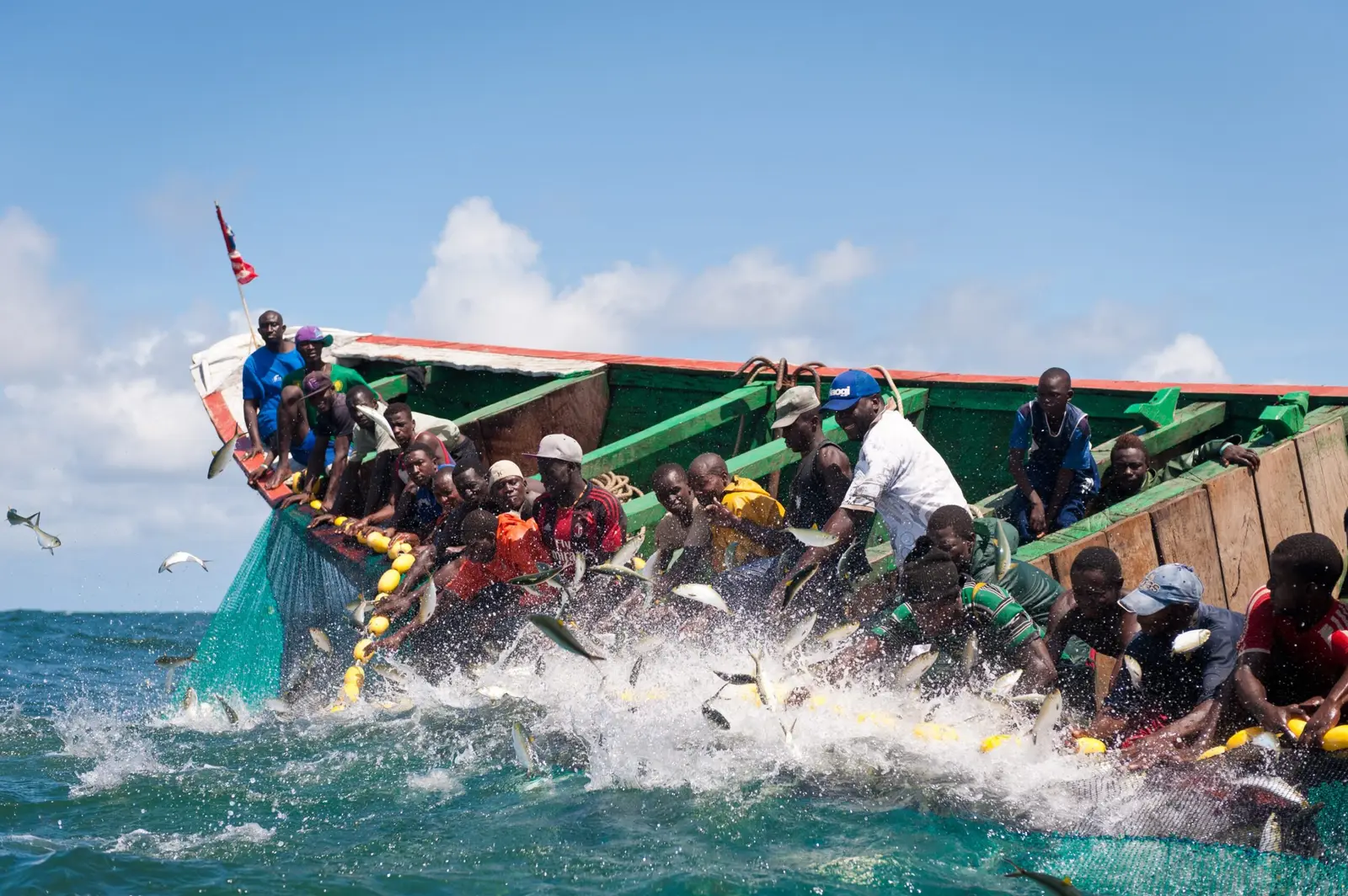
Senegal's growing fishmeal industry is taking fish that previously reached local markets, intensifying concerns about food security and the future of fishing communities. Factories turn the catches into feed for poultry, pigs and, above all, fish and other farmed aquatic species, destined for export. An investigation by the Outlaw Ocean Project, published in an edited version by Mongabay, describes the environmental, economic and human costs of this shift. Despite the tax revenue and jobs the industry provides, residents say they are finding it increasingly difficult to secure food and an income.
Between July 2024 and March 2025, journalists visited three factories: Omega Fishing, Touba Protéine Marine and Saint Louis Sea Production. They spoke with residents, workers and executives, gathering accounts and allegations about the effects of their operations. The three businesses did not respond to requests for comment. According to the investigation, at least eight plants in Senegal were linked between 2018 and 2024 to environmental violations, unsustainable fishing practices and repeated social unrest.
On August 20, 2022, at least 50 protesters in the coastal town of Kayar demanded the closure of Touba Protéine Marine, alleging water contamination and an unbearable stench. They argued that the government had broken its pledge not to approve new fishmeal factories and that the plant was causing health problems. The factory had been built less than half a kilometre from homes, with the report citing government documents and satellite images as evidence of violations of local siting rules. The plant, which was owned by Spain's Barna until 2022, was also reportedly processing whole fish.
Using whole fish for fishmeal is legal in Senegal, Fatou Diouf, a senior official at the Ministry of Fisheries, clarified in writing. She added that further monitoring methods would be introduced to prevent this practice. The report notes that elsewhere in the world, fishmeal is usually made from bycatch and unwanted fish parts. In Senegal, however, a substantial share of the catch goes to production plants, increasing pressure on the supply of fish for human consumption.
The environmental allegations concern at least a dozen incidents between 2018 and 2024, including the dumping of processing waste on beaches and smoke emissions that residents said caused respiratory problems. A 2022 study by the UN Food and Agriculture Organization linked five factories operating at the time to increased respiratory illnesses, such as rhinitis and chronic cough. Children, older people and those with pre-existing health conditions were particularly affected. These findings add a public health dimension to protests over the loss of food and income.
In Abéné, a factory operated by Société des Produits Halieutiques began operating in April 2018 and soon prompted opposition. According to local outlet Malagen, residents reported thick black smoke, a strong stench and untreated wastewater flowing into rice fields and wells. Within weeks, dead fish appeared on the beach, with researchers suspecting pollution from the plant. In a local referendum overseen by the Ministry of Environment, more than 90% of participants opposed the factory, while six neighbouring villages issued a joint memorandum of protest. The government suspended its operations in July 2018.
The industry's expansion is linked to global demand for aquaculture products, an industry worth $313 billion, according to the report. Investment in West Africa began in the early 2010s, mainly from Chinese and European companies targeting European and Asian markets. Greenpeace estimated that about 50 fishmeal and fish oil factories were operating in Mauritania, Senegal and the Gambia in 2019, consuming a total of roughly half a million tonnes of fish a year. At least six active plants were recorded in Senegal in 2024, while the industry had created hundreds of jobs and millions of dollars in tax revenue.
Figures on local diets show the scale of the pressure: between 2009 and 2018, the quantity of small pelagic fish in markets fell by two-thirds, and per capita consumption fell by half. The UN agency had warned that, by the mid-to-late 2020s, the country could face an annual shortfall of about 150,000 tonnes of fish for human consumption. Fatou Samba, 58, who works in fish processing in Bargny, described the change through daily life: even three meals a day have become difficult. As she put it, her family now thinks about survival rather than saving.
The investigation also documents fishermen who, facing limited prospects at home, attempt the dangerous sea journey of more than 1,500 kilometres to the Canary Islands. The route claimed more than 3,000 lives in 2025, according to the report. Cheikhou Omar, 21, said in September 2024 that he had left because there were no fish left; he had been rescued when his boat capsized, killing 30 people. His account highlights the human cost described in the report and the question of who bears the consequences of an industry serving the international food market.
Comments