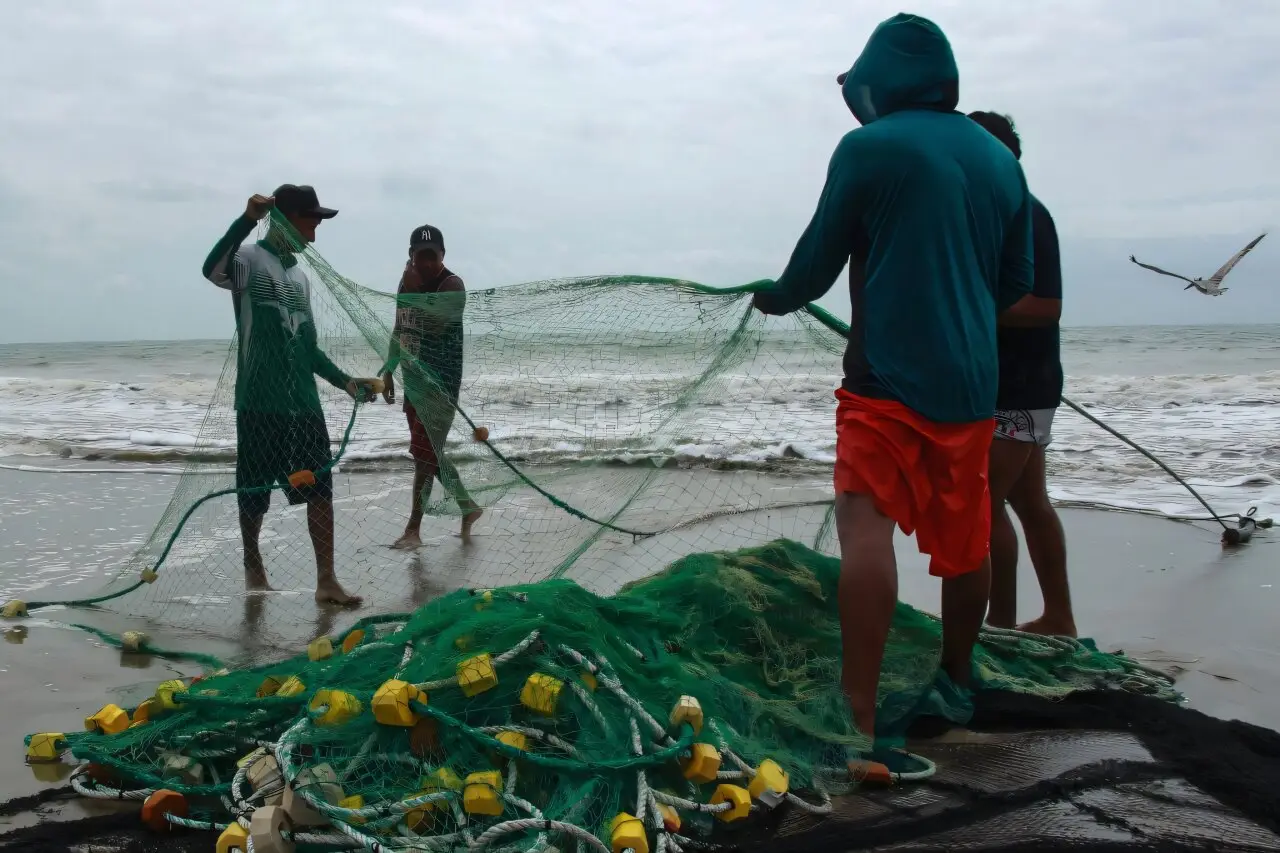
Fishers along Latin America's Pacific coasts are returning with half-empty nets as ocean warming, worsened by El Niño, forces tuna, anchovies and other valuable catches to migrate to cooler waters. From Ecuador and Peru to Panama and Guatemala, some captains have stopped going to sea altogether as stocks near the coast dwindle and seas reach up to 6 degrees Celsius above normal.
In Santa Rosa, southwestern Ecuador, hundreds of moored fishing boats crowd a small harbour. Juan Ollague, 56, returns after a night at sea with just six small tuna. “The water is warm,” he says. “We left empty-handed.” His colleague Darwin Zambrano, 53, untangles a net that has not caught large tuna such as albacore or bonito for weeks.
El Niño is the warm phase of a natural cycle in the tropical Pacific, bringing warmer and drier conditions to some areas and cooler and wetter conditions to others. This year's “super” El Niño, expected to peak later in the year, is already wreaking havoc in Central America, where drought threatens animals and delays crop planting. According to the European monitoring service Copernicus, the average sea surface temperature, excluding polar regions, reached 21.07°C in August, matching March 2024 as the hottest on record. Oceanographer Jonathan Cedeño, who led a measurement expedition from Guayaquil's polytechnic university, reports that average temperatures off Ecuador rose by 2.5–3°C at the surface and by up to 6°C at a depth of 40 metres over the past 10 weeks.
On Panama's Pacific coast, Rigoberto González says he now has to sail increasingly far from shore to make a living. That means more spending on food, ice to preserve the fish, and fuel for the small boat he uses to catch snapper, amberjack and barracuda. “We go out with $100 worth of petrol, and when we return we earn $150,” says the 59-year-old, with the proceeds split among four workers.
In nearby Panama City, some fishers have given up and are staying in port. “We cannot keep losing money,” explains Jesús Morales, head of Panama's coastal fishers' union.
In Iztapa, Guatemala, Eliseo Ovando, 50, says he now needs three days to catch what he used to catch in one, and complains that only commercial fishing businesses receive government help to weather the shortages. In Peru, the world's largest anchovy-fishing country, fishers are turning to construction work to feed their families as their small prey escape their nets.
In Panama City, the poor catches are visible at the wholesale fish market beside the pier that supplies supermarkets. “Less is arriving” from the boats, says fish seller Carlos Nieto, 46, and sometimes the catch is “ruined by the heat”. He now spends about $600 a month on ice, “practically an entire salary”.
For now, sellers in Panama have not passed their increased costs and reduced income on to consumers through significantly higher prices. In Ecuador, however, the second-largest tuna-producing country after Thailand, prices for mahi-mahi, also known as dorado, and swordfish have doubled because of the shortage, according to the industry.
In Santa Rosa, the decline in marine abundance is having knock-on effects, forcing food stalls along the harbour to close temporarily. Francisco Orlando, who makes a living filleting fish, worries he will soon be out of work. “We hope they catch fish,” explains the 37-year-old, sharpening his knives to separate the bones from the flesh. “If they catch fish, we work. If not, we don't work.”
This picture shows how changing ocean conditions are not only an environmental problem, but also an immediate threat to the incomes of people who depend on the sea.
Comments