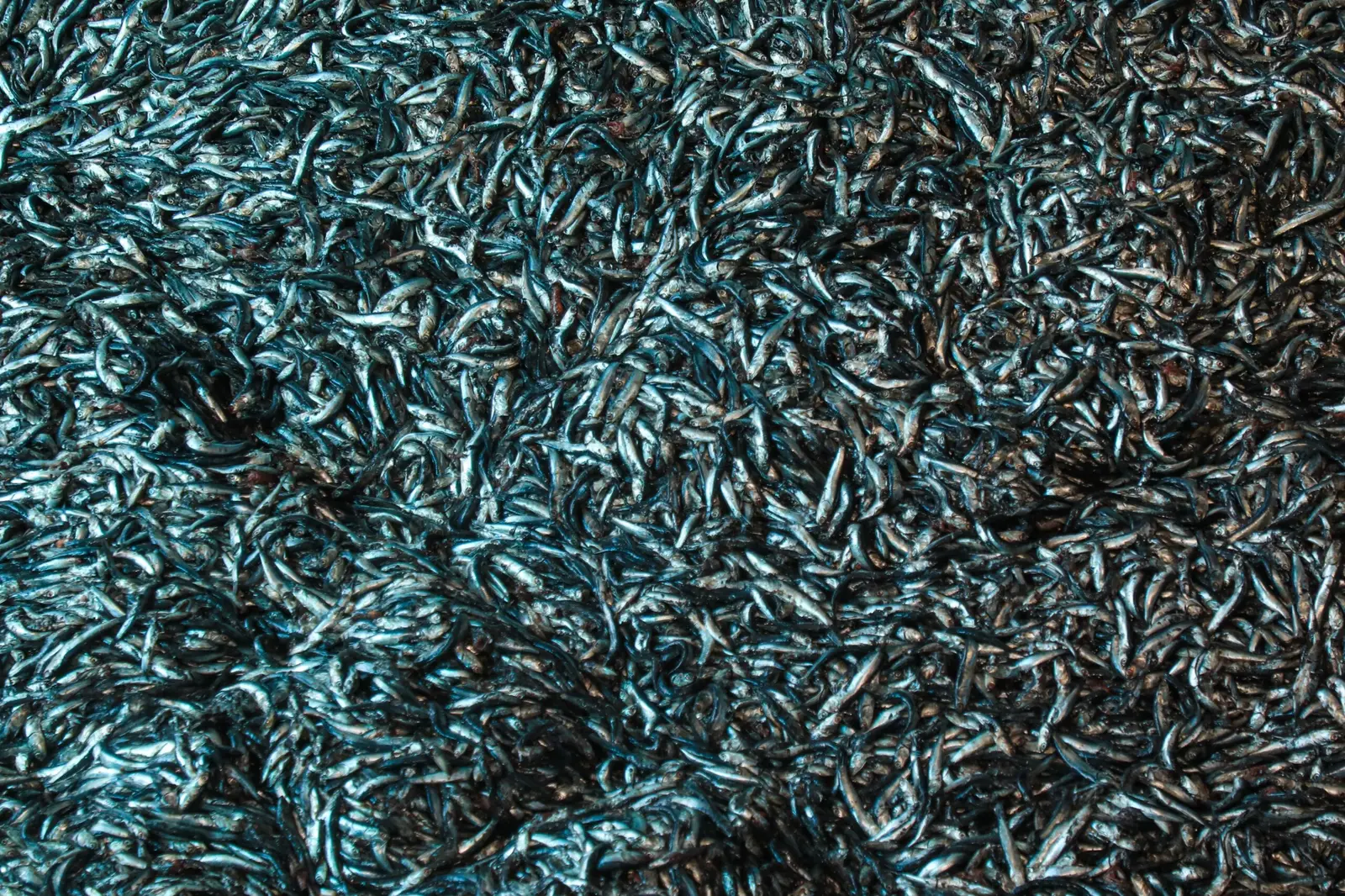
Ethoxyquin, the antioxidant that helped the fishmeal industry reduce fires during storage and transport, is now at the center of health and environmental concerns. Its use in animal feed has been banned in the European Union and other countries, but remains permitted in several markets. An investigation by the Outlaw Ocean Project, published in an edited version by Mongabay, documents its presence in seafood imported into the United States and examines the risks of the substances replacing it.
Fishmeal is produced by drying and grinding fish and is an important raw material for farming salmon, shrimp, tilapia and other species. As it decomposes and oxidizes, it can heat up and ignite spontaneously: the Outlaw Ocean Project's review of historical reports identified at least 90 fires on ships and at facilities worldwide from the 1950s to the 1970s. In 1966 alone, recorded incidents included fires lasting several days, the sinking of a ship and, in another incident, the death of a dockworker and injuries to three firefighters. The problem had broader significance for the food supply chain, as more than half of the seafood consumed worldwide comes from aquaculture.
In 1967, Cargill introduced ethoxyquin as a solution to the oxidation and subsequent heating of fishmeal. The substance was already being used to preserve rubber, fruit and alfalfa, while its application to fishmeal made it easier to transport large cargoes to distant markets. Reported fires fell significantly, and feed companies also promoted its protection of vitamins and pigments. In 1976, the US Coast Guard made treating fishmeal cargoes with ethoxyquin mandatory, while three years later the UN organization overseeing shipping issued a similar recommendation.

Meanwhile, findings on potentially harmful effects were accumulating. As early as 1969, a report by relevant UN bodies noted toxic effects in laboratory animals given high concentrations, as well as cases of dermatitis among fruit-packing workers. A British study in 1987 documented severe damage and evidence of possible carcinogenic effects in rats. In 2015, the European Food Safety Authority described p-phenetidine, an impurity in ethoxyquin, as potentially mutagenic, and in 2017 the European Commission suspended authorization for the use of ethoxyquin in animal feed.
Bans are also in place in the United Kingdom, Norway, Iceland and Liechtenstein. By contrast, Australia, Japan, South Korea and the United States continue to allow its use in animal feed, subject to maximum concentration limits. Cargill told reporters that it has been evaluating alternative antioxidants since 2005 and does not use ethoxyquin in its global salmon feed business or in markets where it is not permitted. It also clarified that antioxidants are added by fishmeal production plants before storage and transport.
In the United States, where about 80% of the seafood consumed is imported, a review of more than 350,000 weekly FDA inspection reports for 2018–2022 found traces of ethoxyquin in shrimp, salmon and tilapia. The shrimp came mainly from Indonesia and India, the salmon most often from Chile and the tilapia often from China. All recorded concentrations were below the limit the FDA considers safe, although critics question its adequacy. The report also says that, according to the agency's data, the substance was detected in imported seafood more than ten times as frequently as in other foods tested.
Environmental concerns relate both to the substance's presence in water and to its effects on aquatic organisms. In 2018, Chinese researchers found it among the most abundant pollutants in a reservoir on the Yangtze River that supplies more than half of Shanghai's drinking water. Lawsuits in the United States against seafood companies challenged descriptions of products as “sustainable,” citing a study that linked ethoxyquin to mortality and deformities in fish and crustaceans. These cases ended in out-of-court settlements, as did lawsuits over claims that pet food contained no artificial preservatives.
The move away from ethoxyquin has led producers to rosemary extract, vitamin E compounds and synthetic antioxidants, mainly butylated hydroxyanisole, known as BHA. BHA is preferred for its lower cost and strong antioxidant action, but it also comes with concerns about carcinogenic effects. The US National Toxicology Program classified it in 1991 among substances reasonably anticipated to be human carcinogens, while a Japanese study in 2008 documented malignant tumors in laboratory rats. However, a European assessment in 2018 found no concern for consumer safety when it is used in animal feed below the limit of 150 milligrams per kilogram; the FDA announced in 2025 that it would review its safety as a food additive.

Comments