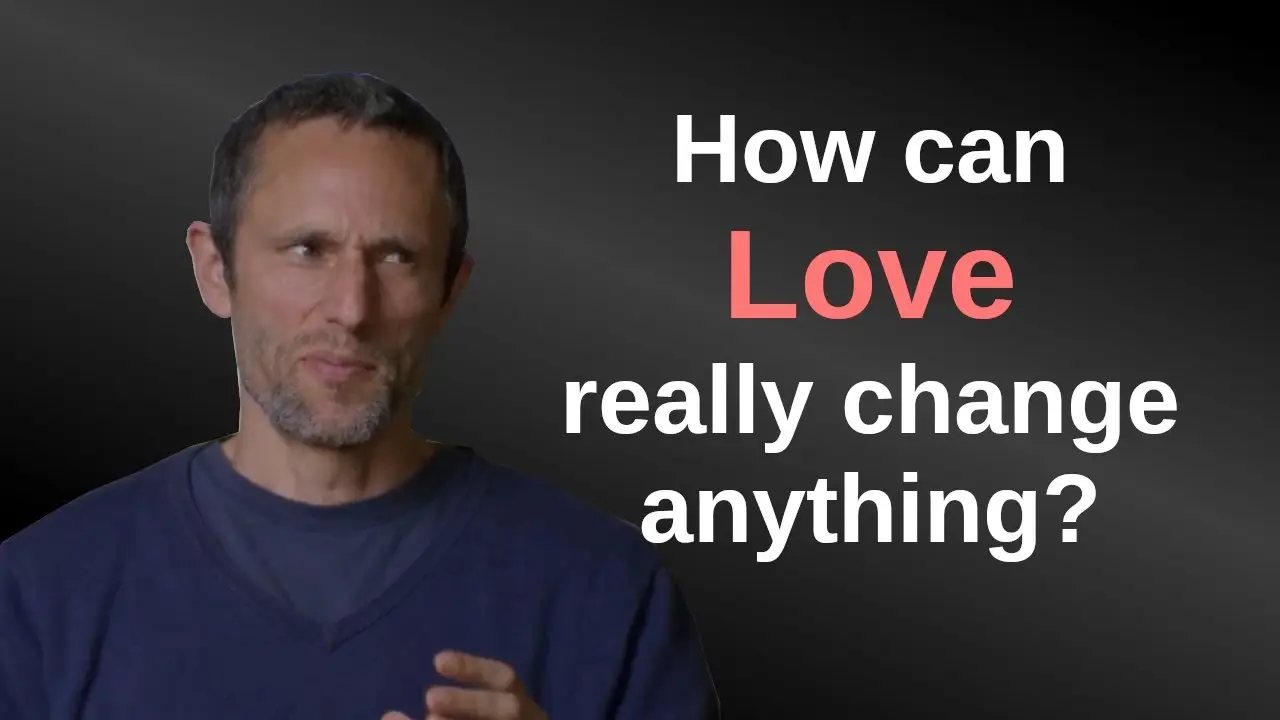
Can love for the Earth support environmental activism? In the excerpt from his interview with Death in the Garden, writer Charles Eisenstein explores this question by examining how efforts are often made to mobilise citizens, businesses and governments. His starting point is the belief that love is not enough to persuade decision-makers and that we need to show them what they stand to lose. He proposes a different approach, focusing on the motives behind environmental care and the relationship between activists and the people they address.
The reasoning he describes rests on appeals to self-interest: humanity’s future is threatened, people’s money is at risk, and their children’s well-being is at stake. According to this approach, the prospect of unpleasant consequences could motivate even those who do not care about nature. But Eisenstein asks what exactly such a campaign seeks to achieve. Does it aim to lead people to love the Earth, or to make them behave as though they care, adopting at least some actions that protect life? This distinction lies at the heart of his criticism.
His first objection concerns how self-interest itself works. When environmental protection is presented solely as a way to avoid personal harm, he argues, each person may prefer everyone else to make the changes. They would then enjoy the benefit without changing themselves. He mentions governments, cities and companies that could imagine passing responsibility from one to another. In his reasoning, therefore, appealing to self-interest does not ensure that people take responsibility: it can leave room for the wish that others will act while we carry on as before.
His second objection shifts the discussion from arguments to the image we form of others. Eisenstein argues that the story we hold in our minds about a person invites them to live up to that image. He uses the example of a corporate executive: if an activist assumes from the outset that the executive is greedy and indifferent to life, that assumption affects their communication. Even when it is not expressed directly, he believes it can be felt in the way the activist approaches them. The attempt at persuasion thus begins with a negative judgement of the other person and their motives.
Such an attitude, he continues, can lead to condescension, insult and a sense of moral superiority. Activists may talk down to others, believing that they care more or have superior values. Eisenstein links this behaviour to resentment towards environmentalists: in his view, the impression that they consider themselves better than everyone else can fuel opposition to them. He adds that this impression sometimes reflects a real attitude. He therefore calls on those working for the environment to abandon the belief in their own superiority.
In place of this predisposition, he proposes a different understanding of the person before us. A company executive, like anyone else we speak to, can be seen as part of the planet’s life and as someone who can participate in its beauty and vitality. Eisenstein describes this understanding as a different story about who we are and why we are here. This is the philosophical basis of his proposal: activists approach others with their capacity to care for life in mind, and that expectation shapes the way they speak to them.
The significance of this change, he says, is that activists become an invitation for the people they address to recognise their relationship with nature. Seeing others as people who can love the Earth creates a different starting point from assuming that they care only about money or personal security. Eisenstein does not describe a specific campaign here or present results from applying this approach. He mainly develops a view of the activist’s attitude: inviting people to care for life also involves the expectations activists express, directly or indirectly, towards others.
He then turns to the personal origins of environmental awareness. He asks what made someone become an environmentalist: was it fear, or an experience of beauty, perhaps combined with an experience of loss? His own emphasis is on the second possibility. Beauty, he says, can make us love something, while losing it can reveal how precious it was. In his reasoning, the desire to protect arises from a bond with what is at risk. Experiencing nature and grieving its destruction thus provide a different starting point for action from the expectation of future personal harm.
To clarify his position, he uses a hypothetical example involving global warming. Even if temperatures began to fall, he says, he would not consider that a reason to continue destroying the ecosphere. The example explains his personal motivation and is not an assessment of how the climate will develop. He states that his opposition to environmental degradation does not depend solely on temperature. Because he loves nature, he would continue to oppose the destruction of rivers by oil spills and mining that destroys the landscape, even under the conditions of this thought experiment.
The examples that follow make this emotional bond more concrete. He refers to seabirds covered in oil washing up on shores, plastic scattered across the oceans, and whales choking on it. He invokes them as images of destruction he does not want to see because he loves the Earth and its creatures. In the excerpt, these references are not accompanied by figures on the scale of the problems. Their role in his argument is to show what he means by care: a direct relationship with specific animals, places and forms of life that are being harmed.
From his own love for the Earth, he moves to the belief that this love also exists in others. He acknowledges, however, that it may not be accessible to everyone in the same way. Someone may, as he puts it, have become cut off from it or be out of touch with it. This acknowledgement connects with his earlier criticism of negative judgements about the people we address. Instead of treating indifference as a person’s fixed characteristic, he proposes seeing it as a condition in which their relationship with life remains difficult to recognise or express.
The excerpt closes with the proposal that environmentalism be understood as an ongoing effort to call one another back to a love for life, which Eisenstein considers part of true human nature. His answer to the question in the title is therefore primarily philosophical and ethical. He argues that fear, self-interest and moral superiority can make mobilisation harder, while recognising a shared love can offer another starting point. In the available material, however, he presents no comparative data or specific results establishing how effective this approach is in practice.




Comments