Paul Rosolie makes his third appearance on Lex Fridman's podcast as a naturalist, explorer and author who has dedicated his life to protecting the Amazon rainforest. His new book, “Jungle Keeper,” describes how his work has intensified in recent years. Rosolie says his organization has already managed to protect 130,000 acres of forest and aims to protect another 200,000 acres in an area where illegal loggers, gold miners and drug traffickers now operate.
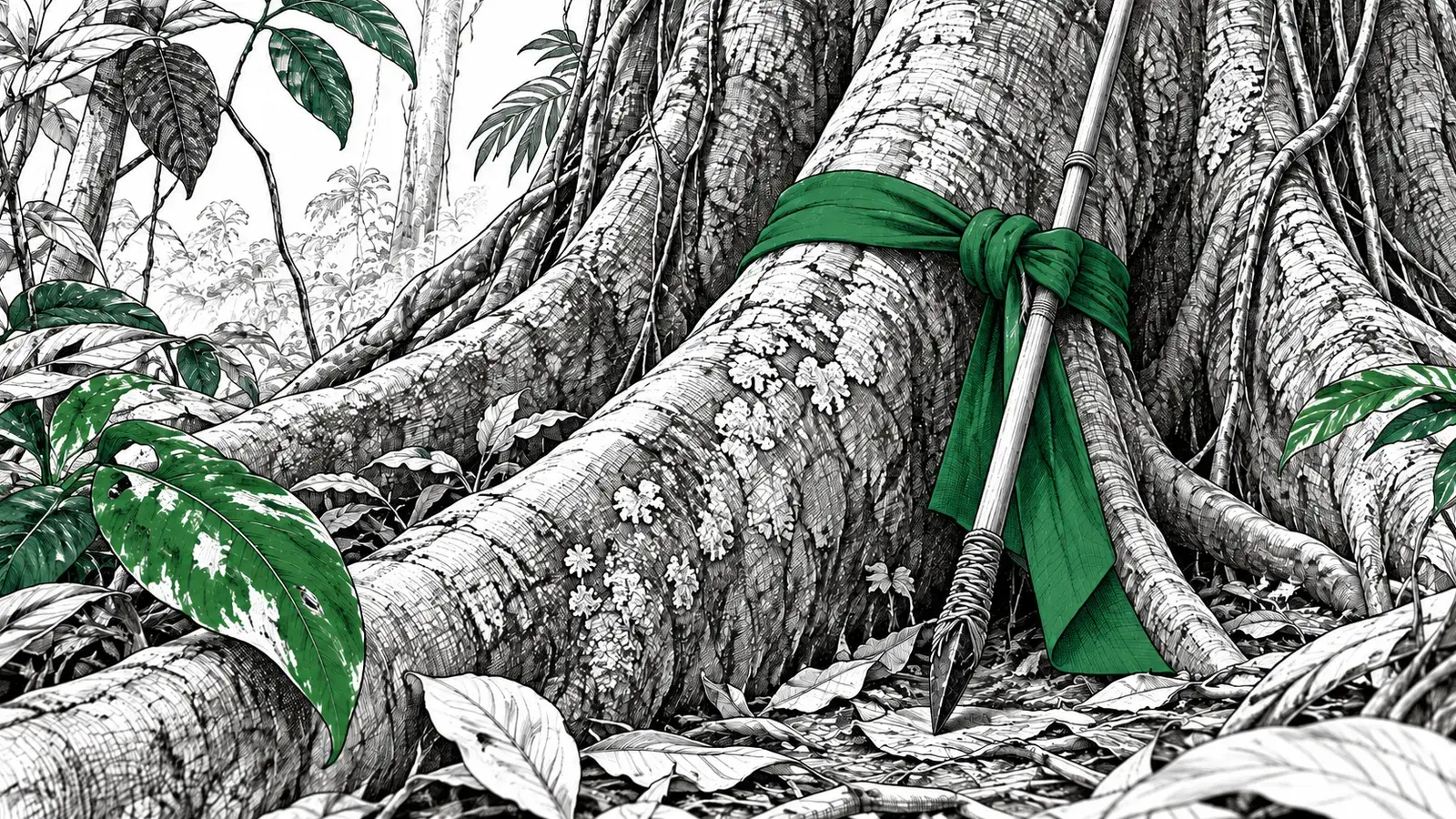
The book opens with the killing of two loggers by warriors from the uncontacted Mashco Piro tribe in August 2024. Rosolie explains that the loggers cut down an ancient shihuahuaco tree, a giant that can exceed 160 feet in height and be more than 1,000 years old. The tribe sensed the tree's fall and subsequently killed the loggers.
According to Rosolie, thousands of tribes still live in nomadic isolation in the Amazon region, using bamboo arrows, living naked and possessing knowledge of medicines that the outside world may never discover. He emphasizes that these tribes want to remain isolated and that violence is often their means of survival.
In October 2024, the remote Indigenous community called Rosolie's team by satellite phone because the uncontacted tribes were appearing. Rosolie describes how he and his colleagues immediately abandoned scheduled meetings, took a boat and traveled all night through a storm to cover a two-day journey in a single night. With them was the forest ranger Ignacio, who had survived an arrow to the head in 2019. When they arrived in the morning, the community was terrified and told them the tribe had appeared on the beach the previous day.
The encounter took place on a river beach. Rosolie describes hearing people shout “Mashco! Mashco!”, women grabbing their children and everyone running. On the opposite side, naked warriors appeared with seven-foot bows, crouched and ready to attack.
The anthropologist Romel, the only person who had communicated peacefully with them in 2013, stood at the front and shouted “Namole,” meaning “brothers” in their language. Rosolie says the team was surrounded, with tribesmen both on the other side of the river and in the jungle, and that the odds were five to one against them. The first gesture of peace was offering a boat full of bananas. Romel entered the water and pushed the boat toward the warriors. Rosolie describes them rushing forward, grabbing the bananas and fighting among themselves rather than sharing them.
At the same time, the tribe's women had secretly moved behind the team and were raiding the farm, uprooting cassava and banana plants. Rosolie says this suggests the contact may not have been entirely peaceful, but a distraction to obtain food. However, after several boatloads of bananas and sugarcane, the situation calmed down.
Rosolie says the tribe asked questions through Romel, such as “Why are you cutting down the trees?” and “How do we tell the good people from the bad?” For them, cutting down a large tree carries almost religious weight, like killing their gods. Rosolie believes the tribe sees outsiders as destroyers of worlds.
There were no women or elderly people at the encounter, only men aged roughly 12 to 40, and Romel said this was the first time that particular group had communicated with the outside world. Communication took place through gestures, clapping and shouting, with no clear hierarchy.
Rosolie emphasizes that this is the first recorded filming of such contact, with clear images and sound. The footage shows the tribe approaching, putting down their bows and calming down. Ignacio began dancing and they responded, while Romel even gave them his shirt.
Toward the end, Romel told Rosolie that the tribe considered him a warrior and asked him to show his palms as a sign of peace. He did so, and the tribe sang back. They then withdrew into the jungle.
However, the situation changed the following day. Rosolie describes their friend George piloting a boat when about 200 tribe members appeared, surrounded the boat and began shooting arrows. An arrow pierced George from his shoulder blade to his abdomen, but he survived after being airlifted out. Rosolie cannot explain why the tribe attacked after the peaceful contact. He speculates that perhaps the engines frightened them, or that violence is so embedded in their survival that they do not consider the change in behavior contradictory.
Rosolie believes protecting the 130,000 acres of forest also protects the tribe's territory. He says most of the additional 200,000 acres they are trying to buy is their land. If the river is not protected, landowners will sell the forest to loggers or drug traffickers, who will kill the tribe with guns and germs. Jungle Keepers hires former loggers and gold miners as forest rangers, giving them better jobs. Rosolie emphasizes that the aim is not to contact the tribes, but to leave them alone if that is what they want.
Meanwhile, the situation with drug traffickers has escalated. Rosolie recounts being chased by armed men in March while flying a drone over a new clearing. The police officers who helped them later killed a friend of theirs with a shotgun. Shortly afterward, armed men ambushed their driver Percy and demanded to know where JJ and “the gringo who flies the drone” were.
Since then, he says, there has been a contract out to kill him and JJ, and every phone call makes him fear something bad has happened. He admits that his dreams have filled with gunfire and that he is not trained for war.
Rosolie also talks about Jane Goodall's influence on his life. As a dyslexic child, he listened to his parents read her stories to him. Years later, he gave her two chapters from a book that did not yet exist, and she replied within 48 hours saying she would endorse it. This opened the door to publishers and led to the creation of Jungle Keepers.
Rosolie emphasizes that Goodall was in the “business of hope” and that apathy is the greatest danger. In his book, he writes that despite the destruction, there are heroes who prove that something can be done.
In one of the book's most personal moments, Rosolie describes climbing the tallest tree he knew, a shihuahuaco about 160 feet high, to finally see the “river of mist” above the forest canopy. He says the climb was exhausting, with nowhere to rest and dangers from falling and insects. When he reached the top at first light, he saw moisture rising from the canopy and forming an invisible river flowing over the jungle. He describes it as a religious experience, like seeing God, and says he wanted to share it with the whole world.
Rosolie also talks about animals he has encountered, such as monogamous macaws that nest in ancient trees, giant anacondas with the composure of apex predators, and the rescue of a drowning spider monkey. In that case, he says he spoke to her in the language of monkeys and she accepted his help, something captured on video. He also mentions encounters with jaguars and a tiger in India that made him feel insignificant before its power. All these experiences lead him to see himself as part of the ecosystem rather than outside it.
At the end, Rosolie talks about his writing process, which relies on journals, notes and many revisions, and about his next book, titled “Endgame.” He says he cannot keep up this intensity much longer, but hopes that if they manage to protect the river, he will be able to teach and inspire other conservationists. Fridman thanks him and asks listeners to pre-order the book and support Jungle Keepers. Rosolie replies that their first conversation changed everything and that hope, not fear, is the fuel for the struggle.

Comments