The International Day of Democracy is, according to the author, an opportunity to reflect on what defines the free world. Winston Churchill described democracy as “the worst form of government except for all those other forms that have been tried from time to time”. Yet perhaps, the article notes, the future holds something better.
Elections and political parties remain central to how we understand democracy. Electoral competition is supposed to give politicians and parties incentives to understand and respond to citizens' concerns, turning them into coherent programmes and policies. Yet public contempt for parties is clearly growing. The inherently adversarial dynamic compels parties not to cooperate; cooperation is avoided because it is seen as diluting the party's “brand”. The author argues that democracy would benefit from reforms that reduce party friction and strengthen collaborative governance.
The Australian figures are telling. In the long-running Australian Election Study, 51% of Australians in 1969 said they trusted “the people in government to do the right thing”. In the 2025 survey, that figure had fallen to 32%. Fewer than one in three Australians now believe political leaders have their interests at heart.
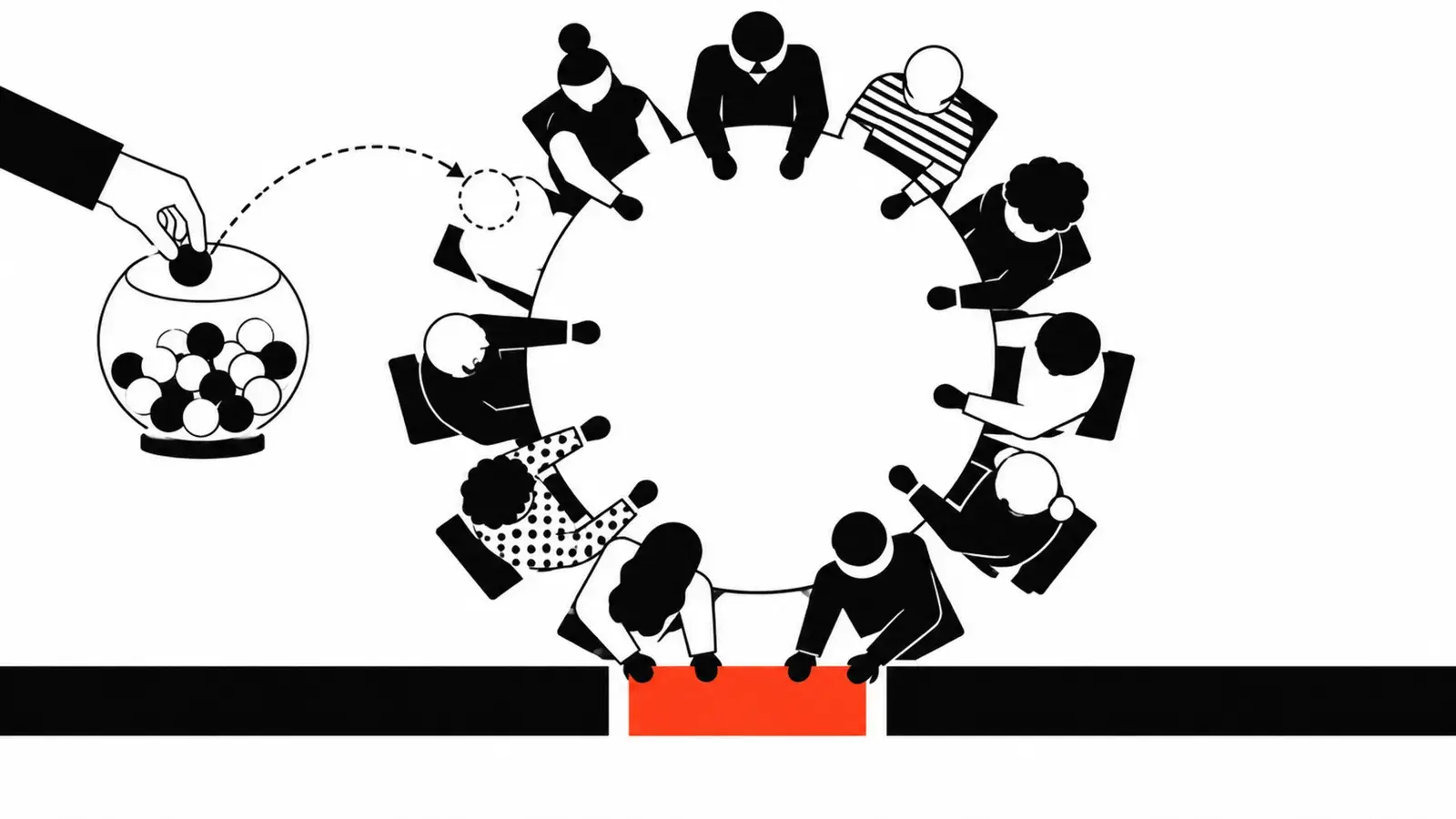
In the same 2025 survey, researchers asked citizens which changes to the political system they would prefer. The proposal with the strongest support was a citizens' assembly, defined as “a body made up of randomly selected citizens who consider important policy issues and advise the government”.
Today, to celebrate the International Day of Democracy, a handbook is being presented at the United Nations in New York as a testament to democracy's evolving nature. The publication, titled “Democracy Beyond Elections – A Handbook on Citizens' Assemblies”, describes several successful citizens' assemblies from around the world.
Over the past decade, many countries have held national citizens' assemblies, though Australia has yet to do so. The United Kingdom, Germany, the Netherlands, Belgium, France and Ireland, among others, have taken this step.
In Britain, a citizens' assembly titled “Your Voice on Immigration” finalised its findings this month; it was commissioned by the House of Commons to inform the government's immigration policy. In France, earlier this year, parliament considered the main recommendation to legalise assisted dying following a national citizens' assembly on the “End of Life”.
The article notes that as trust in politics continues to fall, so does the belief that today's institutions can halt their own decline. By drawing on the community's considered views, citizens' assemblies can overcome years of political deadlock and help rebuild trust in democracy. The article closes with the observation that the future of democracy has arrived — just not yet in Canberra.
The article is by Luca Belgiorno-Nettis, founder and director of the newDemocracy Foundation.




Comments