
The news that independents Allegra Spender and Zali Steggall are forming a new party seems paradoxical at first glance: voters have little affection for parties, and much of the popularity of “independents” rested precisely on their independence. As Luca Belgiorno-Nettis writes in an opinion piece, the two politicians were led to this choice by changes to electoral laws, as well as the fact that a party makes it easier to win Senate seats.
The deeper problem, however, is not simply that parties are unpopular. It is that the political system they dominate is ill suited to the complex, long-term challenges modern democracies face today. Citizens see parties as tribal, self-serving machines more interested in winning the next election than in solving the next generation's problems.
Parties once helped organize public life by turning competing values into programs for government. In many democracies, however, that role has hardened into a system of permanent election campaigning. Public problems are filtered through party strategy; the aim is not to learn, adapt or build agreement, but to win, defend and attack.
This logic is ill suited to the issues piling up in public life. Climate adaptation, defense, fairness between generations, infrastructure, tax reform, housing, migration and care for an aging population require careful work and shared responsibility. Instead, competition between parties pushes politics toward short-term wins, slogans, blame and divisive issues.
Partisanship also narrows how citizens engage with public questions. Instead of weighing ideas on their merits, voters are encouraged to identify with a side. Facts are filtered through loyalty. Parliamentary debate becomes theater for supporters rather than a search for better judgment; voters are reduced to spectators choosing between political “brands” every few years.
The result is a democracy that is constantly active, but not necessarily capable. It produces conflict, news cycles and electoral drama, but rarely produces carefully developed agreement on difficult problems.
The question, the author writes, is how to move from a competitive model of democracy to one that is more cooperative, deliberative and productive. A healthier system would not treat cooperation as weakness, but would make it part of the architecture of politics.
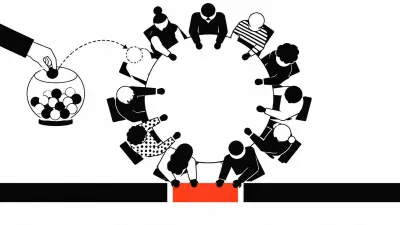
Citizens' assemblies offer a way to begin this transition. When properly designed, they bring together a representative group of ordinary citizens, give them time, balanced information and access to experts, and ask them to deliberate on difficult public issues.
The value of a citizens' assembly is not that it magically reveals the will of the people. Democracy is not simply a tally of preferences. Its deeper promise is that citizens can form better judgments when given time, respect and responsibility. Assemblies show that ordinary people can confront trade-offs that party politics often avoids or distorts.
Such a transition will not happen overnight. It requires new institutions, new expectations and new measures of political success. Leaders should be judged not by whether they defeat their opponents, but by whether they can build lasting agreements. The aim is not to add a token consultation process to a system that otherwise stays the same, but to cultivate a new democratic habit: public decisions shaped by cooperation and long-term stewardship.
Community independents have had great success at the grassroots, with numbers of active volunteers—often more than a thousand per constituency—that exceeded anything the major parties had ever seen. If the new Community Strong group can make effective use of public deliberation across constituencies and party divides, it will demonstrate a better way to practice party politics.


Comments