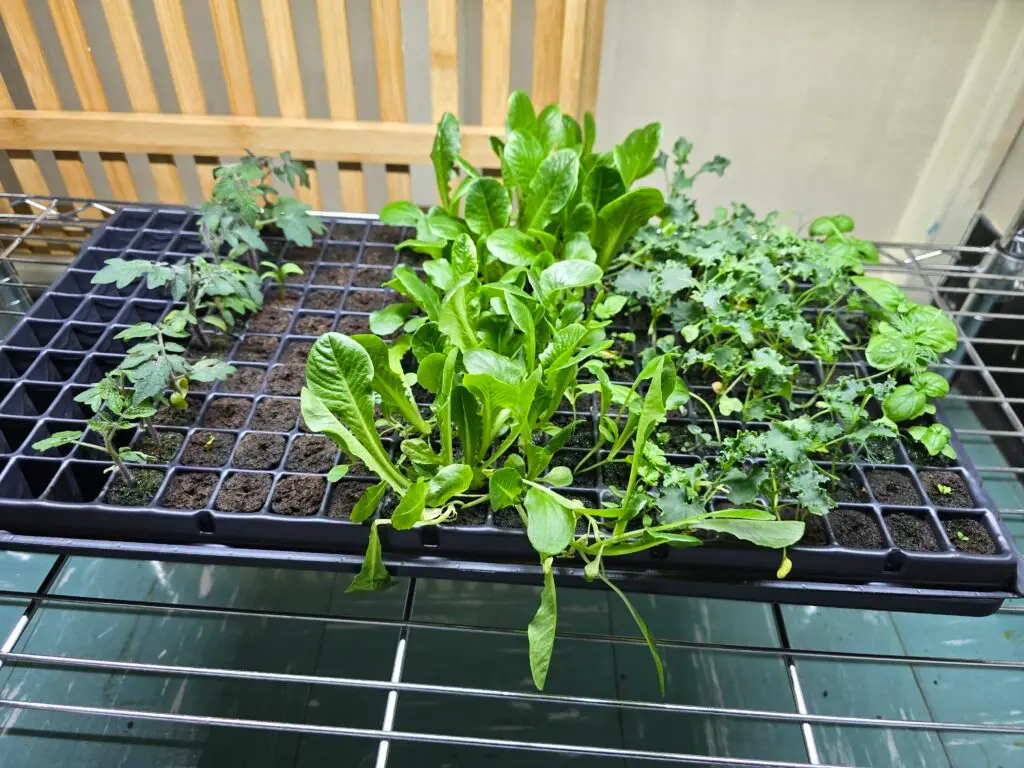
Three schools in Canada are growing vegetables without soil in an effort to address specific problems with access to fresh food. With support from the N:OW for Net-Zero initiative, students in a rural area of Saskatchewan, a remote community in Labrador and a Mi'kmaq community in Nova Scotia are taking part in hydroponic growing projects. The produce supplies school meal programs, while caring for the plants forms part of the teaching.
Hydroponics is the cultivation of plants in nutrient-enriched water instead of soil. In the communities described in the article, the need for these growing systems arises from everyday realities: vegetables may arrive wilted after long journeys, cost a lot or require considerable travel to buy. The school projects give students the opportunity to produce some of their food in the place where they learn.
At Dinsmore Composite School, in the rural town of Dinsmore, Saskatchewan, students installed six hydroponic growing towers to supply the school cafeteria. Although the area is surrounded by farmland, it faces a shortage of fresh vegetables. In the first two months, the towers produced 40 heads of lettuce and four large bags of kale, which were served to all 82 students through the breakfast program.
The crops at the school now include tomatoes, peppers, jalapeño peppers and kale, along with basil, oregano, sage, dill and mint. Students in higher grades use the harvest in biology and nutrition lessons, while tasting vegetables and herbs as they tend the towers. Student Sierra Tully, who played a leading role in the project, described the team's excitement at seeing the idea become reality. The program also attracted the attention of Global News and received a visit from a member of parliament in May 2026.
In the remote coastal community of L'Anse au Loup, Labrador, the problem is both the price and the condition of produce when it reaches stores. According to the article, lettuce often wilts in transit, and fresh produce prices regularly reach twice the national average. The hydroponic garden at Labrador Straits Academy was created in response to these difficulties and incorporated into the science curriculum. The initiative reached 140 students and teachers, while more than 300 residents received information through educational materials and social media.
Even transporting the equipment highlighted the obstacles the community faces. It was ultimately cheaper and faster for a resident to drive to a port near Newfoundland to collect it than to have it shipped directly to the school. Kate Burden, the teacher leading the project, said the team had not anticipated these difficulties but sees them as a temporary obstacle. According to her, the goal is a sustainable growing system inside the school that is resilient to climatic conditions.
At Allison Bernard Memorial High School, in the Mi'kmaq community of Eskasoni, Nova Scotia, the nearest grocery store is a 45-minute drive away. The school is awaiting a new building and has no cafeteria, so students are regularly transported home for lunch. Two hydroponic towers now supply vegetables for breakfast and lunch programs serving more than 264 students and 21 teachers. The project was featured in a PNI Atlantic News article in December 2024.
The same school has an old greenhouse that remains unused. The team hopes that, as students gain experience with hydroponics, they will gradually begin transferring young plants to outdoor growing areas and expanding production. A student involved in coordinating the project stressed that working on real problems makes learning more interesting and provides opportunities for collaboration, critical thinking and creativity. The three examples show how food production can be connected with school meals and education, with a measurable harvest at one school and plans for expansion at another.

Comments