
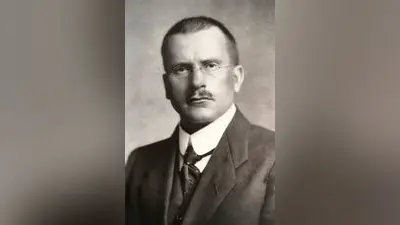
In the spring of 1957, at the age of 84, psychiatrist Carl Jung began telling the story of his life in a series of conversations with his colleague and friend Aniela Jaffé. This material became the basis of Memories, Dreams, Reflections, which he continued working on until shortly before his death in 1961. He even wrote some chapters by hand, so strong was his need to express himself. Jaffé notes in the introduction that the conversational tone carried through the entire “autobiography”: the chapters are brief shafts of light that fleetingly illuminate the external events of Jung's life and work, but convey the atmosphere of his spiritual world and the experience of a person for whom the psyche was a profound reality.
In the chapter “Life and death,” Jung argues that our age has shifted all emphasis to the here and now, resulting in a “demonization” of human beings and the world. The phenomenon of dictators and the misery they brought about stem, in his view, from humanity losing the transcendent because of the shortsightedness of the “over-intellectuals” and falling victim to unconsciousness.
In response, the human task is precisely the opposite: to become conscious of the contents rising from the unconscious. People should neither persist in unconsciousness nor identify with the unconscious elements of their existence, thereby avoiding their destiny, which is to create ever greater consciousness. “The sole purpose of human existence is to kindle a light in the darkness of mere existence,” he writes. Jung adds that, just as the unconscious affects us, increasing consciousness also affects the unconscious.
The book's appendix includes unpublished letters from Freud to Jung. In one, dated 16 April 1909, Freud describes how he had developed an obsession that he would die between the ages of 61 and 62, and how he began seeing these numbers everywhere. Freud explains the experience in two ways: first, an enormous alertness of the unconscious, which leads someone, like Faust, to see Helen in every woman; and second, the undeniable “cooperation of chance.” He adds, with a subtle dig at Jung's views on “poltergeist phenomena,” that his interest in the “ghost complex” is the interest one takes in a beautiful delusion that one does not share.
Despite his shortcomings, Jung was one of the most interesting minds in modern history, and Memories, Dreams, Reflections offers a rare, deeply insightful look into his inner world. The book can be read alongside a rare BBC interview with him about human nature and his delightfully disgruntled critique of Joyce's Ulysses.
Comments