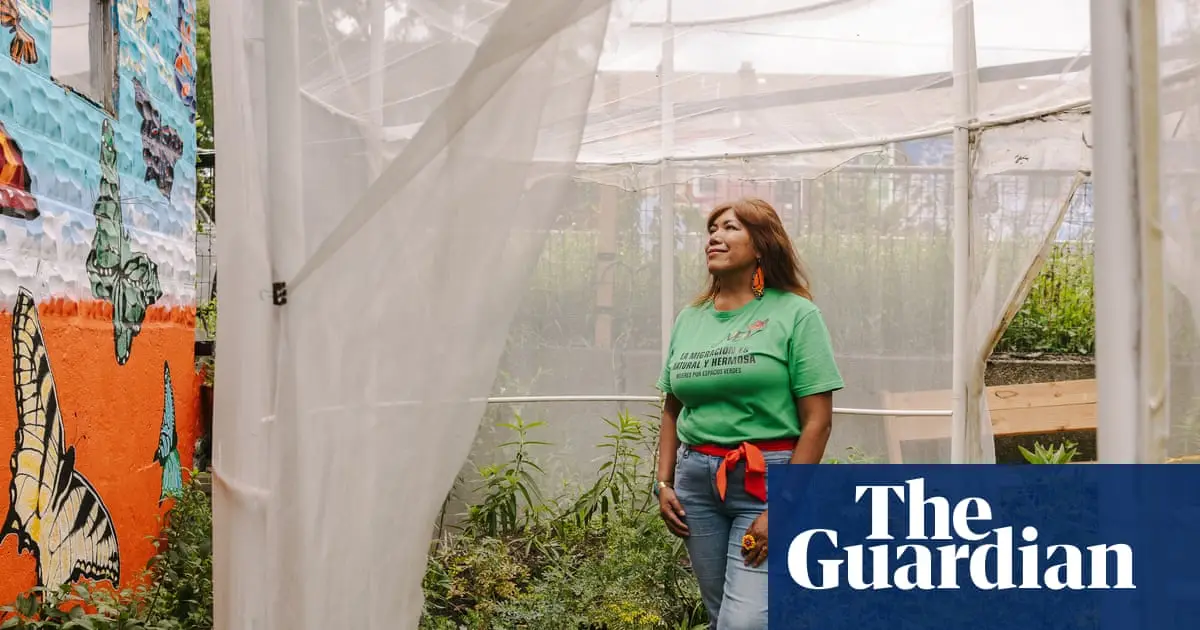
In Chicago’s Pilsen neighborhood, Claudia Galeno-Sánchez has turned her family home into a haven for monarch butterflies and a space for environmental education. By planting native milkweed and wildflowers in the front and back yards, she has restored a small patch of their habitat within the city. The effort has now expanded beyond her home: including plantings at nearby schools, she has created a total of eight projects using native plants.
Every fall, she and her two children watch the butterflies that visit their garden in search of food during migration. Their journey to Mexico covers nearly 3,000 miles and continues until late October. The home, where Galeno-Sánchez lives with her husband and children, serves as a stopover on this annual route connecting the northern United States and Canada with Mexico.
Her involvement began with a visit about ten years ago to her hometown in Puebla, Mexico. The butterflies she saw were noticeably fewer than those she remembered filling the sky as a child, and the difference made her wonder what had happened. The 49-year-old says she knew little about the environment before becoming a mother. Species loss and global warming motivated her to take action for her children and future generations.
Her concern is tied to a broader, documented decline. According to the studies cited in the report, both eastern and western monarch butterfly populations have fallen significantly over the past twenty years. Causes include habitat loss due to deforestation, extreme weather linked to the climate crisis and the use of pesticides that harm the plants they depend on. Galeno-Sánchez is part of a nationwide movement of people planting native milkweed and reducing pesticide use in their gardens.
The population picture also includes encouraging signs, though these do not remove the danger. The eastern population has increased over the past two years, a development that attracted considerable publicity. However, experts warn that the overall decline outweighs the recent recovery and that the species remains at risk of extinction. The report also says that efforts to protect it under the US Endangered Species Act have not succeeded under the Trump administration, with the decision postponed until June 2030.
She herself had to rethink how she was trying to help. Initially, she believed the solution was to raise caterpillars indoors and release the butterflies, but she says she later learned that this practice can make it harder for them to survive in the wild. She therefore shifted her focus to creating suitable outdoor habitats. As she explains, butterflies need to live exposed to sunlight, changes in temperature and the other conditions of their natural environment.
She now plants native species in more parts of the neighborhood, benefiting other pollinators and wildlife as well. She has also begun supplying milkweed to a community garden in an industrial area. She uses donations to buy plants and pay small amounts to residents who help with watering and maintenance. Women for Green Spaces, the nonprofit organization she helped found, is seeking partnerships with schools across Chicago so that children can learn the importance of caring for the environment.
The butterflies’ migration route also holds personal meaning for her, as she arrived in the United States as a child, without her parents, to live with relatives in Chicago. Her immigration status later prevented her from being close to her father as he was dying of cancer, an experience that drives her to share her story. In her work today, she sees an opportunity to remind people of the connections between species and their contribution to a healthy ecosystem. For her, protecting the monarch butterfly is linked to caring for other pollinators and, ultimately, people.

Comments