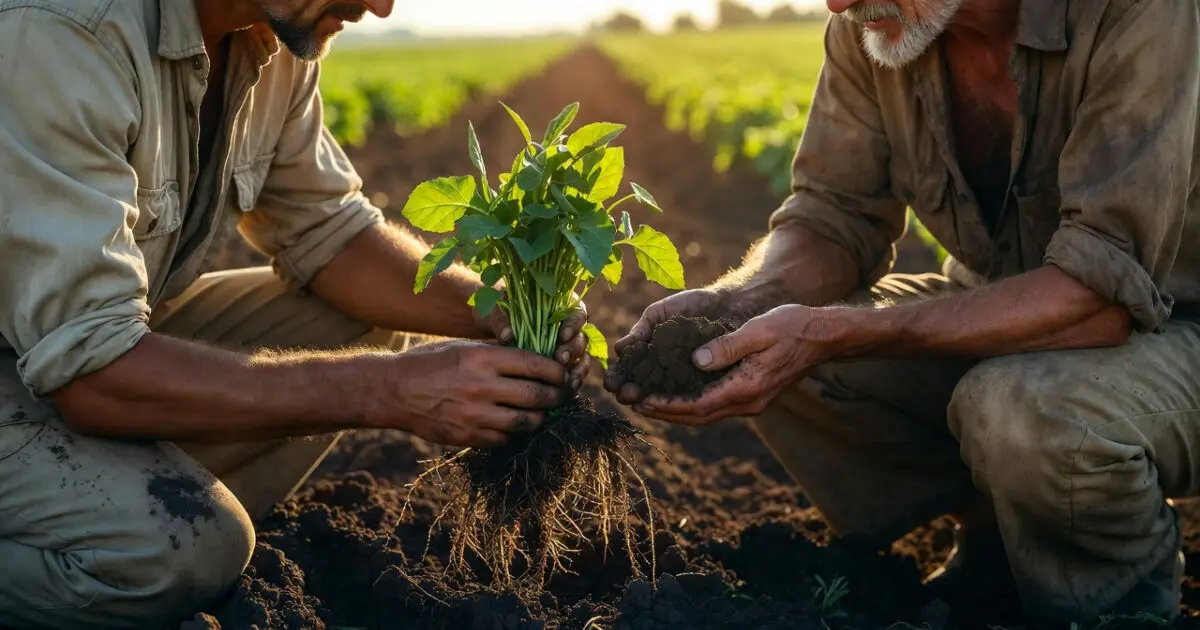
Syngenta's REVERTE programme demonstrates that restoring degraded land can be a profitable business proposition rather than charity. Launched in 2019 in Brazil's tropical Cerrado ecosystem, it has so far brought 280,000 hectares of land under restoration, with those running it citing a target of one million hectares. The programme was designed in partnership with the environmental organisation The Nature Conservancy and rests on three pillars: agronomic expertise, optimised financing and strict environmental compliance.
Participating farmers adopt regenerative practices such as crop rotation, cover crops and no-till farming, which improve soil health, increase carbon sequestration and support long-term productivity. Since upfront costs are a major barrier, Syngenta and the bank Itaú BBA created a dedicated credit line in 2021 for farmers participating in REVERTE. The aim was to reduce investment risk and make the transition to sustainable agriculture financially feasible for the average farmer.
The initial results are encouraging. According to Anton Pushkarev, Syngenta's head of business sustainability for Russia–KAZBEC, 92% of monitored farms recorded higher yields between the first and second years of implementation, with an average increase of 9%. “Farmers have higher yields and higher profits. They are satisfied,” he says.
Beyond the economic dimension, there are environmental benefits too. The 280,000 hectares being restored serve as a carbon sink and recovering habitat. Practices such as no-till farming and cover crops limit soil disturbance, increase organic matter, improve water retention and support biodiversity, transforming agriculture from an extractive activity into a regenerative one.
Syngenta also supports farmers with digital tools through the CROPWISE platform, which provides data to optimise inputs and practices. A pilot programme began in Paraguay in 2024, and the company plans to expand across Latin America.
REVERTE is directly linked to the UN Sustainable Development Goals, specifically Goal 2 on zero hunger, Goal 13 on climate action, Goal 15 on life on land and Goal 17 on partnerships. According to the company, the collaboration with Itaú BBA and The Nature Conservancy shows how corporate and environmental interests can align.
The programme's creators insist that change must put farmers at its centre. “A shift is possible only through innovation and must focus on farmers,” says Pushkarev. The programme demonstrates that the fields that feed the world can also heal the soil, creating a more resilient and sustainable food system.
It is worth noting that the story comes from a source that promotes positive business innovations, and the figures come from the company itself. However, the programme's logic—treating degraded land as a solvable business equation rather than an environmental obligation—points to a direction of real interest for the future of agriculture.
Comments