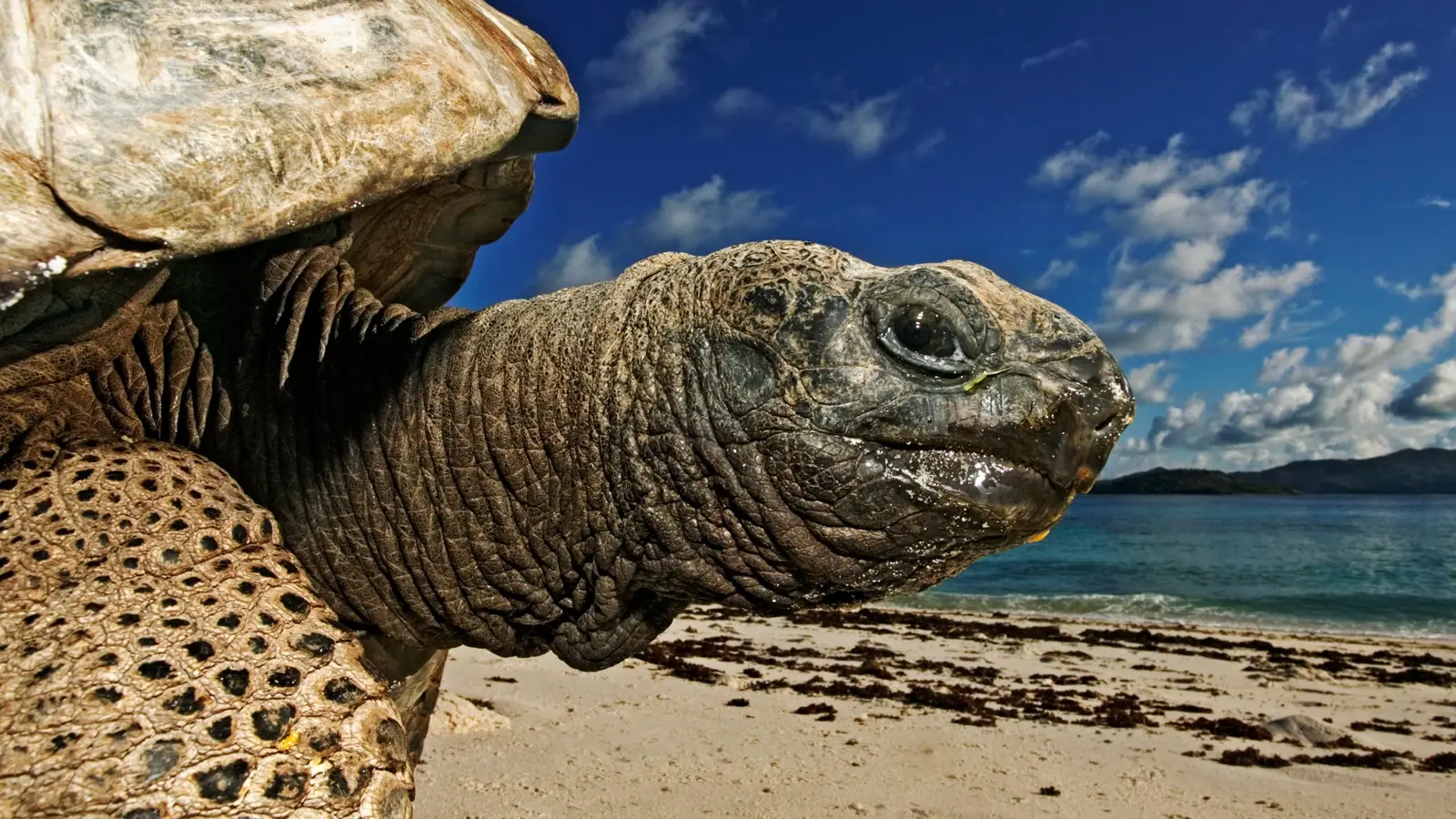
Aldabra's giant tortoises in the Seychelles now number more than 180,000, according to a new population study published in Ecology and Evolution. After decades of protection, their population has reached record levels and exceeds the country's human population for the first time in centuries. The situation is far removed from that of the 19th century, when fewer than a thousand tortoises remained on the atoll.
Before European explorers arrived, the isolated archipelago offered favorable conditions for the species Aldabrachelys gigantea. Abundant food and very few natural predators allowed the tortoises to reach a very advanced age. Their bulky shells protected them from the dangers they encountered on the islands, with little need for speed or aggression.
These conditions changed when European explorers and sailors began arriving on the islands in the 15th century. The large, slow-moving tortoises were an easy source of food for those crossing the seas. Repeated arrivals of ships were accompanied by a decline in the population, until the species came close to extinction.
Today's recovery followed a long period of protection. In 1981, Aldabra was designated a strictly protected nature reserve to support the tortoises' recovery, and in 1982 it was added to the UNESCO list. Conservation biologist Frauke Fleischer-Dogley, chief executive of the Seychelles Islands Foundation and an author of the study, describes the more than 180,000 tortoises living freely on the atoll as evidence of what a long-term commitment to protecting nature can achieve.
The new research is the first rigorous population assessment since the 1990s and covers the entire atoll. Although the tortoise monitoring program is among the longest-running in the region, dense vegetation makes counting difficult in some places. As biologist Nancy Bunbury explains, the researchers used models to account for both the animals they spotted and those that were not visible. This, she says, allowed them to establish the most reliable baseline to date for monitoring the species over the coming decades.
The surveys showed concentrations of tortoises in the atoll's open grasslands. The tortoises themselves maintain these areas through constant grazing. The observation highlights the relationship between the animals and the vegetation where they live.
Despite the recovery, threats remain. The atoll is vulnerable to sea level rise and drought, as human use of fossil fuels continues to alter the global climate. Meanwhile, feral cats and black rats remain widespread on Aldabra and feed on tortoise eggs and hatchlings.
Ecologist Dave Hudson, from the University of Exeter in the United Kingdom, stresses that the new figures provide a baseline rather than marking the end of the effort. The researchers hope the data will help conservation managers track future changes and intervene in time. Aldabra's success offers a documented example of recovery through long-term protection, while continued monitoring remains necessary in the face of growing environmental pressures.

Comments