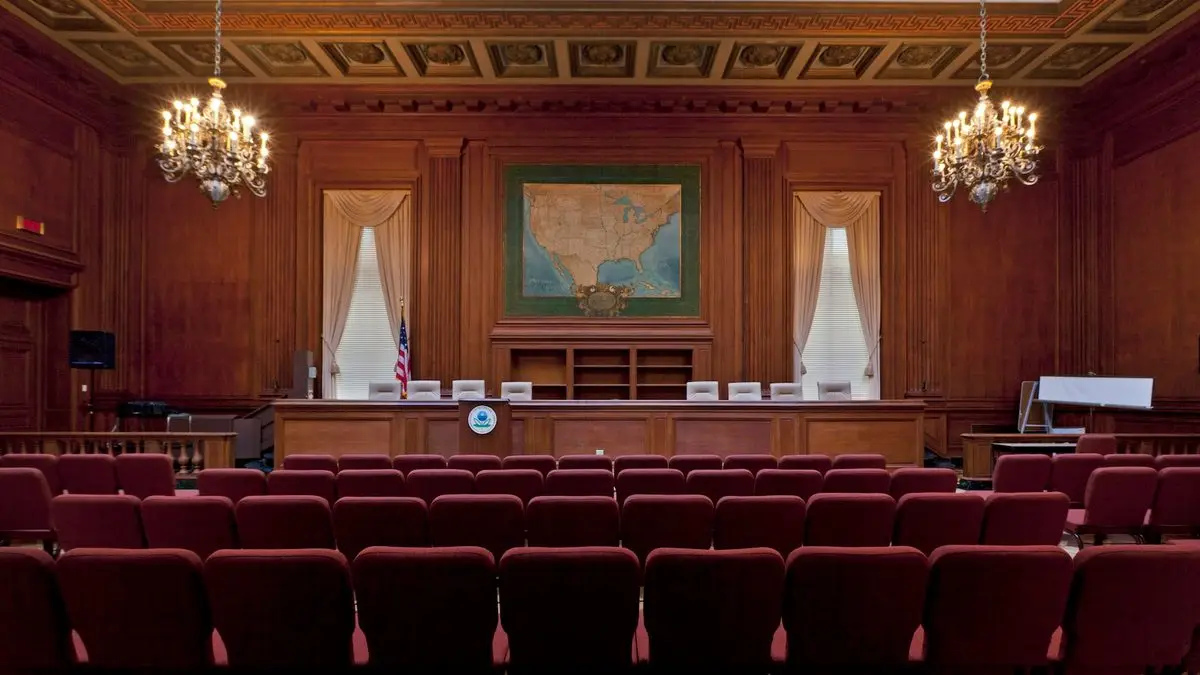
Public participation is a cornerstone of environmental regulation in the United States, embedded in every major environmental law of the past fifty-plus years. Yet the Trump administration is systematically trying to limit public input into environmental decision-making, bypassing decades of legal precedent through controversial interpretations of federal law. Taken together, the pattern of denying people the right to participate is unmistakable.
There are valid reasons to speed up rulemaking and permitting, but cutting public consultation carries serious costs. It can lead to flawed policy that is harder to implement, riddled with avoidable mistakes and more vulnerable to being struck down in court. Comments from industry, public interest organizations, academics, states and other agencies provide critical feedback to regulators, helping them anticipate and avoid unforeseen problems.
In 2025, the administration began stifling public participation in the rigorous environmental reviews required by the National Environmental Policy Act (NEPA) of 1969. Under this law, federal agencies must assess and disclose the foreseeable environmental impacts of major projects they build, fund or approve—from highways to dams and data centers. NEPA’s transparency requirements aim to prevent unnecessary harm by forcing agencies to “look before they leap.” The process can delay projects, but it can also substantially improve them.
Studies show that public comment requirements and stakeholder involvement have repeatedly identified environmental risks that agencies had overlooked. Significant harm can often be reduced through reasonable steps, such as rerouting roads around sensitive areas—as happened with Utah’s Legacy Parkway, which was redesigned to largely avoid the Great Salt Lake wetlands. In another example, the Department of Energy revised its permitting plan for Los Alamos National Laboratory to include a comprehensive wildfire mitigation program after commenters highlighted the risks—steps that significantly reduced the impact when a wildfire later swept through the area.
For the process to work, the government must share draft environmental impact statements with the public, as previous Democratic and Republican administrations did. The Trump administration removed this requirement, and agencies including the Departments of the Interior, Agriculture, Energy and Transportation announced last year that they would no longer release drafts, making informed public comment virtually impossible. Several agencies also abandoned the requirement to analyze projects’ indirect and cumulative impacts, such as climate change, without prior consultation.
Beyond undermining consultation on new projects, the administration is also sidelining comments on new regulations. The president has directed agencies to issue rules without prior consultation, invoking the “good cause” exception to the Administrative Procedure Act’s requirement to publish proposed rules and allow a 30- or 60-day comment period. Decades of legal precedent establish that agencies may finalize rules before receiving comments only in exceptional circumstances—for example, to prevent terrorism, address a public health emergency or prevent market speculation. Speeding things up has obvious appeal, but moving consultation to the end of the process does not solve the problem if the rules are less sound and more vulnerable to legal challenges.
In another example of limiting participation, the Environmental Protection Agency (EPA) proposes eliminating the longstanding federal requirement that state and local air agencies allow public comment on air pollution permits for new “minor” emission sources below a threshold. This category could include data centers that split up their power generation units so that each source appears smaller. These permits are highly controversial because data centers powered by gas or diesel generators emit substantial air pollution—but the change would allow permits to be issued quickly without any opportunity for public input.
The administration has also obstructed public participation by declaring emergencies and invoking national security. In March, the Department of the Interior invoked a previously unused national security exemption to free the oil and natural gas industry from Endangered Species Act requirements in the Gulf of Mexico. In 2025, President Trump granted coal plants, coke ovens and chemical manufacturers two-year exemptions from the Clean Air Act’s hazardous air pollution standards, invoking a national security provision of the law for the first time.
The administration is also trying to thwart the “citizen suit” provisions that Congress included in nearly every major environmental law of the 1970s and 1980s. Under these provisions, individuals or groups can sue regulated entities over violations—or federal agencies for failing to fulfill statutory duties. In the summer, a federal court ruled that the EPA had failed to identify areas with unhealthy soot levels on time and ordered it to do so by early next year—a ruling the administration is appealing. The administration also intervened in a citizen suit against xAI for violating the Clean Air Act, arguing that the president can demand the dismissal of a citizen suit for any reason.
Public participation takes time, but it is valuable for governance. It gives regulated industries, professional associations, public interest organizations, experts, states and citizens a voice, and helps build trust in government. However old-fashioned that view may sound, research supports it: when people participate in decisions that affect them, they are more likely to consider those decisions legitimate even when the outcomes do not favor them.
There are valid reasons to reform the regulatory and permitting system, but not by eliminating public participation.


Comments