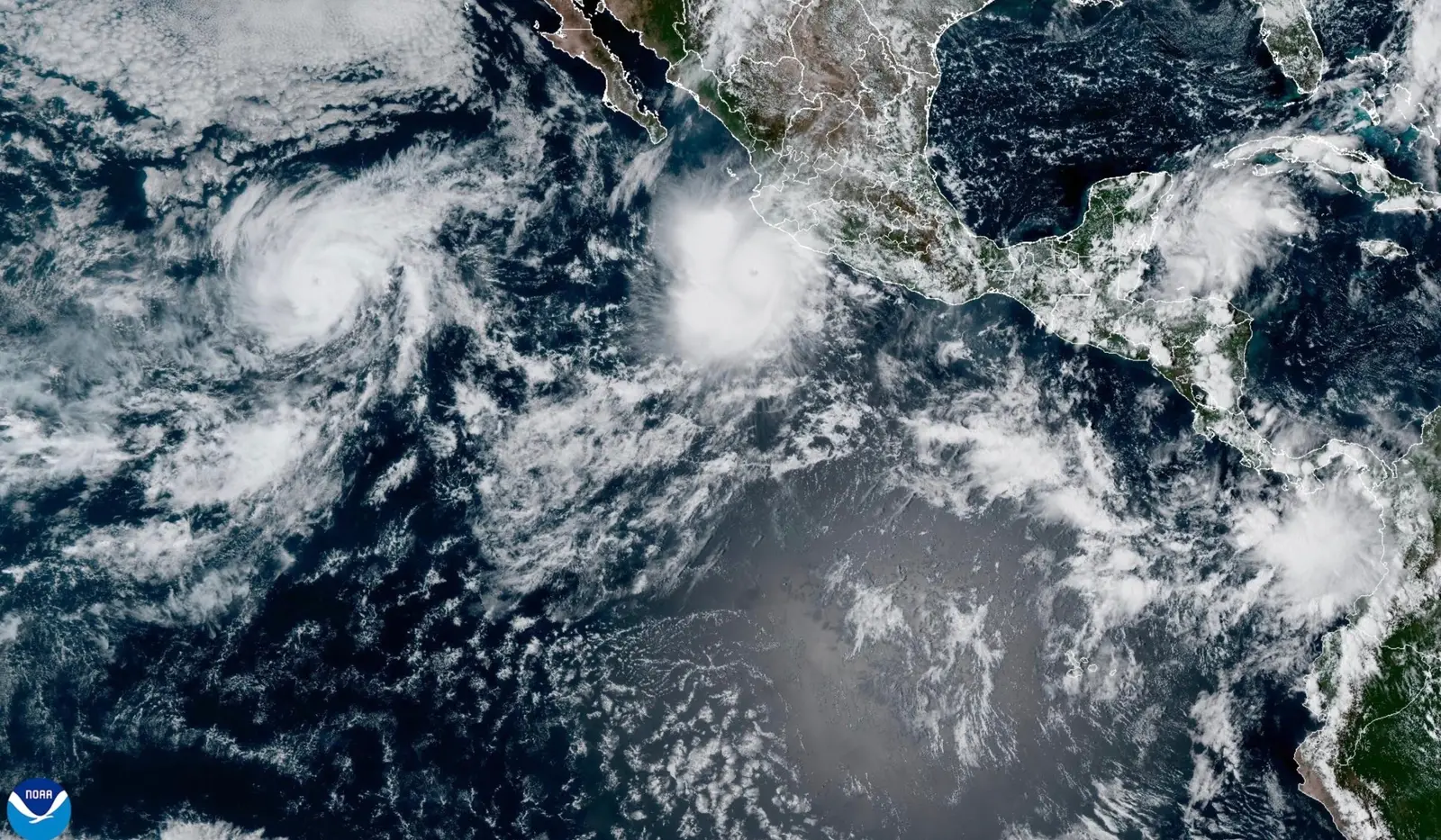
The Pacific Ocean hurricane season is already intense, as El Niño conditions that emerged in June have warmed waters above normal. University of Miami hurricane expert Brian McNoldy estimates that the phenomenon “is on track to become perhaps the strongest El Niño on record.” Hawaii, already battered by two hurricanes over the past month, is once again in the path of Hurricane Nolo, with warnings of catastrophic flooding.
During an El Niño, surface winds blowing from east to west across the Pacific weaken or sometimes reverse. This shifts the jet stream and triggers record global heat, severe droughts, wildfires and dwindling water supplies. El Niños do not follow a regular schedule — they occur on average every two to seven years, sometimes mild and sometimes very strong. McNoldy predicts that the current one will peak this coming winter but persist into 2027: “It doesn't fade away immediately,” he says.
While attention is focused on the increased number of Pacific storms, El Niño has the opposite effect on Atlantic hurricane activity: tropical activity there is almost nonexistent this year. According to Matthew Rosencrans, lead hurricane season forecaster at the US National Weather Service, which is part of NOAA, both the eastern and central Pacific already have four more tropical storms than normal for this time of year, with more than two months remaining until the end of the season.
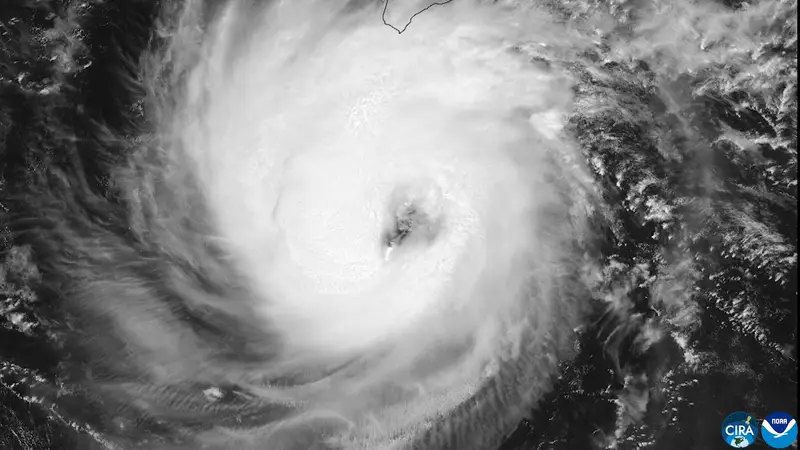
From 1991 to 2020, the eastern Pacific averaged 15 named storms per season, which runs from May 15 to November 30. Exceeding the annual average as early as September, however, “is another story,” Rosencrans says. Another feature that sets this year's storms apart is that three Pacific hurricanes reached Category 5 strength, matching a record set in 2002, also an El Niño year.
The most active season on record in the eastern Pacific was 1992, with 25 named storms, while in the central Pacific it was 2015, with 14. In 2015, nine major hurricanes — Category 3 and above — occurred in the eastern Pacific, but no deaths were reported, because El Niño caused the storms to form farther west and remain over open water throughout their lifetimes. That was not the case during earlier strong El Niños.
In 1997, Hurricane Pauline swept along Mexico's Pacific coast, killing hundreds of people. That same year, Tropical Storm Nora brought unusual rainfall to landlocked southwestern Arizona, while a December storm in Southern California caused flooding that swept cars into a stormwater channel and led to evacuations of trailer parks. In 1998, El Niño was blamed for floods in China that killed 4,150 people, most of them along the Yangtze River.
In Hawaii, Hurricane Lala in August and Hurricane Lowell in early September destroyed or damaged more than 510 homes and caused $168 million in damage to public infrastructure. Lala caused an additional $21.5 million in damage to 38 schools. Nolo, which strengthened into a hurricane on Thursday night, is expected to become the third: forecasters warn that it could bring Hawaii rainfall measured in feet rather than inches.
The strain on Hawaii is nothing new. Heavy rain in March caused the state's worst flooding in two decades, followed in May by a magnitude 6.0 earthquake. Governor Josh Green described this year as “something I don't remember ever experiencing before.” Two hurricanes came within 320 kilometers of Hawaii in 1957, but that did not happen again for more than half a century — until it occurred in 2014, 2016 and 2018, ahead of this year's predicted “triple hit.”
Forecasters often worry about “preparedness fatigue,” when communities prepare for storms that never arrive or turn out to be weaker than expected. John Bravender, a warning coordination meteorologist with the weather service, says 2026 has brought Hawaii a different kind of exhaustion: “The fact that we have these repeated devastating impacts, and while we're recovering we have to prepare for the next event — that's something new that really drains resources and creates the feeling that this is a very busy hurricane season.”
Even so, residents understand the risks: “I think community members realize how dangerous the weather can be, how important it is to be self-sufficient, to have food and water, and also to look after their neighbors,” he adds.

Comments