Keyu Jin is an economist at the London School of Economics (LSE) and the author of The New China Playbook: Beyond Socialism and Capitalism. In her discussion with Lex Fridman, she argues that the West's biggest misconception about China's economy is that a group of people or one person runs it. In reality, she says, there is extreme political centralization but deep economic decentralization: local mayors play a crucial role in reforms and technological innovation. Nor is the Chinese people's relationship with authority one of blind submission; it is a centuries-old tacit agreement: respect for authority in exchange for stability, security, peace and prosperity.
Asked whether China is communist or capitalist, Jin replies that from a purely economic perspective, she has rarely seen a more capitalist society: competitive businesses, people with a strong ambition to make money, consumers and investors. At the same time, the social fabric is deeply socialist: the state and state-owned enterprises dominate many sectors, state banks control the financial system, and there is a strong sense of community, group activities in parks and free classes for older people. Competition is fierce, less as a cultural trait than as a result of economic conditions: if something succeeds, everyone wants to do the same, and families invest in education to secure a better life for their children.
The roots of this model reach back to Confucius. Jin describes Confucianism as a moral philosophy that prioritizes social harmony, filial piety, saving and education as moral cultivation. Historically, meritocracy operated through standardized examinations and gave opportunities to the poor; today, however, meritocracy is eroding, especially in the labor market, where connections play a greater role. She recalls that at school, all students' grades were posted publicly, from first to eight-hundredth place. This fueled ambition but limited creativity: students excel within the box and rarely question it. In the US, she found that competition is equally intense, just hidden.
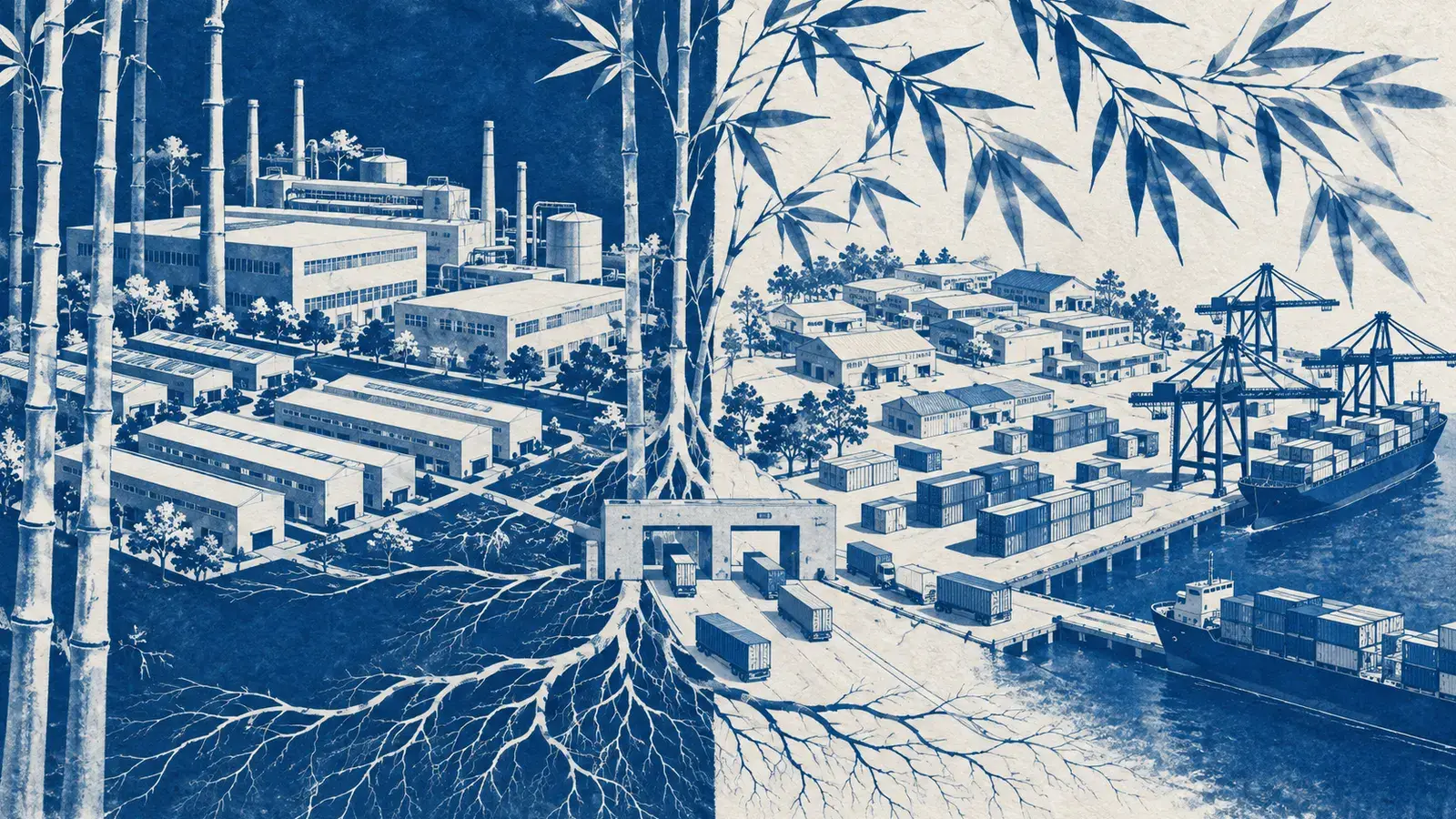
China's transformation began in the late 1970s with Deng Xiaoping, whom she describes as its most pragmatic leader. Opening up and reform were not a central order implemented without friction: governors, mayors and local officials had to be persuaded. Special economic zones were created, Shenzhen was transformed from a fishing village into an export platform and later a Chinese Silicon Valley, while agricultural reforms allowed farmers to decide what to grow and keep the surplus. Joining the World Trade Organization in 2001 was the major turning point. Each major reform was followed, according to Jin, by roughly a decade of strong growth, but the pace of reform has slowed over the past fifteen years.
Her central idea is the “mayor economy”: mayors had strong incentives to succeed because success brought promotion to the central government. The main criterion was initially GDP growth, which encouraged industrialization, exports, land sales and property development. When the central government made environmental protection a criterion carrying penalties, Beijing's skies cleared within a few years. The problem, Jin says, is that the criterion remains focused on production rather than consumption: social insurance, health, elderly care and jobs should be measured. In industrial policy, the state's push was useful initially for electric vehicles, solar panels and semiconductors, but it also created wasted capital; afterward, the market needs to choose the winners.
Jin describes an interesting contrast: Chinese people are simultaneously among the most patient and the most short-term economic actors. Political continuity allows planning over decades, parents invest in their children, and families save. Yet the popular slogan “short, flat, fast” describes a mindset of quick returns, copying and shoddy quality. She believes the current economic weakness may be instructive: it shows that continued progress is not guaranteed and that quality and values matter. She looks back fondly on the community of her poor childhood, with unlocked doors, power cuts and a shared goal, and notes that capitalism brings individualism and loneliness, as with “deaths of despair” in the US.
Another source of misunderstanding is the relationship between the state and the private sector. Jin argues that the state does not generally suppress private businesses; local officials help the most promising ones because that improves GDP and employment. The freedom granted to them has ranged from excessive, as with Evergrande buying football teams, to restrictive. China prefers an “innovation first, regulation later” approach, unlike Europe. In Jack Ma's case, the point is that in China, capital must be controlled by politics rather than the other way around; the tallest tree catches the most wind. The message, she says, is to avoid excessive political prominence, rather than “don't become entrepreneurs.” Most entrepreneurs remain grateful to China for the opportunities it gave them.
On innovation, Jin sees the US as the leader in groundbreaking “zero to one” technologies, while China excels at “one to N” production, commercialization and diffusion. DeepSeek demonstrates, in her view, a model of innovation based on scale and cost reduction, beyond simply copying. Chinese people solve problems but struggle to pose new questions; incentives are external, and basic research remains weaker. Copying is not considered shameful, something that will change as intellectual property rights are strengthened. DeepSeek emerged under crisis conditions: US export controls pushed China to accelerate domestic development. Jin believes sanctions may have failed or even backfired, as Huawei's resurgence also suggests, and warns that leverage has an expiration date.
On Donald Trump's tariffs, Jin says China had been preparing for five years and responded with calibrated assertiveness. Tariffs hurt the US, China and the world because Chinese intermediate goods affect international prices. China's negotiating principles are equality, reciprocity and pragmatism. China will not mix trade with political issues such as Hong Kong and Taiwan, nor accept a change to its mixed economic model. There is, however, room for an agreement on services, financial markets, intellectual property protection and purchases of goods. As an economist, she considers tariffs an unsuitable tool: the US trade deficit stems from a macroeconomic savings-investment imbalance, rather than trade. Strengthening domestic competitiveness, as in US-Japan competition in the 1980s, is preferable.
On immigration, Jin sees both sides: economically, it keeps prices and inflation low, while skilled immigration fuels US technological leadership; however, social harmony and citizens who feel left behind must be taken into account. On Taiwan, she notes that TSMC is crucial to the global economy and that reunification remains a dream of the younger generation in China. Uncertainty has already reduced investment in Taiwan. She believes China's strategic patience and economic situation make military action less likely, as it would be damaging. US-China dialogue must remain open.
The one-child policy was among the most radical in China's history: 98% of urban households had only one child. According to Jin, it had an unexpected positive consequence: it was a golden age for Chinese women, because girls received educational investment just as sons did. It also increased saving, because the cost of raising a child is enormous, and overturned the family hierarchy. Today, fertility is very low, but Jin does not consider aging a catastrophe: in the postwar period, aging economies became wealthier thanks to faster adoption of automation. The real question, she says, is the skills gap and how education is designed.
The property crisis explains the current slowdown. The central government placed limits on speculation, saying that housing is for living in. But the sector linked the fiscal and financial systems: mayors were funded through land sales, and household wealth was tied to property. The transition could take three to ten years. Jin rejects recurring Western predictions of collapse: the fundamentals of China's economy, such as human and physical capital and macroeconomic stability, remain intact. China has a per capita income of around $10,000, yet is also a leader in cutting-edge technologies; this is historically unprecedented.
At the end, she offers advice for anyone visiting China: go beyond Beijing and Shanghai to see second- and third-tier cities such as Chongqing and Chengdu, where the younger generation is seeking work-life balance, entertainment and local opportunities. China's most beautiful side, she says, is that behind the competition and ambition are warm, authentic, sociable people who remain friendly toward foreigners. The discussion closes with a saying by Confucius quoted by Fridman: “It does not matter how slowly you go as long as you do not stop.”




Comments