David Heinemeier Hansson — known as DHH, creator of Ruby on Rails, CTO of 37signals and creator of the Omarchy Linux distribution — returns to Lex Fridman 13 months after a previous conversation in which he was skeptical of AI-assisted programming. He now declares himself “incredibly excited” and describes the recent shift as one of the greatest accelerations of his life, quoting Lenin: “There are decades where nothing happens and weeks where decades happen.”
DHH distinguishes the pre-agentic era — autocomplete and chatbot helpers — from the agentic one. For him the dividing line was November 24, 2025, with Opus 4.5. He says the model’s output was uncannily close to what he would have written, and its ability to use tools, check its own work and act on a computer changed the game. By early spring sub-agents could divide tasks among multiple workers; by summer, Opus 5, Fable, GPT Sol and some open-weight models allowed him to describe a fuzzy problem rather than prescribe a route. In domains such as web CRUD and his Linux distribution work, he says agents now write 80–100% of the code.
His Omarchy Quattro release is the concrete proof he offers. He says that for the last two months of Quattro he did not write any shipped code by hand: he reviewed the shape of the system and critical model-layer lines, but agents produced the new functionality. The Basecamp 5 experience, however, taught him caution: when designers were encouraged to do vibe coding with agents, the individual pull requests looked plausible but collectively damaged the architecture, and humans had to clean it up manually.
Asked why massive apps such as Adobe Photoshop or Microsoft products have not obviously accelerated, DHH argues implementation is rarely the bottleneck in large organizations. Human bandwidth, communication, approval layers and the need to justify jobs consume productivity. Many organizations are bottlenecked on ideas, vision and taste. He says Microsoft has had endless programming capacity for decades, but that did not automatically produce compelling software; the industry has had this capability for only about six months.
DHH sees Linux as the main beneficiary of the agent era. He built Omarchy, an opinionated Arch Linux distribution with Hyprland, after an earlier Ubuntu-based project. Quattro, released a few days before the conversation, installs in 45 seconds, a goal driven partly by frustration that a new Mac took him 42 minutes to update and a PC took 1 hour 35 minutes to set up. He says his team reduced image size from about 7.5 GB to 5.85 GB by trimming fonts and using better compression, and the installer does background preloading while the user answers setup questions.
DHH argues the old Linux drawbacks — config files, command-line tools, arcane error messages — have become advantages because agents know Linux source code and can diagnose problems automatically. Omarchy includes a crash watcher that asks whether an AI should investigate, and agents can inspect logs and source, then draft bug reports. He describes a plugin marketplace that grew to 330 plugins in three days, making the operating system malleable: users can ask agents to build custom panels and tools.
On open source, DHH rejects complaints about agent-generated pull requests. He says after 25 years of running projects, most human programmers fall short at preparing bug reports, tests and explanations, while agents, if instructed, are diligent. He merged more than 1,000 pull requests on Omarchy and accepts that 400 remain unmerged. Agents now filter and review them, leaving him to make the final human decision. He recounts a bot being banned by GitHub after filing 28 issues at once and then emailing a maintainer about a bug in unreleased mise code.
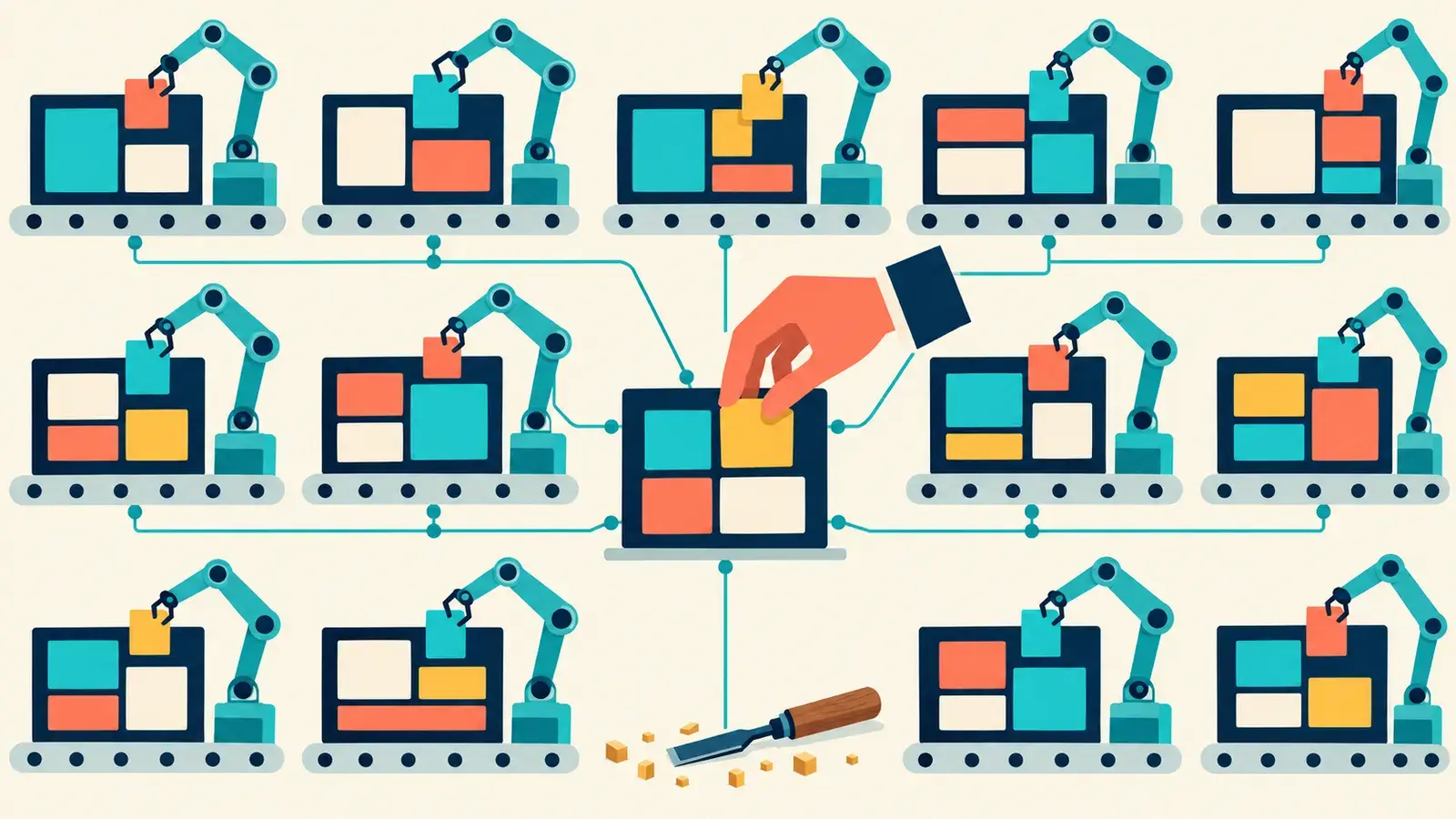
DHH describes his own identity shift. He spent decades chiseling Ruby code, but now he is “programming in English.” He built AmaWrite, a C++/Qt writing app, by telling an agent what he wanted and never reading its C++. He still reviews architecture and proportions like an editor or coach. He finds Rust ugly as a language but excellent as an output target. In an experiment, he had Fable plan a Python-to-Rust translation of a terminal-effects library; Fable/Opus completed it in about 45 minutes at roughly $550, while Sol, Grok 4.6 and DeepSeek Pro completed it for about $46, $55 and $23 respectively. Later runs produced a 46x execution improvement.
His practical setup is terminal-first. He uses Neovim less for writing code than for browsing projects and reviewing context, plus Herdr to track multiple agents, lazygit, and Hunk. He added multiple mini PCs with GL.iNet Comet KVMs, connected via Tailscale/WireGuard, and runs roughly 16 threads across machines. The pace is exhilarating but not sustainable; he expects automation to absorb coordination work, with humans making fewer high-level decisions daily.
To anxious programmers, DHH recommends not trying to anticipate model cycles and not overplanning. He argues productivity improvements are painful in the moment but historically create growth; he cites the ATM and bank tellers, and the Luddites. He says the mechanical part of programming is under threat, but builders with taste and product judgment are not. He also draws a line: vibe coding means telling an agent to build software without looking at implementation, whereas agent-accelerated development still includes review and judgment by someone who understands the system.
On AGI, DHH does not claim general AGI, but says he has seen “glimmers” — long-range tasks, self-correction, security vulnerability discovery and even regret-like behavior. He says these models are exceptionally good at finding and fixing security holes; Fable was too capable for safe release according to its own lab. He defends working with multiple models, using Codex as reviewer and Copilot as an extra check. He is willing to use Anthropic’s tools even though he disliked Claude refusing to translate an essay into Italian, and he values competition and open-weight models from China.
The conversation ends on human themes: raising children as the peak experience, memento mori built into Omarchy’s calendar, the social cost of over-optimization and engagement-maximizing social media, and the Overton window on immigration. DHH says the window opens only when people risk reputation and criticism. He rejects both wholesale AI terror and the “electronic parrot” dismissal, saying the reasonable stance is to accept the moment’s gravity and work with optimism.




Comments