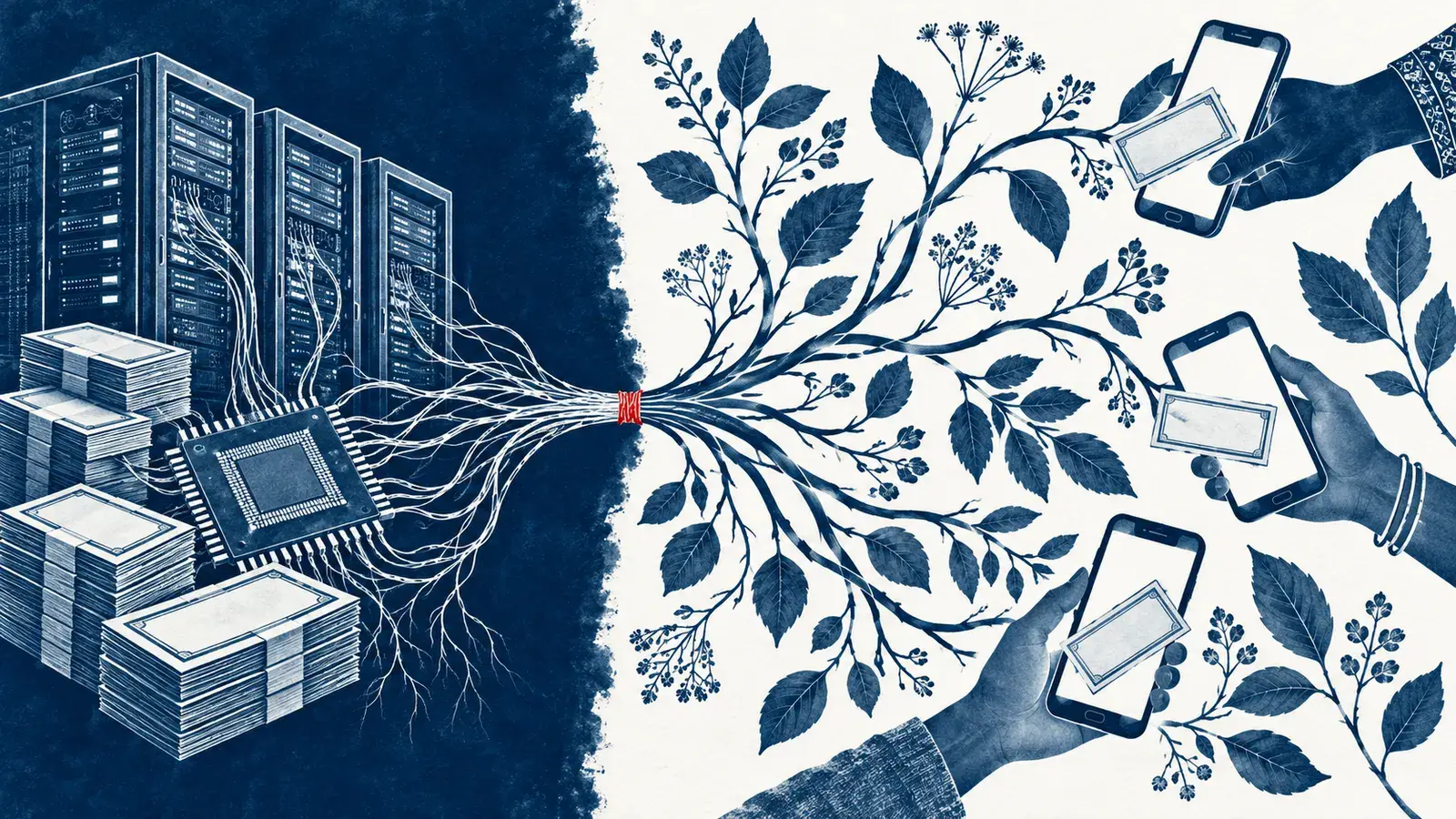
GiveDirectly, an organisation that transfers cash directly to people in extreme poverty, has announced a plan to increase its capacity to distribute money tenfold by 2028. According to reporting by The New York Times, between $37 billion and $100 billion could be made available to charities annually thanks to the wealth generated by rapidly growing artificial intelligence companies such as Anthropic and OpenAI. The organisation says it is sceptical of figures that high, but considers the movement of very large sums in the coming years likely.
GiveDirectly currently has the capacity to distribute around $500 million in 2026, far more than it has in donations. The goal is to be able to absorb $5 billion or more annually by 2028—a tenfold increase in capacity. The investments are funded by private donors rather than general donations, and the organisation says they make sense even if the wave of philanthropy from artificial intelligence never arrives: a leaner and more resilient organisation will have been built.
Cash transfers scale faster than most interventions, GiveDirectly says, because they rely on technology and require neither fragile equipment nor the training of clinical staff. During the COVID-19 pandemic, almost every country in the world gave out cash, paying 1.4 billion people. More than 800 million people live in extreme poverty, and the cost of lifting them above that threshold has been estimated at around $340 billion annually.
However, the potential to scale is not the same as the capacity to deliver. The current model relies on intensive work on the ground: visiting villages, manual enrolment and identity checks. GiveWell describes the challenge: hiring staff and physically reaching villages do not scale easily. GiveDirectly is exploring digital tools, satellite data, and data from mobile operators and governments for remote enrolment and verification, as well as radio, automated telephone menus and USSD messages to communicate with communities with limited familiarity with technology.
Moving away from a physical presence, however, creates new risks. Communities may refuse to enrol if they have not seen the organisation, the most vulnerable—women, older people, people with disabilities and the poorest—may be excluded because they do not have a mobile phone or do not know how to use mobile money, and reports of fraud or abuse may never get through. GiveDirectly acknowledges that reduced contact in Congo and Malawi coincided with higher rates of fraud, and that a remote programme in Nigeria in 2024 generated very few reports—not because it was safer, but because the community did not have enough trust to speak up.
Recipients themselves offer important warnings. In a focus group in Uganda, participants said they would be afraid to enrol themselves without having seen anyone from GiveDirectly, that local leaders might exploit their position to steal numbers and PINs, and that people without a phone or identity document would feel bad or anxious if only mobile phone owners were paid first. They suggested radio, calls instead of messages, and confidential reporting through a telephone hotline.
Another obstacle is mobile phones. Last year, the organisation distributed almost 125,000 phones; if it wants to provide 2 to 3 million a year, it will become one of the largest phone buyers in Africa. It is negotiating directly with manufacturers for better prices and building a real-time record of every device. At the macroeconomic level, it currently sends cash to thousands of people at once, with an injection equivalent to 85% of local GDP.
Studies in Kenya and Malawi found minimal inflation, possibly because of spare capacity in poor rural economies, but the organisation does not take it for granted that this will hold at a much larger scale; it is conducting the largest randomised study of the effects of transfers on a local economy and building models to forecast prices, jobs and business activity.
Government approval is necessary. Registration in a new country can take 6 to 18 months. GiveDirectly recalls the suspension of its programmes in Uganda when rumours linked the transfers to political influence; rebuilding trust took almost two years. It is therefore investing in government relations from the outset and working with national poverty reduction plans.
Finally, it is preparing internally for the pressures of rapid growth: smaller autonomous teams, hiring its first CTO, fewer one-off programme customisations and better support for managers. As it says, the cost of preparing and being wrong is small; the cost of not preparing and being wrong is enormous.



Comments