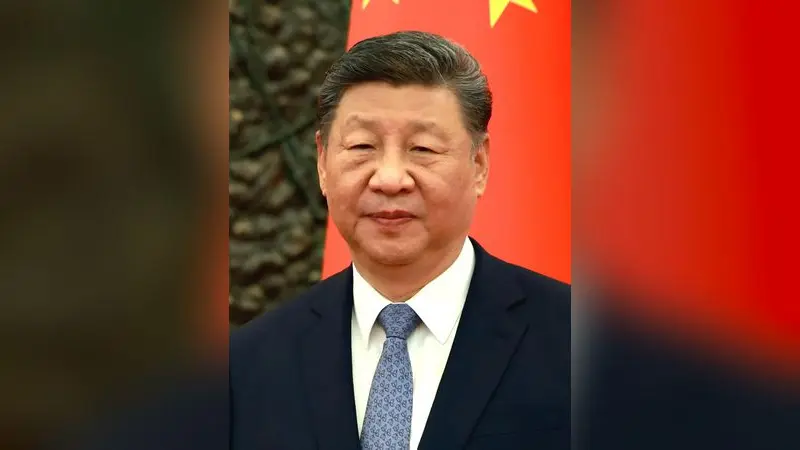
Jeffrey Wasserstrom, a historian of modern China, begins by comparing Mao Zedong with Xi Jinping. The main similarity, he says, is the cult of personality: Mao was the center of an intense cult from 1949 until his death in 1976, while Xi is the first leader since him with a sustained cult of personality, with his books and speeches dominating bookstores. The major difference is that Mao loved chaos, upheaval and class struggle, while Xi loves order, stability and predictability. Mao rejected Confucius as a feudal way of thinking, while Xi speaks positively about Confucius and Confucian traditions, which, according to Wasserstrom, brings him closer to Chiang Kai-shek’s vision of one-party rule in Confucian clothing.
Confucius lived during the Warring States period and preached that there had been a golden past with clear hierarchies. In his thinking, there were no equal relationships: a father owed care to his son, a son respect to his father, a husband protection to his wife, and even siblings were “older” and “younger.” The Confucian tradition emphasized education and meritocracy through examinations, with the belief that people are born similar and become different through learning. But, as Wasserstrom points out, meritocracy always came with a caveat: those with better teachers had a greater chance of success, while a sense of injustice and nepotism caused anger, something that also fueled the 1989 protests in China.
On Tiananmen, Wasserstrom explains that the 1989 protests were not simply a demand for Western-style democracy, but an attempt to pressure the Communist Party to uphold its own ideals of reform and opening up. There had been protests in 1986, which quickly faded when students feared they would be associated with the Red Guards. In 1989, the death of reformer Hu Yaobang provided a trigger, while the anniversary of the May Fourth Movement of 1919 and economic discontent reinforced the mood. When workers joined and an independent labor union was formed, the army intervened. On the night of June 3–4, a massacre took place near the square, with the People’s Liberation Army behaving, as the historian puts it, like an occupying army.
Wasserstrom dwells on the image of the man standing in front of the tanks on June 5. Initially, the Communist Party showed the video to demonstrate restraint, but the narrative failed to take hold because many Beijing residents had witnessed the attack on unarmed civilians firsthand. The image was therefore banned because it showed the army as an invader and the government as having lost its mandate to rule. Wasserstrom believes that this man, probably a worker rather than a student, disappeared and was likely killed without trial. The regime, he says, has since learned the power of images: in Hong Kong it avoided using the army and lethal gunfire, while in Xinjiang it does not allow photographs of the detention camps.
On censorship, Wasserstrom refers to Margaret Roberts’s framework: fear, friction and flooding. Fear is outright prohibition, friction makes access to unwanted information more difficult, and flooding fills the environment with official narratives. He explains that in China you can buy both 1984 and Brave New World, as long as they do not refer directly to China. He mentions a bookstore in Nanjing that would astonish a resurrected Mao, as well as the closure of independent bookstores in Shanghai under Xi, with some reopening in the diaspora, in Washington, Taipei, Chiang Mai and elsewhere.
Despite censorship, Wasserstrom says the system is porous and that he still meets students from mainland China who think freely. This is not complete brainwashing; some get past the firewall, see an image that contradicts the official line and begin asking questions. He emphasizes that the human spirit remains curious and creativity survives, but regrets that people in China do not have easy access to different accounts of history. He also points out that both the United States and Europe have their own one-sided narratives, particularly about World War II.
Regarding Xi, Wasserstrom describes a narrowing of the space for different ways of being Chinese: less patience for the Mongolian language in Inner Mongolia, pressure against feminist movements and impatience with Hong Kong. China’s political elite remains a black box, with very few leaks about how decisions are made. A leaked speech by Xi suggests that he attributes the Soviet Union’s collapse to insufficient ideological commitment and a lack of “manliness” in maintaining control. Wasserstrom believes Xi is above all a nationalist and wants China to be strong on the international stage, with a narrative that draws on the “century of national humiliation.”
On the trade war, Wasserstrom avoids predictions and points out that bilateral US–China relations are often changed by external events: the Sino-Soviet split made Nixon’s visit possible, and September 11 redefined relations. In the current tariff conflict, he considers it important to look at other players too, such as Europe, India and Southeast Asia. Nationalism and the need for Xi to avoid appearing weak may prolong tensions, but the interconnectedness of the economies acts as a buffer. He recalls Han Han’s remark that Americans would never bomb the Three Gorges Dam because their iPhones are made there.
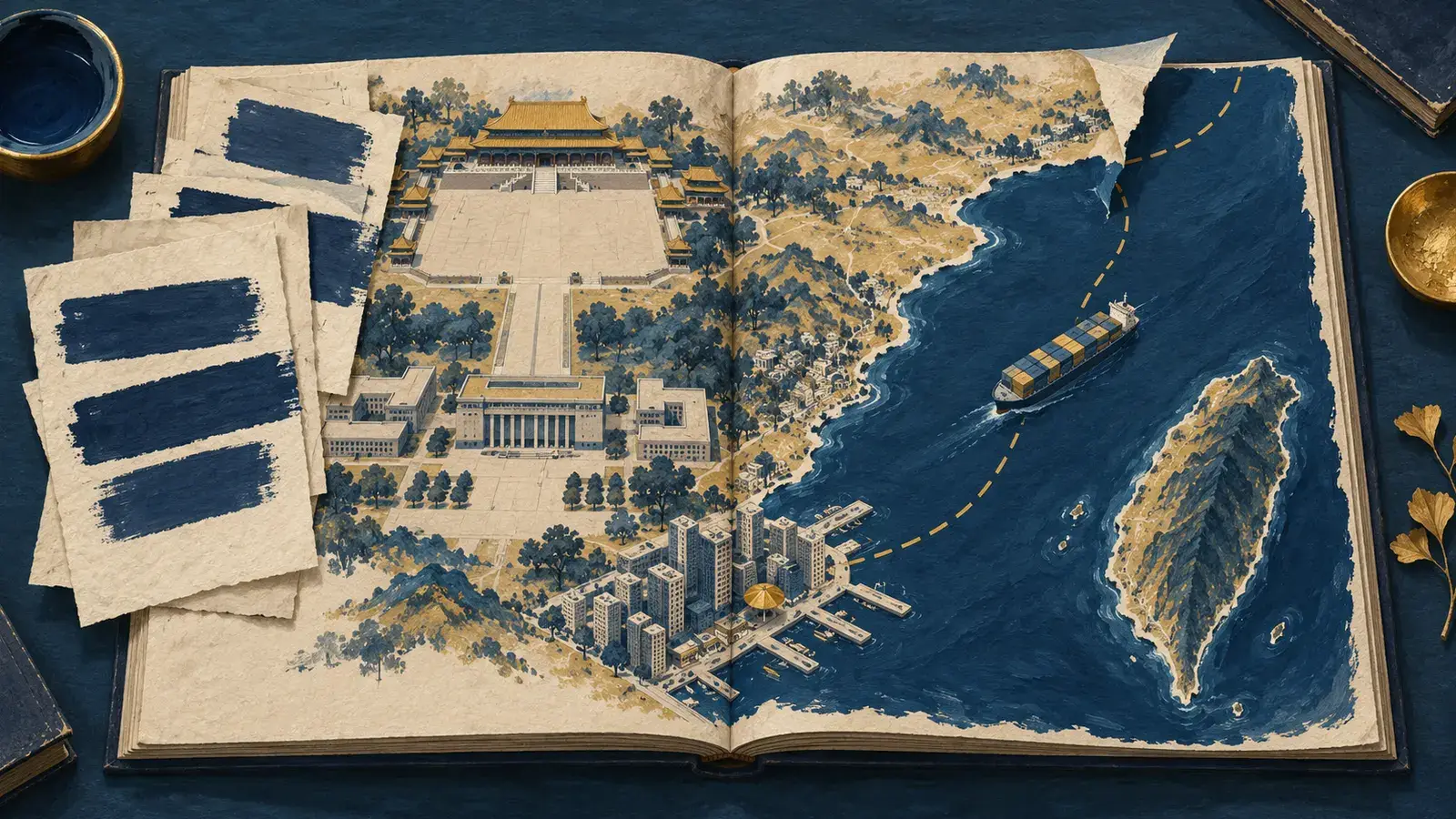
On Taiwan, Wasserstrom explains how Hong Kong served as a model for “one country, two systems” after the 1984 agreement. In 1997, sovereignty was transferred to the People’s Republic of China, but Beijing gradually narrowed the differences. Hong Kong’s protests in 2014 and 2019 were enormous relative to its population, with 1 to 2 million people in a city of 7.5 million. Activists warned Taiwan: “Hong Kong’s today could be Taiwan’s tomorrow.” Wasserstrom believes there is no fixed plan for military action, but that a sense of weakness or a need for a diversion would increase the risk. Military escalation could begin with gray-zone pressure and lead to an unpredictable conflict.
Speaking about youth movements, Wasserstrom emphasizes that protests are often preceded by earlier mobilizations that seemingly failed but nevertheless passed on skills and narratives. Younger people have a reasonable impatience: if a freedom is lost by 2047, a 17-year-old will spend most of their life without it, while an 80-year-old can say “be patient.” History shows that movements that seemed doomed changed things, as in Eastern Europe in 1989, but also that successes can be reversed, as in Orbán’s Hungary. He mentions his friend from Myanmar who said, “I feel helpless but not hopeless,” and stresses that history does not follow a straight path.
Wasserstrom describes Mao’s rise: after the fall of the empire in 1911, Sun Yat-sen founded the Republic of China, but Chiang Kai-shek turned against the communists in 1927. Mao elevated the peasantry as a revolutionary force, and the Communist Party eventually won the civil war, with the nationalists retreating to Taiwan. The Great Leap Forward caused a famine that killed tens of millions, fueled by fear, ego and false reports. Today, Mao is presented selectively: Xi honors the Mao who strengthened the nation and fought America in Korea, but not the Mao who loved chaos and mobilized young people in the streets.
At the end, Wasserstrom hopes for a China with greater tolerance of diversity, more room for civil society and a return of the creativity that once flourished in Hong Kong. He refers to Geremie Barmé’s idea of an “other China,” which includes not only Confucius and hierarchy, but also Taoism, cosmopolitanism and multiple cultural traditions. Hong Kong’s spirit, even after the defeat of 2019, survives in the diaspora and inspires activists from Minneapolis to Minsk. Wasserstrom hopes that future bookstores in Beijing and Hong Kong will freely sell 1984, Brave New World and his books, in a world where the great powers cooperate more than they clash.
Comments