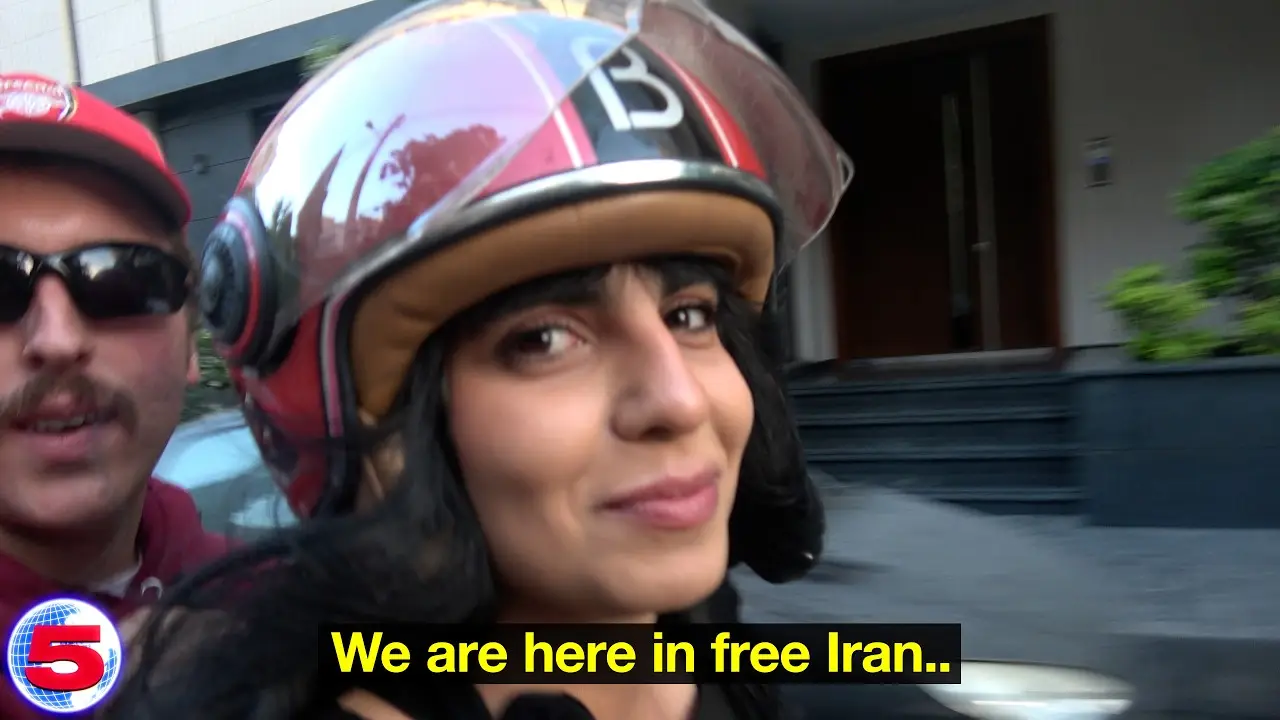
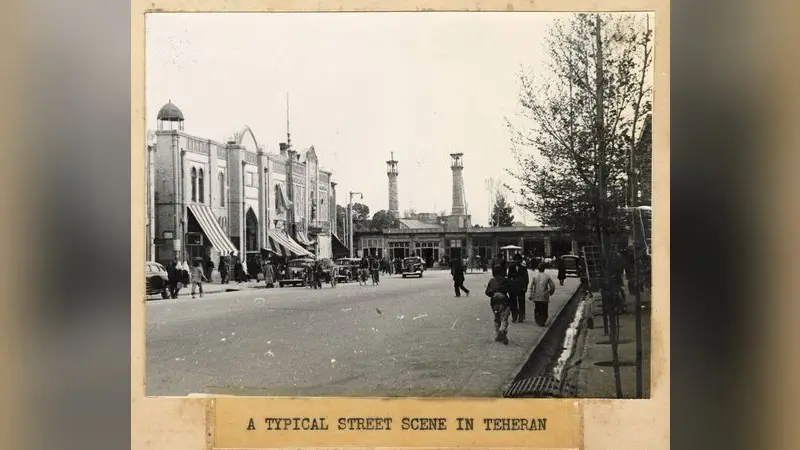
Andrew Callaghan traveled to Tehran and spent the first two days on a state-organized tour, then went out onto the streets on his own. As he explains, the video shows a city very different from the one portrayed by either Western media or Iranian state propaganda.
From his first walk along a central street, Callaghan says he felt as though he were in a neighborhood like New York's Upper East Side or West Los Angeles: women without headscarves, packed cafés and young creatives. What he did not see, however, were bars, clubs or taverns. As he explains, since the 1979 revolution there has been a complete ban on producing, selling and publicly consuming alcohol, with exceptions only for religious minorities during rituals. A first arrest usually brings a warning, a second 80 lashes, and subsequent offenses can even carry the death penalty.
Modesty standards are enforced by the “morality police,” or “Guidance Patrol,” rather than the regular police. After Mahsa Amini's death in 2022, the force appeared to be disbanded, but it returned quietly in 2023 and was active again in 2024. Former president Masoud Pezeshkian had pledged that the morality police would not approach or arrest women who broke the rules, yet incidents continued to happen. Young people speaking on camera say that “there are no bars,” but privately admit that underground venues exist and that they bring their own beers.
One of the most significant conversations is with a photographer and critic of the regime whose voice and face are altered, and who took part in the January protests. He says the pro-government rallies the journalist was taken to are not “the pulse of Iran” and probably consist of paid protesters. He refuses to discuss politics because, after taking part, he was tortured, placed in solitary confinement and put on a watchlist. He says that if he speaks out again, he could pay the ultimate price. He confines himself to the economy: nothing is normal, inflation is high, he has had no work as a photographer for four months, and most people have no income.
The economic downturn, Callaghan explains, was made worse by the internet shutdown the government imposed when the protests began. Because most of the Gen Z youth he spoke to depended on e-commerce, the shutdown made their situation worse. One of them says he lost all his income. A young man says he now relies on “the angels on his shoulder.” An extreme metal and black metal musician with the project 431N describes how he was trying to set up a record label and physical distribution, but everything was lost. Some people lost money from cryptocurrency wallets when their IP address changed because of a VPN and companies froze their accounts. He notes that VPNs became expensive and that many people made money from others' misery. “War is business,” he says, naming arms dealers and companies such as Lockheed Martin and Boeing.
In a hip neighborhood, Callaghan finally sees graffiti, which he says makes him feel at home, and connects the culture to the streets of New York. He meets young people involved in hip-hop and its five elements. But when a young woman shows her “666” tattoo and the crew prepares to film it, they are ordered to stop filming while the police watch. As he comments, if you are simply going about your day, you are unlikely to run into trouble, but if you say something forbidden to a foreign camera, the police appear: “they have eyes everywhere.”
The young people describe life without the internet: they cannot play games or communicate, and VPNs are expensive. “We just need internet, a free life and money,” one of them says. Even supporters of the regime acknowledge the economic hardship, but attribute it to American sanctions that began after 1979 and intensified under Trump's presidency with the so-called “super sanctions.” A speaker at an anti-American rally admits that people are living with economic difficulties, but insists that the cause is US sanctions, which destroy every country, “both mine and yours.”
Young critics offer a different explanation: the sanctions came because of the Iranian government's own approach to the world. One young man refers to the moment when Mahmoud Ahmadinejad declared that Israel should be wiped off the map. The video includes the phrase “this source of corruption will soon be wiped off the face of the earth.” From that point, he says, sanctions multiplied and the dollar exchange rate soared. Another acknowledges that sanctions are the driving force behind the gradual decline. Callaghan adds that the Israeli-Western response is also extreme, as it seeks to pressure the government as in Venezuela or Cuba.
The figures cited give a sense of the situation: a coffee cost 165,000 two months ago and has since gone up, while the dollar rose from 3,500 ten years ago to nearly 200,000. One person Callaghan speaks to notes that almost no young person can live on one job; he himself works 12-hour days. Callaghan mentions young people juggling two or three jobs. For him, the comparison with American Gen Z is inevitable: young people there also work multiple jobs, share rent and watch superpowers spend on wars rather than prosperity at home.
Some young people express deep despair. One with an “FTW” tattoo describes the level of chaos and disorder as “almost biblical,” although he says he does not want to sound awkward. A young woman says she has no hope for the future: “I don't believe anything will change or that anyone will change anything for us here.” She links war to natural resources and money, saying that as long as Iran has resources, there will always be war. When Callaghan tells her that Americans have also felt hopeless for years, she replies that this is not good.
At the same time, the video captures small signs of gradual change. Callaghan says many of the scenes he filmed would have been unthinkable in 2015, and that even the partial withdrawal of the morality police is seen by young people as a step forward. A telling example is the recent legalization of women riding motorcycles. A young woman with a Honda Scoopy 130 says it used to be forbidden, but licenses have been issued for the past few months and she can wear whatever she wants. She offers no opinion on whether this is due to the protests, but insists that life has become difficult for everyone, men and women alike.
Callaghan makes a broader observation about the media: viewers of the first two parts of the series, he says, split into two opposing camps. Some saw their view of the regime confirmed, while others saw their image of Iranian society fall apart. This is not because of lies, but because the audience is almost entirely American and has been informed by two controlled ecosystems: Western corporate media and Iranian state media, each with its own selection of facts. That is why, he argues, being physically present or reporting from the scene matters, because much of what shapes everyday life never makes the news.
The video ends without predictions. Callaghan wonders whether Iranian and American Gen Z, when they come of age politically, will correct the mistakes of the generation governing today or become just as stubborn and bloodthirsty. “We're not in the prediction business,” he says. After Tehran, he traveled to Berlin for the complete opposite experience: an endless party with drugs, sex and nudity, which he describes as a necessary “spiritual cleansing” after a week in Iran.

Comments